Rosmarinic acid
Rosmarinic acid is a naturally occurring phenolic compound widely found in plants of the Lamiaceae family, including Salvia species and chia (Salvia hispanica).
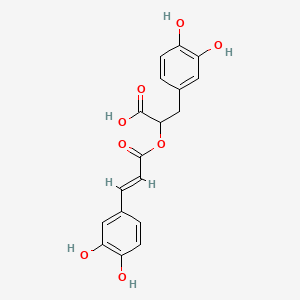
Rosmarinic acid is a naturally occurring phenolic compound widely found in plants of the Lamiaceae family, including Salvia species and chia (Salvia hispanica). Chemically, it is a caffeic acid ester with strong antioxidant properties, and it is frequently studied as a bioactive phytochemical rather than as a conventional drug. In biomedical research, rosmarinic acid is of interest because it can modulate oxidative stress, inflammatory signaling, and cell survival pathways, which has led to investigation in metabolic, neuroprotective, antimicrobial, and anticancer contexts.
Recent studies have continued to position rosmarinic acid as a multifunctional natural product with potential pharmaceutical relevance. Its reported activities include antioxidant effects, enzyme inhibition, and support for nanomedicine-based delivery systems. In the publications summarized here, rosmarinic acid was examined both as a major plant metabolite and as an active component incorporated into engineered nanoparticles, including PLGA nanoparticles, polydopamine-based nanotherapeutics, and RA-Se@M self-assembled systems. These studies collectively reflect its role as a bioactive scaffold in oxidative stress-related disease models, including Parkinson’s disease, pancreatic cancer, triple-negative breast cancer, and postprandial glucose modulation.
Where the papers sit
10 papers from the last 6 months study rosmarinic acid directly · updated from PubMed 3 Oct 2026
Study type 0 clinical trials · 10 preclinical
Themes 3 themes · 1 new direction
-
Targeted Bioactive Delivery
Controlled and tissue-targeted delivery is the shared aim across wound, neurological, metabolic and skin applications. Hydrogels and cubosomes are used to improve local uptake, with diabetic wound work linking hypoxia relief and angiogenesis to tissue regeneration. Brain-directed nanocarriers pursue DNA delivery for Parkinson’s disease, while skin systems target antimelanoma activity. The platforms remain exploratory and disease-specific, with no single clinical direction established.
4 papers · 40%
-
Phytochemical Enzyme Inhibition
Plant phenolics are being mapped by chromatographic and mass-spectrometric methods and tested against metabolic and antimicrobial enzymes. α-Glucosidase inhibition is evaluated alongside antioxidant activity, often against acarbose or related carbohydrate-modulating benchmarks. Other screens target β-lactamase, using bioautography, docking and activity-guided profiling to identify inhibitors. The work remains mainly exploratory, linking extract composition to enzyme activity rather than demonstrating clinical efficacy.
4 papers · 40%
-
Nanoparticle Antioxidant Delivery
Nanoformulation is being used to improve antioxidant delivery while adding protective or gene-silencing functions. In testicular toxicity, nano-rosmarinic acid preserves testosterone and limits apoptosis through NRF2/HO-1 and NF-κB/NLRP3 signaling. Polymeric nanoparticles extend this approach to combined antioxidant delivery and gene silencing. The shared emphasis is safer, more targeted delivery rather than free-compound treatment.
2 papers · 20%
Rosmarinic acid is assigned a protein-aggregation-control role in insulin therapy
The insulin-complexation study in Drosophila melanogaster treats insulin amyloidosis as a formulation problem and finds that rosmarinic acid binds aggregation-prone regions of insulin, inhibits fibrillation dose-dependently, and improves the management of diabetic traits when combined with insulin 42331169Jun. This differs from the set’s other uses of rosmarinic acid as an antioxidant, anti-inflammatory, neuroprotective agent, or enzyme-inhibitory constituent: it makes rosmarinic acid a direct inhibitor of therapeutic-protein amyloid formation, opening a formulation-stabilization role rather than another application of cellular protection.
Papers
The 10 papers from the last 6 months that study rosmarinic acid directly, newest first, by theme and by study type. Study types come from PubMed publication types and MeSH headings.
By theme
Targeted Bioactive Delivery (4)
- Cascade-Therapeutic Nanozyme Hydrogel Mediates Hypoxia Alleviation and Angiogenesis Promotion To Accelerate Diabetic Wound Healing. ACS applied materials & interfaces · 13 Aug 2026 PMID 42587488
- QbD-engineered EGCG-rosmarinic acid cubosomal hydrogel for controlled skin delivery and antimelanoma efficacy. International journal of pharmaceutics · 25 Jul 2026 PMID 42501769
- A Brain-Targeted DNA Delivery Nanocarrier Modulator for Synergistic Therapy of Parkinson's Disease. ACS applied materials & interfaces · 2 Jul 2026 PMID 42390437
- Insulin complexation with curcumin derivative mitigates the protein amyloidosis and efficiently manages diabetes in Drosophila melanogaster. International journal of biological macromolecules · 22 Jun 2026 PMID 42331169
Phytochemical Enzyme Inhibition (4)
- Unlocking the Role of Chia (Salvia hispanica L.) Seed Phenolic Metabolites in Postprandial Glucose Modulation: in vitro, in vivo, and Antioxidant Evidence Supported by Molecular Docking. Plant foods for human nutrition (Dordrecht, Netherlands) · 18 Jun 2026 PMID 42313210
- Solvent-Dependent GC-MS and LC-MS/MS Phytochemical Profiling of Echium italicum L. Aerial Part Extracts and In Vitro Enzyme Inhibitory and DNA-Protective Effects. Biomedical chromatography : BMC · 11 Jun 2026 PMID 42274011
- Evaluation of the Phytochemical Composition, Antioxidant Activity, and Enzyme Inhibitory Potential of Salvia heldreichiana Within the Framework of Molecular Docking and CAVER Tunnel Analysis. ChemistryOpen · 1 Jun 2026 PMID 42220228
- A high-performance thin-layer chromatography-bioautography-mass spectrometry approach for screening β-lactamase inhibitors from herbal medicines. Journal of chromatography. A · 2 May 2026 PMID 42068824
Nanoparticle Antioxidant Delivery (2)
- Nano-Rosmarinic Acid Protects Against Chlorfenapyr-Induced Testicular Toxicity Through Modulation of NRF2/HO-1 and NF-κB/NLRP3 Signaling Pathways. Journal of biochemical and molecular toxicology · 21 Jul 2026 PMID 42478942
- Covalent functionalization of polymeric nanoparticles prepared from nano-emulsion templates for gene silencing and antioxidant delivery at neuronal level. International journal of pharmaceutics · 2 May 2026 PMID 42069271
By study type
Preclinical: animal, cell and lab studies (10)
- Cascade-Therapeutic Nanozyme Hydrogel Mediates Hypoxia Alleviation and Angiogenesis Promotion To Accelerate Diabetic Wound Healing. ACS applied materials & interfaces · 13 Aug 2026 PMID 42587488
- QbD-engineered EGCG-rosmarinic acid cubosomal hydrogel for controlled skin delivery and antimelanoma efficacy. International journal of pharmaceutics · 25 Jul 2026 PMID 42501769
- Nano-Rosmarinic Acid Protects Against Chlorfenapyr-Induced Testicular Toxicity Through Modulation of NRF2/HO-1 and NF-κB/NLRP3 Signaling Pathways. Journal of biochemical and molecular toxicology · 21 Jul 2026 PMID 42478942
- A Brain-Targeted DNA Delivery Nanocarrier Modulator for Synergistic Therapy of Parkinson's Disease. ACS applied materials & interfaces · 2 Jul 2026 PMID 42390437
- Insulin complexation with curcumin derivative mitigates the protein amyloidosis and efficiently manages diabetes in Drosophila melanogaster. International journal of biological macromolecules · 22 Jun 2026 PMID 42331169
- Unlocking the Role of Chia (Salvia hispanica L.) Seed Phenolic Metabolites in Postprandial Glucose Modulation: in vitro, in vivo, and Antioxidant Evidence Supported by Molecular Docking. Plant foods for human nutrition (Dordrecht, Netherlands) · 18 Jun 2026 PMID 42313210
- Solvent-Dependent GC-MS and LC-MS/MS Phytochemical Profiling of Echium italicum L. Aerial Part Extracts and In Vitro Enzyme Inhibitory and DNA-Protective Effects. Biomedical chromatography : BMC · 11 Jun 2026 PMID 42274011
- Evaluation of the Phytochemical Composition, Antioxidant Activity, and Enzyme Inhibitory Potential of Salvia heldreichiana Within the Framework of Molecular Docking and CAVER Tunnel Analysis. ChemistryOpen · 1 Jun 2026 PMID 42220228
- Covalent functionalization of polymeric nanoparticles prepared from nano-emulsion templates for gene silencing and antioxidant delivery at neuronal level. International journal of pharmaceutics · 2 May 2026 PMID 42069271
- A high-performance thin-layer chromatography-bioautography-mass spectrometry approach for screening β-lactamase inhibitors from herbal medicines. Journal of chromatography. A · 2 May 2026 PMID 42068824
Written from 10 PubMed abstracts, each one listed by PMID above. Published: 2026-07-16. Last written: 2026-08-27 by GPT. Drafted by language models from published abstracts; not medical advice.