Prostaglandin E2
Prostaglandin E2 (PGE2) is a bioactive lipid mediator belonging to the prostaglandin family of eicosanoids, biosynthesized from arachidonic acid through the sequential actions of phospholipase A2 and Cyclooxygenase 2 (COX-2).
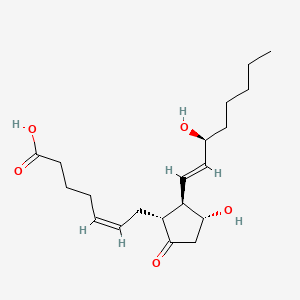
Prostaglandin E2 (PGE2) is a bioactive lipid mediator belonging to the prostaglandin family of eicosanoids, biosynthesized from arachidonic acid through the sequential actions of phospholipase A2 and Cyclooxygenase 2 (COX-2). It is one of the most widely studied and pleiotropic of all prostanoid signaling molecules, playing central roles in the regulation of inflammation, pain sensitization, fever, immune modulation, and vascular tone. PGE2 exerts its effects by binding to four G-protein-coupled receptor subtypes (EP1–EP4), enabling context-dependent downstream signaling that can either promote or resolve inflammatory responses depending on tissue and cellular environment. Elevated PGE2 production is a hallmark of acute and chronic inflammatory states, and its measurement in biological fluids and tissues serves as a widely accepted biomarker of inflammatory activity.
Beyond classical inflammation, PGE2 occupies a critical role at the interface of immunity and oncology. Within the tumor microenvironment, PGE2 functions as a potent immunosuppressive mediator, dampening antitumor immune responses alongside factors such as vascular endothelial growth factor A (VEGFA) and Interleukin-6 (IL-6). Its involvement in oxidative stress signaling, including cross-talk with nuclear factor erythroid 2-related factor 2 (Nrf2) and nuclear factor kappa B (NF-κB) pathways, further positions it as a convergence point for inflammatory and redox regulation across multiple disease contexts. Therapeutic strategies targeting PGE2 biosynthesis — most prominently through COX-2 inhibition — remain among the most clinically deployed anti-inflammatory interventions in medicine.
Where the papers sit
11 papers from the last 6 months study Prostaglandin E2 directly · updated from PubMed 3 Oct 2026
Study type 0 clinical trials · 1 observational · 10 preclinical
Themes no clear themes · 1 new direction
Those 11 do not share a common subject.
-
Prostaglandin signaling recurs across unrelated questions in cancer immunity, bone and renal aging, neuropathy, skin disease, alopecia, autism biomarkers, and heterotopic ossification. Some studies examine COX-2/PGE2 as a therapeutic target, while others treat prostaglandins as biomarkers or physiological mediators. The interventions range from celecoxib and natural inhibitors to nanocarriers and dietary lipids. No unified biological direction emerges from this heterogeneous set.
PGE2 is presented as a hair-growth-promoting signal rather than solely a pathological or immunosuppressive mediator
Androgenetic alopecia treated with cetirizine is the subject of the study, which proposes that increasing PGE2 expression may promote hair growth and evaluates targeted transferosomal delivery as a treatment strategy 42030261Apr. Whereas the other papers use PGE2 chiefly as a mediator or marker of inflammation, tissue injury, immune suppression, tumor progression, or treatment resistance, this paper assigns it a trophic role in hair-follicle growth. This shifts PGE2 from a target to be suppressed toward a signal that may be therapeutically enhanced in a regenerative application.
Papers
The 11 papers from the last 6 months that study Prostaglandin E2 directly, newest first, by theme and by study type. Study types come from PubMed publication types and MeSH headings.
By theme
No clear themes (11)
- Chronic type II interferon promotes tumor growth through mitochondrial RNA-induced type I interferon and prostaglandin synthesis. Science (New York, N.Y.) · 10 Sept 2026 PMID 42721225
- The alpha and the omega (6 lipids): discovering dietary drivers of heterotopic ossification. The Journal of clinical investigation · 1 Sept 2026 PMID 42677832
- PGE2-mediated NK cell reprogramming drives acquired immunotherapy resistance in lung adenocarcinoma. Journal for immunotherapy of cancer · 12 Aug 2026 PMID 42586608
- Hijacking radiotherapy-induced chemokines with self-assembled molecular decoys for glioblastoma radio-immunotherapy. Journal of controlled release : official journal of the Controlled Release Society · 2 Jul 2026 PMID 42392408
- Podocyte mPGES-2 Determines Renal Aging and Contributes to Senile Osteoporosis. Aging cell · 25 Jun 2026 PMID 42347750
- Using combined ROC curves to improve the diagnostic usefulness of glutaminase, prostaglandins, and 8-isoprostane as biomarkers of autism spectrum disorders;Role in the Glu-GABA-Gln cycle. BMC neuroscience · 25 Jun 2026 PMID 42343199
- A Comparative Study of Mesenchymal Stem Cell Derived From Human Embryonic Stem Cell-derived Mesenchymal Stem Cells Through a Trophoblast-like Stage and Bone Marrow-derived Mesenchymal Stem Cells in Treating Acute Xenogeneic Graft-versus-host Disease in Humanized Mice. Transplantation · 9 Jun 2026 PMID 42260632
- A natural COX-2 inhibitor-integrated nanoplatform for TNBC immunotherapy: Mn-PC-PTX synergizes chemotherapy and immune activation. Colloids and surfaces. B, Biointerfaces · 8 May 2026 PMID 42102776
- Protection of skin from UVB-induced photoaging: Antioxidant and anti-inflammatory effects of avenanthramide C from oat sprout extract via suppression of MAPK pathways. Journal of photochemistry and photobiology. B, Biology · 8 May 2026 PMID 42102478
- Celecoxib Mitigates Paclitaxel-Induced Peripheral Neuropathy Through Modulation of the COX-2/PGE2 Pathway in Rats. FASEB journal : official publication of the Federation of American Societies for Experimental Biology · 28 Apr 2026 PMID 42048120
- Targeted transferosomal delivery of cetirizine: A new approach to alopecia management. PloS one · 24 Apr 2026 PMID 42030261
By study type
Observational studies and case reports (1)
- Using combined ROC curves to improve the diagnostic usefulness of glutaminase, prostaglandins, and 8-isoprostane as biomarkers of autism spectrum disorders;Role in the Glu-GABA-Gln cycle. BMC neuroscience · 25 Jun 2026 PMID 42343199
Preclinical: animal, cell and lab studies (10)
- Chronic type II interferon promotes tumor growth through mitochondrial RNA-induced type I interferon and prostaglandin synthesis. Science (New York, N.Y.) · 10 Sept 2026 PMID 42721225
- The alpha and the omega (6 lipids): discovering dietary drivers of heterotopic ossification. The Journal of clinical investigation · 1 Sept 2026 PMID 42677832
- PGE2-mediated NK cell reprogramming drives acquired immunotherapy resistance in lung adenocarcinoma. Journal for immunotherapy of cancer · 12 Aug 2026 PMID 42586608
- Hijacking radiotherapy-induced chemokines with self-assembled molecular decoys for glioblastoma radio-immunotherapy. Journal of controlled release : official journal of the Controlled Release Society · 2 Jul 2026 PMID 42392408
- Podocyte mPGES-2 Determines Renal Aging and Contributes to Senile Osteoporosis. Aging cell · 25 Jun 2026 PMID 42347750
- A Comparative Study of Mesenchymal Stem Cell Derived From Human Embryonic Stem Cell-derived Mesenchymal Stem Cells Through a Trophoblast-like Stage and Bone Marrow-derived Mesenchymal Stem Cells in Treating Acute Xenogeneic Graft-versus-host Disease in Humanized Mice. Transplantation · 9 Jun 2026 PMID 42260632
- A natural COX-2 inhibitor-integrated nanoplatform for TNBC immunotherapy: Mn-PC-PTX synergizes chemotherapy and immune activation. Colloids and surfaces. B, Biointerfaces · 8 May 2026 PMID 42102776
- Protection of skin from UVB-induced photoaging: Antioxidant and anti-inflammatory effects of avenanthramide C from oat sprout extract via suppression of MAPK pathways. Journal of photochemistry and photobiology. B, Biology · 8 May 2026 PMID 42102478
- Celecoxib Mitigates Paclitaxel-Induced Peripheral Neuropathy Through Modulation of the COX-2/PGE2 Pathway in Rats. FASEB journal : official publication of the Federation of American Societies for Experimental Biology · 28 Apr 2026 PMID 42048120
- Targeted transferosomal delivery of cetirizine: A new approach to alopecia management. PloS one · 24 Apr 2026 PMID 42030261
Written from 11 PubMed abstracts, each one listed by PMID above. Published: 2026-06-15. Last written: 2026-09-12 by GPT. Drafted by language models from published abstracts; not medical advice.