L-glutamine
L-glutamine is the biologically active L-enantiomer of glutamine, a proteinogenic amino acid and one of the most abundant free amino acid in human tissues and circulation.
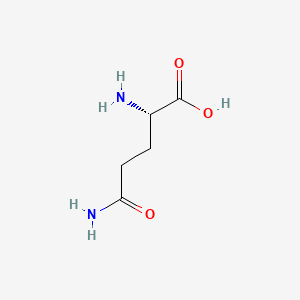
L-glutamine is the biologically active L-enantiomer of glutamine, a proteinogenic amino acid and one of the most abundant free amino acid in human tissues and circulation. It serves as a key nitrogen donor in intermediary metabolism and supports multiple cellular processes, including amino acid biosynthesis, nucleotide synthesis, redox balance, and energy metabolism. Because of these roles, L-glutamine is often described as a conditionally essential amino acid, particularly during physiological stress, illness, or rapid growth.
In biomedical research, L-glutamine is frequently studied in relation to mitochondrial function, immune and intestinal metabolism, and amino-acid–dependent signaling. Recent work has also linked glutamine availability to disease-relevant metabolic rewiring, including cancer metastasis, muscle and joint metabolism, and neuro-metabolic changes. In these contexts, glutamine intersects with pathways involving mitochondrion function, Glutamic acid, tryptophan, and broader amino acid networks, and it may be influenced by interventions such as semaglutide, fluoxetine, butyric acid, or engineered microbial therapies.
Where the papers sit
9 papers from the last 6 months study l-glutamine directly · updated from PubMed 27 Sept 2026
Study type 0 clinical trials · 2 observational · 1 human data · 5 preclinical · 1 unclassified
Themes no clear themes · 1 paradigm shift · 2 new directions
Those 9 do not share a common subject.
-
Glutamine appears across studies of macrophage function, cancer metabolism, chemotherapy-associated diarrhea, radiotherapy nutrition, muscle mitochondria, and hepatic encephalopathy. Mechanistic work links SLC1A5 transport and metabolic reprogramming to senescence, efferocytosis, invasion, and stress responses. Other contributions address supplementation, engineered probiotics, conference-level oncology strategies, or nanopore technology rather than a shared biological question. The cluster therefore supports no coherent direction beyond broad interest in glutamine-related biology and treatment.
Glutamine metabolism is a macrophage-state control point rather than a uniformly beneficial nutrient
The partial-hepatectomy mouse model of liver regeneration and the oxidative-stress-, cisplatin-, and radiation-induced senescent-macrophage model of squamous cell carcinoma invasion show that glutamine handling can determine macrophage state and disease outcome, rather than simply supply a beneficial metabolic substrate 42678502Sep 42333921Jun. In liver regeneration, loss of macrophage SLC1A5 depletes intracellular glutamine, induces senescence and inflammation, reduces Gas6-dependent efferocytosis, and impairs hepatocyte proliferation; in squamous cell carcinoma, glutaminase-2-driven glutaminolysis in senescent macrophages increases IL-1β and promotes tumor invasion. Together, these findings replace a generic nutrient-support model with a context-dependent one in which macrophage glutamine metabolism is a therapeutic control point whose direction of manipulation must be determined by the macrophage state and disease.
L-glutamine is used as a single-molecule recognition target in an engineered biological nanopore
The ClyA nanopore and substrate-binding-domain protein system for single-molecule monitoring assigns L-glutamine a physical measurement role outside the set’s nutritional and disease-metabolism frameworks 42328825Jun. Instead of supplying cells, regulating metabolism, or serving as a therapeutic supplement, glutamine is the molecule whose recognition and conformationally dependent current signal are optimized by nanopore engineering, including a threefold signal amplification through tryptophan substitutions. This makes L-glutamine an analyte for real-time single-molecule sensing.
L-glutamine is treated as a toxic gut-liver-brain-axis metabolite to be neutralized
The engineered multi-strain bacterial cocktail for hepatic encephalopathy gives L-glutamine a pathogenic role that differs from the set’s usual use of it as a nutrient or metabolic support 42269583Jun. The therapy is described as simultaneously neutralizing ammonia and L-glutamine while replenishing essential amino acids, so the intervention seeks to remove glutamine rather than provide it or enhance its availability. This reframes glutamine as a target toxin in a microbiome-based treatment for cirrhosis-associated neuroinflammation.
Papers
The 9 papers from the last 6 months that study l-glutamine directly, newest first, by theme and by study type. Study types come from PubMed publication types and MeSH headings.
By theme
No clear themes (9)
- Solute Carrier Family 1 Member 5 (SLC1A5)-dependent glutamine transport regulates macrophage senescence and efferocytosis during liver regeneration. Molecular biomedicine · 1 Sept 2026 PMID 42678502
- The Preventive Effect of Introducing Glutamine on Chemotherapy-Induced Diarrhea in Colorectal Cancer and Its Influence on Inflammatory Factors Such as CRP and IL-6. Molecular nutrition & food research · 30 Jul 2026 PMID 42529890
- Forging New Pathways in Oncology: Strategic Insights from the 17th Annual Frontiers in Cancer Science Conference. Cancer research · 2 Jul 2026 PMID 42388021
- Outcomes of Supplementation With β-Hydroxy-β-methylbutyrate, Arginine, and Glutamine During Carbon-ion Radiotherapy for Head and Neck Cancer: A Prospective Exploratory Study. In vivo (Athens, Greece) · 30 Jun 2026 PMID 42379751
- Oxidative Stress Induced Senescent Macrophage-Driven Squamous Cell Carcinoma Invasion via Glutamine Metabolic Reprogramming. Aging cell · 23 Jun 2026 PMID 42333921
- Engineering a Biological Nanopore for Monitoring Protein Dynamics and Conformational Changes at the Single-Molecule Level. ACS nano · 22 Jun 2026 PMID 42328825
- Semaglutide targets muscle mitochondria to regulate glutamine metabolism and treat osteoarthritis. iScience · 17 Jun 2026 PMID 42305583
- Engineered probiotic for hepatic encephalopathy. Cell host & microbe · 10 Jun 2026 PMID 42269583
- Stress Tested: Aging Rewires Tumors for Metastatic Spread through Activation of the Integrated Stress Response. Cancer research · 21 Apr 2026 PMID 42013364
By study type
Observational studies and case reports (2)
- The Preventive Effect of Introducing Glutamine on Chemotherapy-Induced Diarrhea in Colorectal Cancer and Its Influence on Inflammatory Factors Such as CRP and IL-6. Molecular nutrition & food research · 30 Jul 2026 PMID 42529890
- Outcomes of Supplementation With β-Hydroxy-β-methylbutyrate, Arginine, and Glutamine During Carbon-ion Radiotherapy for Head and Neck Cancer: A Prospective Exploratory Study. In vivo (Athens, Greece) · 30 Jun 2026 PMID 42379751
Human data, design not indexed (1)
- Forging New Pathways in Oncology: Strategic Insights from the 17th Annual Frontiers in Cancer Science Conference. Cancer research · 2 Jul 2026 PMID 42388021
Preclinical: animal, cell and lab studies (5)
- Solute Carrier Family 1 Member 5 (SLC1A5)-dependent glutamine transport regulates macrophage senescence and efferocytosis during liver regeneration. Molecular biomedicine · 1 Sept 2026 PMID 42678502
- Oxidative Stress Induced Senescent Macrophage-Driven Squamous Cell Carcinoma Invasion via Glutamine Metabolic Reprogramming. Aging cell · 23 Jun 2026 PMID 42333921
- Engineering a Biological Nanopore for Monitoring Protein Dynamics and Conformational Changes at the Single-Molecule Level. ACS nano · 22 Jun 2026 PMID 42328825
- Engineered probiotic for hepatic encephalopathy. Cell host & microbe · 10 Jun 2026 PMID 42269583
- Stress Tested: Aging Rewires Tumors for Metastatic Spread through Activation of the Integrated Stress Response. Cancer research · 21 Apr 2026 PMID 42013364
Unclassified: not yet indexed with MeSH (1)
- Semaglutide targets muscle mitochondria to regulate glutamine metabolism and treat osteoarthritis. iScience · 17 Jun 2026 PMID 42305583
Written from 9 PubMed abstracts, each one listed by PMID above. Published: 2026-06-24. Last written: 2026-09-03 by GPT. Drafted by language models from published abstracts; not medical advice.