cisplatin
Overview
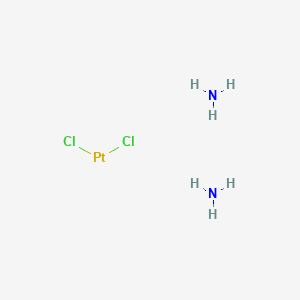
Cisplatin (cis-diamminedichloroplatinum(II); CDDP) is a platinum-based cytotoxic chemotherapy drug and one of the foundational agents in medical oncology. Approved for clinical use in the late 1970s, it is administered intravenously and remains a standard component of regimens for testicular, ovarian, bladder and urothelial, lung, head and neck, and cervical Cancers. After entering cells, the chloride ligands are displaced by water, producing a reactive aquated complex that binds genomic DNA and forms intra- and interstrand crosslinks, preferentially at adjacent guanine residues. These adducts distort the DNA helix, stall replication and transcription, and activate the DNA damage response, culminating in cell cycle arrest and apoptosis; TP53 status and signaling through the PI3K/Akt pathway are among the determinants of how strongly a tumor cell commits to that death program. Although often grouped with alkylating agents because it produces DNA crosslinks, cisplatin is chemically distinct from classical alkylators and acts independently of cell cycle phase. In practice it is rarely used alone, and is combined with gemcitabine, fluorouracil, doxorubicin, methotrexate, paclitaxel, radiation therapy, or immune checkpoint inhibitors such as pembrolizumab, nivolumab, and durvalumab, and it serves as the comparator against which newer regimens such as enfortumab vedotin plus pembrolizumab are measured.
Two problems constrain cisplatin's use: dose-limiting toxicity — nephrotoxicity, ototoxicity, myelosuppression, peripheral neuropathy, and severe emesis — and intrinsic or acquired resistance. Resistance mechanisms studied in tumor cells include elevated intracellular glutathione and other thiol-mediated drug inactivation, enhanced DNA repair capacity, and evasion of regulated cell death. Because cisplatin generates reactive oxygen species and perturbs redox and metal homeostasis, its activity intersects with non-apoptotic death pathways, notably ferroptosis, where GPX4 and labile iron govern lipid peroxidation, and suppressing ferroptosis defenses can resensitize resistant tumors. Related work explores combination with PARP inhibitors such as olaparib in DNA-repair-deficient tumors, and nanoparticle and micelle formulations that raise platinum loading and direct drug to tumor tissue in order to widen the therapeutic window. Parallel medicinal chemistry efforts develop alternative platinum(II) and other metal complexes intended to retain cytotoxicity, act through mechanisms other than direct DNA targeting, and remain effective in cisplatin-resistant cells.
New Publications Today (1)
- PMID 42601691 — Postoperative cutaneous metastasis of breast cancer with phenotypic conversion to triple-negative subtype: A case report.
Recent Publications Summary (latest 30 papers)
Recent investigations have focused extensively on mechanisms underlying cisplatin resistance across multiple cancer types, with studies identifying key molecular drivers and strategies to overcome therapeutic resistance. Sphingomyelin synthase 1 (SMS1) expression was selectively induced by cisplatin and its overexpression protected cells against drug-induced apoptosis, while SMS1 silencing enhanced chemotherapy sensitivity in ovarian cancer 42593674Aug. In cervical cancer, secreted phosphoprotein 1 (SPP1) was identified as a hub gene that promoted cisplatin resistance through KRAS modulation, and SPP1 silencing restored drug sensitivity 42507688Jul. The transcription factor DLX6 was found to suppress ferroptosis through GPX4 regulation, and DLX6 inhibition triggered ferroptosis while sensitizing lung adenocarcinoma cells to cisplatin 42455236Jul. In breast cancer, the synaptonemal complex protein SYCP1 was aberrantly expressed and promoted DNA repair and cell cycle progression; loss of SYCP1 impaired DNA repair kinetics and increased chemotherapy sensitivity 42418586Jul. RUNX2-mediated suppression of ferroptosis via the YAP1/GLS1 axis enhanced cisplatin resistance in ovarian cancer, while RUNX2 palmitoylation by ZDHHC14 was required for this protective effect 42149203May. Simvastatin synergistically enhanced cisplatin efficacy in resistant cervical cancer by suppressing caveolin-1-mediated PI3K/AKT signaling 42087353May. A novel Mcl-1 inhibitor (N5) demonstrated potent activity in Mcl-1-dependent ovarian cancer and exhibited synergistic effects with cisplatin to overcome drug resistance 42084733May. Traditional Chinese medicine approaches showed promise, as the Zuo Jin Wan formula reversed cisplatin resistance in gastric cancer by inhibiting DRP1-mediated mitochondrial fission and mitophagy through suppression of AMPK signaling 42522679Jul. In esophageal squamous cell carcinoma, cryptotanshinone suppressed tumor metastasis when combined with cisplatin by inhibiting macrophage polarization 42070315May. Comprehensive bioinformatics analysis identified exosome complex (EXOSC) family members—particularly EXOSC2, EXOSC3, and EXOSC5—as prognostically informative markers associated with inferior survival and advanced clinicopathological features 42171853May.
Advanced drug delivery systems have emerged as a major strategy to improve cisplatin efficacy while reducing toxicity. Amifostine-loaded hollow silica nanoparticles (SiNPs@AMF) demonstrated nephroprotective effects when administered prophylactically prior to cisplatin, reducing inflammatory and extracellular matrix biomarkers of kidney injury 42530708Jul. A syringeable hyaluronic acid-based hydrogel co-loaded with cisplatin and the STING agonist MSA-2 enabled sustained local release and synergistic STING-pathway activation, significantly inhibiting ovarian tumor growth without systemic toxicity 42456758Jul. Immunoregulatory dendritic lipopeptides were engineered to enhance cisplatin loading via platinum coordination; the optimized formulation showed superior therapeutic efficacy compared to conventional liposomes and demonstrated synergistic effects when combined with STING agonists through enhanced dendritic cell maturation and cytotoxic T lymphocyte infiltration 42444257Jul. A polysaccharide-based dynamic organic nanocomposite hydrogel featuring crosslinked cisplatin nano-prodrugs within pH-responsive matrices enabled deep tissue penetration and tumor-microenvironment-triggered drug release, producing complete tumor suppression through synergistic cisplatin-demethylcantharidin interactions 42230041Jun. In osteosarcoma, liposomal encapsulation of a novel ruthenium organometallic compound provided a safer alternative to cisplatin for both drug-resistant and parental tumor models 42116576May. Azole-platinum(II) complexes formulated in Pluronic micelles showed reduced glutathione reactivity and altered lipophilicity compared to free cisplatin 42390168Jul, while ONS-tridentate platinum(II) complexes demonstrated strong DNA-binding interactions with ligand-dependent cytotoxic activity 42333610Jun.
Combination therapeutic strategies have demonstrated synergistic antitumor effects across diverse cancer models. An aqueous extract of Artemisia vulgaris L. showed synergistic cytotoxic interactions with cisplatin in lung cancer cells, with mechanistic studies implicating apoptosis and autophagy pathways 42581353Aug. Ginsenoside Rg3 co-treatment with cisplatin enhanced apoptosis in lung cancer cells and tumor tissues through caspase-3/9 and p53 activation while simultaneously suppressing NLRP3 inflammasome-mediated nephrotoxicity via SIRT1-dependent mechanisms 42169649May. Phytocannabinoids (Δ9-tetrahydrocannabinol and cannabidiol) were evaluated in combination with cisplatin for effects on cell proliferation, cell cycle progression, and DNA damage in cervical cancer 42055476Apr. A biweekly divided-dose docetaxel-cisplatin-5-fluorouracil regimen was developed for esophageal squamous cell carcinoma to improve tolerability while maintaining dose intensity; the regimen achieved grade ≥3 adverse events in 44.4% of patients with adequate surgical outcomes 42527061Jul. Synergistic activity was observed between methionine restriction and low-dose cisplatin in experimental lung cancer bone metastasis models 42379791Jun. A triple-negative breast cancer patient with cutaneous metastasis and HER2 phenotypic conversion was treated with gemcitabine plus cisplatin combined with the PD-L1 inhibitor envafolimab 42601691Aug. enfortumab vedotin plus pembrolizumab emerged as preferred first-line treatment for metastatic urothelial carcinoma, though gemcitabine plus cisplatin remains an established comparator 42384383Jul.
Clinical monitoring and adverse effect management have been refined to optimize cisplatin-based therapy outcomes. Chemotherapy-induced anemia was identified as an independent prognostic factor for overall survival in muscle-invasive bladder cancer patients undergoing neoadjuvant cisplatin-based chemotherapy 42132947May. Body weight monitoring during cisplatin treatment showed clinical utility as an alternative indicator of fluid balance and acute kidney injury risk, reducing occupational exposure hazards compared to traditional urine collection 42049447Apr. Sodium thiosulfate administration demonstrated potential for preventing acute kidney injury in ovarian cancer patients receiving hyperthermic intraperitoneal chemotherapy with cisplatin 42047121Apr. A transcriptome-based deep learning model was developed and externally validated to predict gemcitabine and cisplatin chemotherapy response in urothelial carcinoma, offering a precision medicine approach to minimize unnecessary toxicity 42055629Apr. Additionally, a half-sandwich iridium(III) metallodrug showed promise as a non-DNA-targeted cisplatin alternative that disrupts nucleolar, mitochondrial, and lysosomal homeostasis to overcome resistance while sparing normal cells 42300762Jun.
What Changes, What Holds
1. SMS1, SPP1, and RUNX2 are now targetable determinants of cisplatin resistance
REINFORCES SMS1, SPP1, DLX6, SYCP1, and RUNX2 mediate evasion 42593674Aug42507688Jul, exemplifying thiol-mediated inactivation, enhanced DNA repair, and suppressed death the Overview already describes. ferroptosis suppression via DLX6 and RUNX2 confirms that pathway as a resistance node already flagged for targeting. These genes deepen established understanding rather than displace it.
2. STING-agonist hydrogels and non-platinum metals achieve immunotherapy and alternative mechanisms
NEW DIRECTION Cisplatin-STING hydrogels 42456758Jul and dendritic-lipopeptide formulations 42444257Jul integrate immune activation into drug delivery—synergy absent from the Overview's focus on "platinum loading and tumor targeting." Ruthenium and ONS-platinum(II) complexes move outside platinum chemistry, realizing the "other metal complexes" the Overview mentions as hoped-for development.
3. enfortumab vedotin-pembrolizumab becomes preferred to cisplatin-gemcitabine first-line
REINFORCES Artemisia, ginsenoside, and methionine restriction paired with cisplatin 42581353Aug42169649May confirm cisplatin's "rarely used alone" principle. Emergence of enfortumab-pembrolizumab as preferred first-line 42384383Jul refines the landscape but does not overturn cisplatin-gemcitabine as established standard.
4. Sodium thiosulfate prevents cisplatin nephrotoxicity; anemia predicts survival
NEW DIRECTION Anemia as prognostic marker 42132947May and sodium thiosulfate nephroprotection 42047121Apr establish prospective management strategies the Overview does not address, despite naming nephrotoxicity as dose-limiting. A half-sandwich iridium(III) metallodrug 42300762Jun exemplifies non-DNA-targeting alternatives the Overview expects.
Overview update candidates: STING-integrated immunoformulations; sodium thiosulfate nephroprotection; anemia as prognostic marker; SMS1, SPP1, DLX6, SYCP1, RUNX2 as actionable resistance drivers.
cisplatin
Background Contexts
In the literature, the biological baseline, pathological conditions, or disease models commonly surrounding cisplatin are described as follows:
- muscle-invasive bladder cancer (Disease) — 8 papers: PMIDs 42485627, 42212670, 42190158, 42132947, etc.
- ovarian cancer (Disease) — 7 papers: PMIDs 42593674, 42484766, 42456758, 42149203, etc.
- triple-negative breast cancer (Disease) — 6 papers: PMIDs 42601691, 42305027, 42229377, 42104585, etc.
- acute kidney injury (Disease) — 5 papers: PMIDs 42435348, 42400592, 42049447, 41967274, etc.
- bladder cancer (Disease) — 5 papers: PMIDs 42504569, 42479258, 42435244, 42055629, etc.
- Biliary Tract Cancer (Disease) — 4 papers: PMIDs 42524843, 42407195, 42026958, 41627846
- chemotherapy (Therapy) — 4 papers: PMIDs 42530708, 42522679, 42305027, 42259411
- lung cancer (Disease) — 4 papers: PMIDs 42581353, 42474358, 42379791, 42169649
- adenocarcinoma of the lung (Disease) — 3 papers: PMIDs 42455236, 42171853, 41662930
- ferroptosis (Biological Process) — 3 papers: PMIDs 42455236, 42435348, 42435244
- Mortality (Clinical Metric) — 3 papers: PMIDs 42522679, 42507688, 42504569
- breast cancer (Disease) — 2 papers: PMIDs 42601691, 42229377
Methodologies & Technologies Used
Researchers utilize the following experimental methods, imaging platforms, computational models, or biological reagents to study cisplatin:
- western blot (Technology) — 5 papers: PMIDs 42507688, 42458720, 42423804, 42229377, etc.
- flow cytometry (Technology) — 4 papers: PMIDs 42527078, 42458720, 42229377, 42070315
- gemcitabine (Therapy) — 4 papers: PMIDs 42524843, 42407195, 42212670, 42026958
- A-549 (Cell Line) — 3 papers: PMIDs 42587008, 42581353, 42474358
- cell viability (Clinical Metric) — 3 papers: PMIDs 42581353, 42527078, 42423804
- durvalumab (Therapy) — 3 papers: PMIDs 42524843, 42407195, 42053502
- hyaluronic acid (Chemical) — 3 papers: PMIDs 42456758, 42435348, 42259411
- immunohistochemistry (Technology) — 3 papers: PMIDs 42378954, 42229377, 42171853
- MCF-7 (Disease) — 3 papers: PMIDs 42587008, 42333610, 42229377
- molecular docking (Technology) — 3 papers: PMIDs 42581353, 42229377, 42070315
- MTT assay (Technology) — 3 papers: PMIDs 42587008, 42527078, 42484766
- NMRI mice (Organism) — 3 papers: PMIDs 42149203, 42070315, 41662930
Molecular Interventions & Targets
The primary molecular pathways, regulatory genes, enzymes, or therapeutic agents actively targeted and manipulated in relation to cisplatin include:
- gemcitabine (Therapy) — 6 papers: PMIDs 42601691, 42418586, 42384383, 42055629, etc.
- enfortumab vedotin (Therapy) — 4 papers: PMIDs 42485627, 42384383, 41774881, 41707170
- pembrolizumab (Therapy) — 4 papers: PMIDs 42485627, 42384383, 41730003, 41707170
- durvalumab (Therapy) — 3 papers: PMIDs 42190158, 42053502, 41678313
- immunotherapy (Therapy) — 3 papers: PMIDs 41987345, 41869709, 41774881
- fluorouracil (Therapy) — 2 papers: PMIDs 42527061, 41757489
- nivolumab (Therapy) — 2 papers: PMIDs 41690301, 41627171
- PI3K/Akt signaling pathway (Pathway) — 2 papers: PMIDs 42087353, 42049890
- platinum-based chemotherapy (Therapy) — 2 papers: PMIDs 42593674, 41987345
- Yes-associated protein 1 (YAP1) (Protein) — 2 papers: PMIDs 42149203, 41980058
- 2i (Chemical) — 1 paper: PMIDs 41944661
- 2K (Other) — 1 paper: PMIDs 41944661
Observed Outcomes & Phenotypes
The phenotypic changes, physiological endpoints, or clinical metrics observed and measured in connection with cisplatin include:
- apoptotic process (Biological Process) — 15 papers: PMIDs 42507688, 42495756, 42484766, 42435348, etc.
- overall survival (Clinical Metric) — 8 papers: PMIDs 42532979, 42527077, 42524843, 42498484, etc.
- cytotoxicity (Clinical Metric) — 7 papers: PMIDs 42581353, 42560575, 42507688, 42484766, etc.
- oxidative stress (Biological Process) — 6 papers: PMIDs 42593674, 42407195, 42400592, 42190158, etc.
- reactive oxygen species (Chemical) — 6 papers: PMIDs 42435348, 42002049, 41992775, 41980058, etc.
- ferroptosis (Biological Process) — 5 papers: PMIDs 42495756, 42305027, 42149203, 41992775, etc.
- progression-free survival (Clinical Metric) — 5 papers: PMIDs 42527077, 42524843, 42498484, 42407195, etc.
- Cisplatin Resistance (Other) — 4 papers: PMIDs 42507688, 42504569, 42474358, 41475977
- IC50 (Clinical Metric) — 4 papers: PMIDs 42587008, 42581353, 42560575, 42479258
- TP53 (Gene) — 4 papers: PMIDs 42484766, 42474532, 42458720, 42169649
- tumor cell proliferation (Clinical Metric) — 4 papers: PMIDs 42455236, 42418586, 42300762, 42087353
- Apoptosis (Biological Process) — 3 papers: PMIDs 42587008, 42581353, 42230041
General Takeaways & Clinical Potentials
The high-level concepts, clinical translations, and overarching conclusions proposed in the research surrounding cisplatin are summarized below:
- Cisplatin Resistance (Other) — 4 papers: PMIDs 42479258, 42423804, 42085841, 41992775
- chemoresistance (Biological Process) — 2 papers: PMIDs 42495756, 42484766
- inflammation (Biological Process) — 2 papers: PMIDs 42530708, 42435348
- lysosomal homeostasis (Biological Process) — 2 papers: PMIDs 42593674, 42300762
- ovarian cancer (Disease) — 2 papers: PMIDs 42484766, 42456758
- oxidative stress (Biological Process) — 2 papers: PMIDs 42435348, 41980058
- pathologic complete response (Clinical Metric) — 2 papers: PMIDs 41774881, 41678313
- tumor microenvironment (Biological Process) — 2 papers: PMIDs 42070315, 41662930
- 40 Gy CCRT regimen (Therapy) — 1 paper: PMIDs 41628317
- 5-gene predictive model (Gene) — 1 paper: PMIDs 41662930
- 96.6% success rate (Clinical Metric) — 1 paper: PMIDs 42050839
- Acetylcholine Receptor Antibodies (Protein) — 1 paper: PMIDs 42601737