melatonin
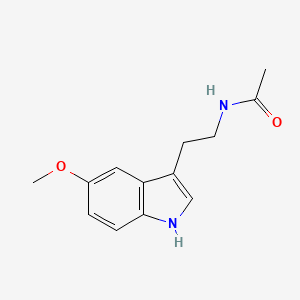
Overview
Melatonin is an indoleamine best known as a regulator of circadian rhythms and sleep-wake timing, but it is also studied as a pleiotropic bioactive molecule with antioxidant, anti-inflammatory, and mitochondria-modulating properties. In biomedical research, it is frequently discussed as a therapeutic candidate rather than only as an endogenous hormone, particularly in contexts where oxidative stress, inflammation, metabolic dysfunction, and mitochondrial injury contribute to disease.
Recent work has examined melatonin across a broad range of conditions, including type 2 diabetes, polycystic ovary syndrome, osteoporosis, pulmonary arterial hypertension, metabolic syndrome-associated tissue injury, Parkinson’s disease-related biomarker patterns, and age-related ovarian and stem-cell dysfunction. Mechanistically, these studies place melatonin in pathways involving Sirtuin 1 (SIRT1), NRF2, mitophagy, mitochondrial fission, RANKL/OPG signaling, and inflammatory mediators such as interleukin-6 and tumour necrosis factor-α. It has also been considered alongside other agents such as quercetin, resveratrol, sirolimus, cholecalciferol, ubidecarenone, and Insulin Therapy in translational and preclinical settings.
Recent Publications Summary
Recent studies have investigated melatonin across multiple disease models and therapeutic contexts, emphasizing its dual roles as both an antioxidant and anti-inflammatory agent. In periodontitis treatment, a dual drug-loaded hydrogel system combining minocycline and melatonin demonstrated sustained release over 10 days with good biocompatibility, reducing biofilm formation and pro-inflammatory cytokines while scavenging reactive oxygen species 42560526Aug. Similarly, in the context of metabolic syndrome complicated by periodontal disease, melatonin administration attenuated hyperglycemia, dyslipidemia, hepatic injury, and periodontal destruction by reducing NLRP3 inflammasome expression and enhancing IL-10 levels 42154263May.
Melatonin's effects on bone metabolism and osteogenic differentiation have been explored across multiple conditions. In osteoporosis models, melatonin regulated osteoblast differentiation through the RANKL/OPG signaling axis and improved bone strength in ovariectomized mice 42023609Apr. Under hyperglycemic conditions, melatonin enhanced osteogenic differentiation of bone marrow mesenchymal stem cells by activating the NRF2-autophagy pathway 42096091May. In polycystic ovary syndrome, melatonin ameliorated mitochondrial dysfunction in granulosa cells by suppressing Drp1-mediated excessive mitochondrial fission through SIRT1 upregulation 41949882Apr. Additionally, melatonin mitigated senescence in adipose-derived mesenchymal stem cells by restoring mitophagy and mitochondrial proteostasis, reducing Mitochondrial ROS and lipid peroxidation 42054487Apr.
Melatonin demonstrated neuroprotective and neurological benefits in multiple models. In aluminum chloride-induced Alzheimer's disease in rats, melatonin's antioxidant and anti-inflammatory properties ameliorated cognitive decline and neuroinflammation 42384283Jul. In a pilocarpine-induced seizure-like model using zebrafish larvae, lower melatonin concentrations (2.25–4.50 µg/mL) reduced hyperlocomotion, increased latency to seizure onset, and decreased reactive oxygen species levels in a concentration-dependent manner 42493757Jul. Melatonin appeared as a potential metabolite biomarker in stratifying heterogeneous presentations of Parkinson's disease 42014729Apr, and bright light therapy's effects on anhedonia in depression were associated with melatonin peak phase shifts 41785919Mar.
Hepatic protection by melatonin was demonstrated in diabetic models, where melatonin alone or combined with quercetin reduced oxidative stress markers, pro-inflammatory cytokines including IL-6 and TNF-α, and liver enzyme elevations 42021540Apr. In pulmonary arterial hypertension, melatonin exhibited comparable antioxidant and anti-inflammatory effects to sildenafil, reducing oxidative/nitrosative stress and supporting mitochondrial biogenesis in the right ventricle 41679692Feb. However, emerging evidence indicates potential metabolic concerns: melatonin impaired glucose tolerance and reduced early-phase insulin secretion in a randomized controlled trial, with stronger effects in carriers of the MTNR1B diabetes risk variant 42346809Jun. Recent innovations in drug delivery, including dissolving microneedles and nasal delivery of a melatonin analog (MT-A2), have been designed to improve bioavailability and overcome first-pass metabolism 42306921Jun41941324Apr. Additionally, a large electronic health record study raised a safety signal regarding long-term melatonin use and heart failure risk in adults with insomnia, warranting cautious clinical evaluation 42167796May.
What Changes, What Holds
1. Periodontal disease responds to melatonin's anti-inflammatory pathway in metabolic syndrome
NEW DIRECTION Periodontitis emerges as a condition where melatonin reduces both local inflammation and systemic metabolic dysfunction, through NLRP3 inflammasome downregulation and IL-10 elevation 42154263May. Periodontal disease was not previously identified as a melatonin target in the established evidence base, though the anti-inflammatory mechanism aligns with known pathways. A dual melatonin-minocycline hydrogel has also been developed for sustained local delivery 42560526Aug.
2. Mitochondrial and bone-metabolism pathways confirm established mechanisms across osteoporosis and reproductive dysfunction
REINFORCES Studies in osteoporosis, hyperglycemic osteogenesis, PCOS, and senescent stem cells confirm antioxidant and mitochondrial-remodeling mechanisms already noted in the Overview: NRF2-autophagy activation in osteogenic differentiation 42096091May and mitophagy restoration in senescence 42054487Apr, alongside RANKL/OPG and SIRT1-Drp1 suppression. No new mechanism emerges across these conditions.
3. Melatonin exhibits neuroprotection in Alzheimer's and seizure models beyond circadian regulation
NEW DIRECTION Cognitive decline and neuroinflammation reduce in aluminum-induced Alzheimer's models, and seizure latency increases in concentration-dependent manner in zebrafish larvae 42384283Jul42493757Jul. Alzheimer's and seizure prevention do not appear in the Overview. Parkinson's biomarker role and depression-associated phase shifts 41785919Mar represent further extensions of melatonin's central nervous system role beyond sleep-wake control.
4. Melatonin impairs glucose tolerance, contradicting therapeutic assumptions in type 2 diabetes
PARADIGM SHIFT Reduced insulin secretion and glucose tolerance impairment emerged in a randomized controlled trial with stronger effects in MTNR1B risk carriers 42346809Jun, undermining the antioxidant/anti-inflammatory rationale for diabetes use. Long-term melatonin exposure also associated with increased heart failure risk 42167796May—a newly identified harm. Hepatic protection and PAH benefits remain supported by recent evidence.
Overview update candidates: glucose tolerance impairment in type 2 diabetes; long-term heart failure risk; and melatonin's application to periodontal disease in metabolic syndrome.
melatonin
Background Contexts
In the literature, the biological baseline, pathological conditions, or disease models commonly surrounding melatonin are described as follows:
- periodontitis (Disease) — 2 papers: PMIDs 42560526, 42172897
- type 2 diabetes (Disease) — 2 papers: PMIDs 42346809, 41389002
- adults with insomnia (Other) — 1 paper: PMIDs 42167796
- Age-related osteogenic failure (Disease) — 1 paper: PMIDs 42023609
- aluminium (Chemical) — 1 paper: PMIDs 42384283
- Cardiometabolic comorbidity (Disease) — 1 paper: PMIDs 42154263
- cell membrane permeability (Cellular Component) — 1 paper: PMIDs 41941324
- chronic orbital inflammation (Disease) — 1 paper: PMIDs 41679692
- diabetes (Disease) — 1 paper: PMIDs 42021540
- high glucose (Other) — 1 paper: PMIDs 42096091
- host immune response (Biological Process) — 1 paper: PMIDs 42172897
- inflammatory disorders (Disease) — 1 paper: PMIDs 42172897
Methodologies & Technologies Used
Researchers utilize the following experimental methods, imaging platforms, computational models, or biological reagents to study melatonin:
- Tumor necrosis factor-α (TNF-α) (Protein) — 2 papers: PMIDs 42384283, 42021540
- 10% fructose (Chemical) — 1 paper: PMIDs 42154263
- 8,239 compounds (Chemical) — 1 paper: PMIDs 41941324
- acute and chronic colitis models (Organism) — 1 paper: PMIDs 42031061
- Alizarin Red S (Chemical) — 1 paper: PMIDs 42023609
- Alkaline phosphatase (ALP) (Protein) — 1 paper: PMIDs 42023609
- Allograft inflammatory factor 1 (Gene) — 1 paper: PMIDs 42384283
- aluminum chloride (Chemical) — 1 paper: PMIDs 42384283
- Anselamimab (Therapy) — 1 paper: PMIDs 42090923
- anti-inflammatory cytokines (Biological Process) — 1 paper: PMIDs 42021540
- antioxidant (Other) — 1 paper: PMIDs 42054487
- aspartate transaminase (Clinical Metric) — 1 paper: PMIDs 42021540
Molecular Interventions & Targets
The primary molecular pathways, regulatory genes, enzymes, or therapeutic agents actively targeted and manipulated in relation to melatonin include:
- 2-hydroxymelatonin (Chemical) — 1 paper: PMIDs 42090923
- AMP-activated protein kinase alpha 1 (AMPKα1) (Protein) — 1 paper: PMIDs 41833148
- anhedonia (Clinical Metric) — 1 paper: PMIDs 41785919
- anti-inflammatory effect (Biological Process) — 1 paper: PMIDs 42560526
- antibacterial effect (Clinical Metric) — 1 paper: PMIDs 42560526
- antioxidant effect (Biological Process) — 1 paper: PMIDs 42560526
- autophagy (Biological Process) — 1 paper: PMIDs 41833148
- beta cell (Cellular Component) — 1 paper: PMIDs 42346809
- biliverdin (Chemical) — 1 paper: PMIDs 42014729
- Cathepsin D (CTSD) (Protein) — 1 paper: PMIDs 42023609
- cholecalciferol (Therapy) — 1 paper: PMIDs 42014729
- chronic orbital inflammation (Disease) — 1 paper: PMIDs 41833148
Observed Outcomes & Phenotypes
The phenotypic changes, physiological endpoints, or clinical metrics observed and measured in connection with melatonin include:
- reactive oxygen species (Chemical) — 3 papers: PMIDs 42560526, 42493757, 42054487
- mitochondrial membrane potential (Biological Process) — 2 papers: PMIDs 42054487, 41949882
- Mitochondrial ROS (Clinical Metric) — 2 papers: PMIDs 42054487, 42031061
- proinflammatory cytokine (Biological Process) — 2 papers: PMIDs 42560526, 42384283
- Allograft inflammatory factor 1 (Gene) — 1 paper: PMIDs 42384283
- ALOX5 (Protein) — 1 paper: PMIDs 42172897
- anti-inflammatory cytokines (Biological Process) — 1 paper: PMIDs 42154263
- anti-inflammatory effects (Biological Process) — 1 paper: PMIDs 42154263
- Behavioral stage progression (Biological Process) — 1 paper: PMIDs 42493757
- biocompatibility (Other) — 1 paper: PMIDs 42560526
- BNIP3L/Nix (Protein) — 1 paper: PMIDs 42054487
- brain retention (Biological Process) — 1 paper: PMIDs 41941324
General Takeaways & Clinical Potentials
The high-level concepts, clinical translations, and overarching conclusions proposed in the research surrounding melatonin are summarized below:
- ALOX5 (Protein) — 1 paper: PMIDs 42172897
- AMPK activators (Chemical) — 1 paper: PMIDs 41833148
- antioxidant (Other) — 1 paper: PMIDs 41833148
- autophagy regulators (Gene) — 1 paper: PMIDs 41833148
- Beta-Cell Responsivity to Glucose (Clinical Metric) — 1 paper: PMIDs 42346809
- Biomarkers (Other) — 1 paper: PMIDs 42172897
- cardiovascular practice (Other) — 1 paper: PMIDs 42167796
- CDK5R1 (Gene) — 1 paper: PMIDs 42172897
- diagnostic and treatment strategies (Clinical Metric) — 1 paper: PMIDs 42014729
- Fertility and Sterility (Other) — 1 paper: PMIDs 41833148
- Insulin Negative Feedback (Biological Process) — 1 paper: PMIDs 42346809
- Janus kinase 3 (Protein) — 1 paper: PMIDs 42172897