Everolimus
Everolimus is a clinically used inhibitor of the Mechanistic target of rapamycin (mTOR) (mTOR), a central regulator of cell growth, proliferation, metabolism, and survival.
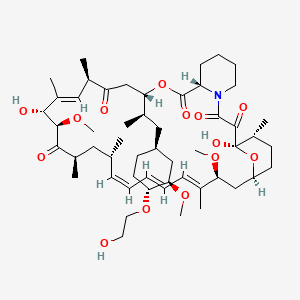
Everolimus is a clinically used inhibitor of the Mechanistic target of rapamycin (mTOR) (mTOR), a central regulator of cell growth, proliferation, metabolism, and survival. As an mTOR-targeted therapy, it is used in a range of diseases in which dysregulated PI3K/Protein kinase B (PKB)/mTOR signaling contributes to pathological cell growth or treatment resistance. In biomedical research, everolimus is frequently discussed alongside sirolimus as a representative mTOR inhibitor, with particular relevance to oncology, transplant-related pharmacology, and pediatric vascular abnormalities.
Pharmacologically, everolimus modulates downstream signaling from the PI3K/AKT/mTOR pathway and is often studied in combination with other therapies to enhance antitumor activity or overcome resistance. Recent publications also continue to examine its safety profile, including potential hepatotoxicity and renal effects, reflecting the need to balance therapeutic benefit with organ-specific toxicity.
Where the papers sit
9 papers from the last 6 months study everolimus directly · updated from PubMed 12 Oct 2026
Study type 2 clinical trials · 2 observational · 1 human data · 2 preclinical · 2 unclassified
Themes one subject · 2 new directions
Those 9 are all about one subject.
-
mTOR-Targeted Therapy
mTOR-targeted therapy spans endocrine-resistant ER-positive/HER2-negative breast cancer, gastroenteropancreatic neuroendocrine tumours, glioma and meningioma. Combination strategies pair everolimus with giredestrant, endocrine therapy or radiotherapy, while [177Lu]Lu-edotreotide provides a phase 3 comparator. Transplant studies shift the question toward malignancy prevention and renal injury modulation, including tacrolimus-associated damage. The evidence remains disease-specific rather than establishing one unifying treatment advantage.
Everolimus is used to reduce de novo malignancy risk after liver transplantation
The liver-transplant recipient study assumed everolimus’s relevance could be evaluated within post-transplant immunosuppression, but found that initiating it within three years of transplantation was associated with fewer de novo malignancies, while discontinuation was associated with increased risk. This gives everolimus a preventive cancer role after transplantation rather than its usual role as treatment for an established malignancy 42413767Jul.
Everolimus serves as a pharmacological modulator of tacrolimus-induced renal injury
The subtotal-nephrectomized rat model of tacrolimus nephrotoxicity used everolimus not as an antitumor treatment but as a means of modifying drug-induced kidney damage, finding partial attenuation of tacrolimus-associated renal dysfunction, albuminuria, fibrosis, and structural injury. This extends everolimus into experimental protection against treatment-related renal injury 42061595Apr.
Papers
The 9 papers from the last 6 months that study everolimus directly, newest first, by theme and by study type. Study types come from PubMed publication types and MeSH headings.
By theme
mTOR-Targeted Therapy (9)
- Giredestrant plus Everolimus in Advanced Breast Cancer. The New England journal of medicine · 30 Sept 2026 PMID 42814929
- EVERolimus effectiveness after proGREssion on ENdocrine therapy plus CDK4/6 inhibitor for ER-positive/HER2-negative advanced breast cancer: EVERGREEN study. Breast cancer research and treatment · 10 Jul 2026 PMID 42429895
- Everolimus and de novo malignancies after liver transplantation: A nationwide emulated trial using real-world data. JHEP reports : innovation in hepatology · 7 Jul 2026 PMID 42413767
- [177Lu]Lu-edotreotide versus everolimus for gastroenteropancreatic neuroendocrine tumours (COMPETE): a phase 3, multicentre, randomised, open-label, superiority trial. Lancet (London, England) · 2 Jul 2026 PMID 42392118
- Tacrolimus-accelerated renal interstitial injury in subtotal nephrectomized rats and its pharmacological modulation by everolimus. Toxicology letters · 30 Apr 2026 PMID 42061595
- Targeted therapies plus radiotherapy for diffuse intrinsic pontine glioma: the randomized phase 2 BIOMEDE trial. Nature medicine · 24 Apr 2026 PMID 42032072
- Clinical Impact and Cost-effectiveness of Everolimus Combination Therapy in Liver Transplant Recipients: Focus on the Risk of Cancer, Infection, and Renal Function. Transplantation · 23 Apr 2026 PMID 42024308
- Next-Generation Therapies for Meningioma: Overcoming Barriers and Expanding Treatment Options. Cancer investigation · 22 Apr 2026 PMID 42017452
- HMGCS1 as a potential mediator of resistance to EZH2 inhibition via ferroptosis mediated by PI3K/AKT/mTOR pathway in the pancreatic neuroendocrine neoplasms. Endocrine-related cancer · 21 Apr 2026 PMID 42013002
By study type
Clinical trials (2)
- Giredestrant plus Everolimus in Advanced Breast Cancer. The New England journal of medicine · 30 Sept 2026 PMID 42814929
- [177Lu]Lu-edotreotide versus everolimus for gastroenteropancreatic neuroendocrine tumours (COMPETE): a phase 3, multicentre, randomised, open-label, superiority trial. Lancet (London, England) · 2 Jul 2026 PMID 42392118
Observational studies and case reports (2)
- EVERolimus effectiveness after proGREssion on ENdocrine therapy plus CDK4/6 inhibitor for ER-positive/HER2-negative advanced breast cancer: EVERGREEN study. Breast cancer research and treatment · 10 Jul 2026 PMID 42429895
- Everolimus and de novo malignancies after liver transplantation: A nationwide emulated trial using real-world data. JHEP reports : innovation in hepatology · 7 Jul 2026 PMID 42413767
Human data, design not indexed (1)
- Clinical Impact and Cost-effectiveness of Everolimus Combination Therapy in Liver Transplant Recipients: Focus on the Risk of Cancer, Infection, and Renal Function. Transplantation · 23 Apr 2026 PMID 42024308
Preclinical: animal, cell and lab studies (2)
- Tacrolimus-accelerated renal interstitial injury in subtotal nephrectomized rats and its pharmacological modulation by everolimus. Toxicology letters · 30 Apr 2026 PMID 42061595
- HMGCS1 as a potential mediator of resistance to EZH2 inhibition via ferroptosis mediated by PI3K/AKT/mTOR pathway in the pancreatic neuroendocrine neoplasms. Endocrine-related cancer · 21 Apr 2026 PMID 42013002
Unclassified: not yet indexed with MeSH (2)
- Targeted therapies plus radiotherapy for diffuse intrinsic pontine glioma: the randomized phase 2 BIOMEDE trial. Nature medicine · 24 Apr 2026 PMID 42032072
- Next-Generation Therapies for Meningioma: Overcoming Barriers and Expanding Treatment Options. Cancer investigation · 22 Apr 2026 PMID 42017452
Written from 9 PubMed abstracts, each one listed by PMID above. Published: 2026-07-12. Last written: 2026-07-29 by GPT. Drafted by language models from published abstracts; not medical advice.