chitosan
Overview
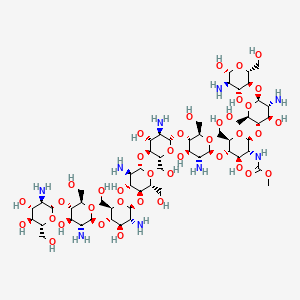
Chitosan is a cationic polysaccharide produced by the partial deacetylation of chitin, the structural polymer found in crustacean shells and fungal cell walls. Along its backbone it carries free amino groups that become protonated at mildly acidic pH, giving the molecule a net positive charge. This cationic character, combined with its biocompatibility, biodegradability, mucoadhesive behavior, and film- and gel-forming capacity, makes chitosan a widely used biomaterial rather than a conventional small-molecule drug. Its degree of deacetylation and molecular weight are the principal parameters that tune its solubility, mechanical strength, and biological activity.
In biomedical research chitosan functions mainly as a functional platform or matrix that is blended, crosslinked, or chemically modified to build wound dressings, hemostatic powders, antimicrobial coatings, and tissue-engineering scaffolds. Its protonated amino groups let it associate electrostatically with negatively charged microbial surfaces, which underlies its intrinsic antibacterial and anti-biofilm activity against organisms such as Staphylococcus aureus, and with anionic polymers such as oxidized sodium alginate to form double-network hydrogels with improved mechanical and sustained-release properties. The same reactive amines allow functionalization with metal ions and complexes, including copper(2+), and conjugation with bioactive moieties such as retinoic acid, enabling multifunctional systems that pair antimicrobial protection with hemostasis, remineralization, or antitumor activity. Chitosan is also combined with proteins like collagen and gelatin and used as a fat replacer or edible film in food applications, reflecting the breadth of roles that follow from its shared polysaccharide chemistry.
New Publications Today (1)
- PMID 42599883 — Comparative efficacy of nerve coagulation vs. cap implantation in neuroma prevention using the rat sciatic nerve model: A histological and neuroradiological insight.
Recent Publications Summary
Chitosan has been extensively investigated as a scaffold material for wound healing and hemostasis across multiple clinical applications. A thermally responsive chitosan powder combined with poly(acrylic acid) demonstrated rapid hemostasis in noncompressible wounds within 10 seconds while simultaneously promoting tissue regeneration through immune modulation 42098062May. Chitosan-based hydrogels functionalized with copper nanoclusters and carbon dots showed prominent antibacterial activity against Pseudomonas aeruginosa with good biocompatibility 42049038Apr. In canine full-thickness cutaneous wounds, chitosan nanoparticles combined with platelet-rich plasma, particularly when functionalized with silver, achieved significantly enhanced wound closure compared to single-agent controls 42484703Jul. For wounds in dynamic anatomical regions, a double-network hydrogel incorporating chitosan, oxidized sodium alginate, and zinc benzimidazole tetracarboxylate demonstrated enhanced mechanical properties with sustained antimicrobial efficacy through controlled zinc ion release 41951085Apr.
Chitosan-based hydrogels serve as versatile biocompatible platforms for tissue engineering and three-dimensional cell culture applications. An injectable thermosensitive hydrogel formed from chitosan, β-glycerophosphate, and hydroxyethyl cellulose supported robust cellular viability and spatial proliferation in vitro, enabling hepatoma cells to form tumor spheroids and bone marrow stromal cells to establish spatial networks 42525690Jul. The effectiveness of chitosan hydrogel systems depends critically on polymer chemistry; systematic evaluation revealed that only high-deacetylation shrimp-derived chitosan effectively incorporated tannic acid–metal complexes for controlled antioxidant and antibacterial responses 41987422Apr. In peripheral nerve injury models, both chitosan and polylactide nerve caps modulated neuroma morphology more effectively than nerve coagulation alone, promoting organized nerve regeneration in the rat sciatic nerve model 42599883Aug.
Chitosan conjugates and nanocomposites have demonstrated multifunctional therapeutic potential in cancer and infectious disease. Retinoic acid-functionalized chitosan polycationic conjugates achieved integrated anticancer and antimicrobial activity, inhibiting melanoma cell proliferation and exhibiting broad-spectrum antibacterial activity through membrane disruption, reactive oxygen species generation, and apoptosis induction 42378347Jun. For sustained immunotherapy, a thermoresponsive chitosan composite hydrogel loaded with indocyanine green–functionalized gold nanorods and boronic acid-modified silica formed a high-strength double-network depot enabling tumor microenvironment-responsive release, photothermal therapy, and immune cell repolarization 41842712Mar. Chitosan also demonstrated remineralisation potential on artificial carious lesions with concurrent antibacterial and anti-biofilm activities 42205106May.
Chitosan nanoparticles have been evaluated as drug carriers for challenging delivery barriers and systemic health applications. In a dynamic in vitro blood-brain barrier model, chitosan nanoparticles exhibited permeability profiles influenced by surface charge and fluid-dynamic shear stress, establishing chitosan as a versatile polymeric carrier for brain-targeted drug delivery 41833845Mar. At the systemic level, chitosan supplementation (3 g/day for 12 weeks) in females with obesity was linked to reduced Firmicutes-to-Bacteroidota ratios in the gut microbiota, while structured lifestyle interventions independently improved body composition and physical function 42522290Jul.
What Changes, What Holds
1. Thermally responsive and metal-functionalized composites confirm chitosan's tunable hemostatic platform
REINFORCES Thermally responsive chitosan-poly(acrylic acid) powders achieving rapid hemostasis combined with immune modulation deepen mechanistic understanding of chitosan's established wound-healing capacity 42098062May. zinc benzimidazole and copper-nanoparticle variants confirm the principle the Overview states: that metal complexation and protonated amino groups enable multifunctional antimicrobial and hemostatic effects, now with added thermal and controlled-release sophistication 41951085Apr.
2. High-deacetylation degree is critical for chitosan tissue-engineering scaffold performance across multiple tissues
REINFORCES Systematic evaluation demonstrates that high-deacetylation shrimp-derived chitosan effectively incorporates tannic acid–metal complexes across hepatoma spheroid formation, peripheral nerve regeneration, and bone marrow stromal networks 41987422Apr. This finding sharpens the Overview's identification of deacetylation degree as a principal parameter without changing the established principle that chitosan's tissue-engineering role depends on polymer chemistry tuning.
3. Chitosan enables photothermal immunotherapy and remineralizes dental tissues
NEW DIRECTION photothermal therapy via indocyanine green–gold nanorods combined with immune cell repolarization in thermoresponsive hydrogels represents a therapeutic mechanism the Overview does not address 41842712Mar. Remineralization of artificial carious lesions with concurrent antibacterial and anti-biofilm activity establishes a dental restorative application entirely absent from the baseline, which limits chitosan to wound dressings, hemostasis, tissue engineering, and food uses 42205106May.
4. Oral chitosan supplementation modulates the gut microbiota; nanoparticles cross the blood-brain barrier
NEW DIRECTION Chitosan nanoparticles penetrating the blood-brain barrier in dynamic models establish a central nervous system delivery platform the Overview does not discuss 41833845Mar. Systemic oral supplementation in obese females linked reduced Firmicutes-to-Bacteroidota ratios to chitosan, but independent improvements from lifestyle intervention cloud the direct microbiota effect 42522290Jul. Both CNS and systemic metabolic applications represent departures from the Overview's exclusive focus on local biomedical matrices and food uses.
Overview update candidates: Dental remineralization with concurrent antibacterial and anti-biofilm activity; photothermal and immune-modulated tumor therapy; blood-brain barrier penetration for CNS-targeted delivery.
chitosan
Background Contexts
In the literature, the biological baseline, pathological conditions, or disease models commonly surrounding chitosan are described as follows:
- bacterial infectious disease (Disease) — 3 papers: PMIDs 42333676, 42325099, 41691388
- infection (Disease) — 3 papers: PMIDs 42484703, 42483953, 41932298
- Chronic diabetic wounds (Disease) — 2 papers: PMIDs 42099268, 42003408
- electrical conductivity (Clinical Metric) — 2 papers: PMIDs 42396753, 42314232
- hydrogel (Other) — 2 papers: PMIDs 42397148, 42230037
- inflammation (Biological Process) — 2 papers: PMIDs 42483953, 41895075
- MCF-7 (Disease) — 2 papers: PMIDs 42097777, 41990535
- reactive oxygen species (Chemical) — 2 papers: PMIDs 42343878, 41990535
- adverse remodeling (Clinical Metric) — 1 paper: PMIDs 42397148
- Agar (Other) — 1 paper: PMIDs 42285454
- antibacterial implant coatings (Technology) — 1 paper: PMIDs 41691388
- anticancer (Biological Process) — 1 paper: PMIDs 42532124
Methodologies & Technologies Used
Researchers utilize the following experimental methods, imaging platforms, computational models, or biological reagents to study chitosan:
- gelatin (Other) — 5 papers: PMIDs 42532124, 42483953, 42212436, 41980122, etc.
- fourier-transform infrared spectroscopy (Technology) — 4 papers: PMIDs 42378734, 42372885, 42285454, 41702113
- hydrogel (Other) — 3 papers: PMIDs 42532124, 42472801, 42361943
- Scanning Electron Microscopy (Technology) — 3 papers: PMIDs 42331173, 42250630, 41771486
- sodium alginate (Chemical) — 3 papers: PMIDs 41980122, 41903318, 41832025
- tannic acid (Chemical) — 3 papers: PMIDs 42225353, 42160026, 41987422
- carbon quantum dots (Other) — 2 papers: PMIDs 42325099, 42097777
- collagen (Protein) — 2 papers: PMIDs 42484646, 42483953
- copper(2+) (Chemical) — 2 papers: PMIDs 42325099, 41987422
- drug screening (Technology) — 2 papers: PMIDs 42555055, 42484646
- dynamic light scattering (Technology) — 2 papers: PMIDs 42378734, 42250630
- epidermal growth factor (Protein) — 2 papers: PMIDs 42484703, 42483953
Molecular Interventions & Targets
The primary molecular pathways, regulatory genes, enzymes, or therapeutic agents actively targeted and manipulated in relation to chitosan include:
- Staphylococcus aureus (Organism) — 2 papers: PMIDs 42397260, 42378347
- β-Glycerophosphate (Chemical) — 2 papers: PMIDs 42525690, 41842712
- (+)-taxifolin (Chemical) — 1 paper: PMIDs 42097773
- (2S)-2-aminobutane-1,4-dithiol (Chemical) — 1 paper: PMIDs 42333676
- aceclofenac (Therapy) — 1 paper: PMIDs 41771486
- adenosine triphosphate (Chemical) — 1 paper: PMIDs 42579408
- agarose (Chemical) — 1 paper: PMIDs 41987422
- alitretinoin (Chemical) — 1 paper: PMIDs 42378347
- allocryptopine (Chemical) — 1 paper: PMIDs 42393368
- amlodipine (Therapy) — 1 paper: PMIDs 42331173
- azithromycin (Therapy) — 1 paper: PMIDs 41833846
- bactericidal hydroxyl radicals (Chemical) — 1 paper: PMIDs 42099268
Observed Outcomes & Phenotypes
The phenotypic changes, physiological endpoints, or clinical metrics observed and measured in connection with chitosan include:
- Staphylococcus aureus (Organism) — 8 papers: PMIDs 42378734, 42333676, 42225353, 42099268, etc.
- Escherichia coli (Organism) — 7 papers: PMIDs 42483953, 42378734, 42333676, 42225353, etc.
- compressive strength (Clinical Metric) — 5 papers: PMIDs 42487167, 42361943, 42247132, 41987422, etc.
- cytotoxicity (Clinical Metric) — 5 papers: PMIDs 42484984, 42331173, 42230031, 42097777, etc.
- drug release (Clinical Metric) — 5 papers: PMIDs 42532124, 42484984, 42331173, 41932298, etc.
- reactive oxygen species (Chemical) — 5 papers: PMIDs 42484646, 42333739, 42333676, 42230031, etc.
- biocompatibility (Other) — 4 papers: PMIDs 42487167, 42397148, 42331173, 41932298
- collagen deposition (Clinical Metric) — 4 papers: PMIDs 42484703, 42483953, 42397260, 42225353
- wound closure (Clinical Metric) — 4 papers: PMIDs 42483953, 42333676, 42099268, 42049038
- apoptotic process (Biological Process) — 3 papers: PMIDs 42484984, 42414363, 41842712
- cell viability (Clinical Metric) — 3 papers: PMIDs 42555055, 42397260, 42378734
- Cyclooxygenase 2 (COX-2) (Protein) — 3 papers: PMIDs 42378734, 42159308, 42097773
General Takeaways & Clinical Potentials
The high-level concepts, clinical translations, and overarching conclusions proposed in the research surrounding chitosan are summarized below:
- disease modeling (Other) — 2 papers: PMIDs 42555055, 42484646
- hemostasis (Clinical Metric) — 2 papers: PMIDs 42487167, 42097773
- regenerative medicine (Therapy) — 2 papers: PMIDs 42555055, 42484646
- wound closure (Clinical Metric) — 2 papers: PMIDs 42484703, 42003408
- adsorption equilibrium (Biological Process) — 1 paper: PMIDs 42391306
- AMPK/mTOR (Pathway) — 1 paper: PMIDs 41707746
- Anesthesia-related postoperative neuropathic pain (Disease) — 1 paper: PMIDs 42159308
- Antibacterial and anti-inflammatory bioactivity (Biological Process) — 1 paper: PMIDs 41833846
- autologous nerve grafts (Therapy) — 1 paper: PMIDs 42343878
- bioactivity (Clinical Metric) — 1 paper: PMIDs 42487167
- bioavailability (Other) — 1 paper: PMIDs 42264256
- biocompatible platform (Other) — 1 paper: PMIDs 41990535