camptothecin
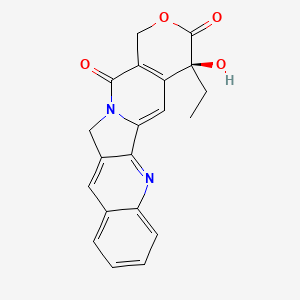
Overview
Camptothecin (CPT) is a cytotoxic quinoline alkaloid of the monoterpene indole class, first isolated from the bark and wood of Camptotheca acuminata, a tree native to southern China. It acts on topoisomerase I (Top1), the enzyme that relieves torsional stress by nicking one DNA strand, passing the duplex through, and resealing it. Camptothecin binds at the interface of the transient Top1–DNA cleavage complex and blocks the resealing step, so the enzyme remains covalently trapped on nicked DNA. The trapped complex is itself reversible and drug removal releases it; the lethal event comes when an advancing replication fork or transcription complex collides with it, converting a repairable nick into a double-strand break. That requirement makes the drug S-phase specific, and makes exposure duration matter more than peak concentration.
Its chemistry is the practical constraint. The E-ring α-hydroxylactone required for activity hydrolyzes at physiological pH to an inactive carboxylate, an equilibrium that human serum albumin pushes further toward the open form, so the parent compound loses potency in plasma while remaining poorly soluble and toxic. Semisynthetic derivatives address this: irinotecan hydrochloride is a prodrug converted by carboxylesterases to the far more potent SN-38, whose clearance depends on UGT1A1-mediated glucuronidation and whose toxicity therefore tracks UGT1A1 genotype; topotecan is used directly; and exatecan remains investigational as a free drug.
Precise delivery has given the scaffold a second life. Camptothecin analogs are potent at picomolar concentrations, which is what an antibody-drug conjugate needs from a payload, and the most successful current conjugates carry either SN-38 or an exatecan derivative on a cleavable linker — an arrangement that concentrates the drug at the tumor and exploits its membrane permeability to kill neighboring antigen-negative cells. Prodrug design, linker chemistry, and nanoparticle formulation continue to be pursued for the same reason: the molecule kills reliably, and nearly every difficulty with it concerns getting an intact lactone to the right place.
Recent Publications Summary
Recent studies have focused on camptothecin as a payload or prodrug component in tumor-targeted delivery systems designed to improve solubility, control release, and reduce off-target toxicity. A light-programmable PEG-PLA nanomedicine co-encapsulating a dimeric camptothecin prodrug with the photosensitizer Ce6 achieved very high drug loading and nearly complete loading efficiency, and light-triggered photodynamic therapy was reported to aggravate intratumoral hypoxia and facilitate camptothecin release, producing pronounced antitumor efficacy in 4T1 and MCF-7 xenograft models 42304791Jun. Similarly, a tandem-responsive dendritic dot used covalently conjugated camptothecin with a Cy5 imaging core to enable pH- and γ-glutamyl transpeptidase-activated drug release, fluorescence activation, and enhanced cellular transcytosis, with potent antitumor activity in vitro and in vivo 42143689May. A hyperbranched polymer-based unimolecular nanoprodrug also used glutathione-cleavable linkers and a γ-glutamyl transferase-responsive surface motif to improve cancer/normal cell selectivity and anticancer efficacy 42068279May.
Other reports described camptothecin-loaded nanocarriers that respond to tumor-associated microenvironmental cues. A multifunctional niosome-chitosan-gold nanohybrid enabled pH- and ROS-triggered camptothecin release and showed enhanced cytotoxicity against MCF-7 breast cancer cells along with anti-inflammatory activity 41990535Apr. A ROS/pH dual-responsive metal-phenolic nanosystem encapsulating camptothecin and modified with phenylboronic acid-conjugated hyaluronic acid was designed to target CD44-positive activated hepatic stellate cells in liver fibrosis, with the stated goal of microenvironment remodeling and metabolic reprogramming 41819037Mar. In another prodrug strategy, camptothecin was incorporated into a tyrosinase-responsive design intended for melanoma-selective activation; however, the abstract reports efficient tyrosinase activation and improved selectivity for the doxorubicin prodrug, while camptothecin did not exhibit similar activity 41955916Apr.
Camptothecin also appeared in broader drug-development efforts aimed at improving therapeutic performance through linker and payload engineering. A discovery campaign for novel camptothecin-based linker-payloads, starting from exatecan, identified constructs suitable for high drug-to-antibody ratio antibody-drug conjugates with low aggregation, good in vitro potency, and robust target-mediated in vivo efficacy across two antibody-antigen pairs 42059187Apr. In parallel, a flavonolactam series was benchmarked against camptothecin as a reference topoisomerase I inhibitor, with the lead compound NL-26 showing comparable Topo I inhibitory activity and antitumor efficacy in HCT116 xenografts 41934689Apr. Camptothecin was also used as a comparator in a review of approved antibody-drug conjugates, which summarized clinical pharmacology trends across payload classes 41906492Mar.
Beyond delivery and medicinal chemistry, one publication addressed camptothecin biosynthesis itself. By heterologously expressing CrLAMT from Catharanthus roseus in Camptotheca acuminata, investigators enhanced camptothecin accumulation in leaves and hairy roots, reporting 2.23-fold and 1.78-fold increases relative to controls and upregulation of the downstream enzyme CaSTR2 42138768May.
What Changes, What Holds
1. tumor-triggered nanoprodrugs make camptothecin more usable without changing its core role
REINFORCES Light- and microenvironment-responsive delivery systems mainly extend the established story of camptothecin as a highly potent but formulation-limited cytotoxic payload. They strengthen the case for prodrug engineering, controlled release, and tumor-selective activation as the practical path forward, rather than altering its mechanism or therapeutic identity. The added value is better loading, release control, and reduced off-target exposure, not a new biological role. 42304791Jun42143689May
2. Microenvironment-responsive carriers broaden delivery strategies, but one prodrug result is internally inconsistent
REINFORCES These reports keep camptothecin in the same framework of tumor-targeted, stimulus-responsive delivery designed to improve selectivity and tolerability. The fibrosis and breast-cancer carrier studies fit the baseline emphasis on engineered delivery, while the melanoma prodrug abstract appears to credit tyrosinase selectivity to doxorubicin rather than camptothecin, leaving that camptothecin claim unsettled rather than transformative. The main update is methodological and translational, not conceptual. 41990535Apr41819037Mar41955916Apr
3. Camptothecin remains the benchmark payload while exatecan-derived linkers push ADC engineering forward
REINFORCES New linker-payload work extends the baseline claim that camptothecin chemistry is central to ADC development by showing how exatecan-like scaffolds are being tuned for higher drug loading, lower aggregation, and preserved potency. The comparison against camptothecin in a separate topoisomerase I inhibitor study also reinforces its status as a reference standard rather than challenging it. What changes is the engineering envelope, not the drug’s established place in oncology. 42059187Apr41934689Apr
4. Biosynthetic engineering can raise camptothecin production in the source plant
NEW DIRECTION Heterologous expression in Camptotheca acuminata adds a production-oriented role that the Overview does not cover: improving endogenous camptothecin biosynthesis rather than using the compound as a therapeutic scaffold. This does not contradict the established mechanism or drug-development narrative, but it shifts attention toward supply-side optimization and pathway control. The evidence is early and preclinical, so broader metabolic consequences and scalability remain to be settled. 42138768May
Overview update candidates: biosynthetic engineering to increase camptothecin yield in Camptotheca acuminata; stimulus-responsive nanoprodrug and ADC-linker engineering as reinforcing examples of its delivery-focused translational role.
camptothecin
Background Contexts
In the literature, the biological baseline, pathological conditions, or disease models commonly surrounding camptothecin are described as follows:
- antibody-drug conjugate (Therapy) — 1 paper: PMIDs 41906492
- Camptotheca acuminata (Organism) — 1 paper: PMIDs 42138768
- Candida albicans (Organism) — 1 paper: PMIDs 42319782
- dosing strategies for ADCs (Therapy) — 1 paper: PMIDs 42059187
- drug-drug interactions (Other) — 1 paper: PMIDs 41906492
- exposure-response analysis (Technology) — 1 paper: PMIDs 41906492
- ferroptosis (Biological Process) — 1 paper: PMIDs 41839266
- Hydroxyl-containing small-molecule drugs (Therapy) — 1 paper: PMIDs 42224648
- hypochlorous acid (Chemical) — 1 paper: PMIDs 42224648
- immunogenicity (Biological Process) — 1 paper: PMIDs 41906492
- inflammatory conditions (Biological Process) — 1 paper: PMIDs 41819037
- liver cirrhosis (Disease) — 1 paper: PMIDs 41819037
Methodologies & Technologies Used
Researchers utilize the following experimental methods, imaging platforms, computational models, or biological reagents to study camptothecin:
- A549 xenograft models (Cell Line) — 1 paper: PMIDs 41812429
- A549 xenograft mouse models (Organism) — 1 paper: PMIDs 41812429
- acidic pH (Biological Process) — 1 paper: PMIDs 42143689
- acyl hydrazide motif (Chemical) — 1 paper: PMIDs 42224648
- Basic Blue 3 (Chemical) — 1 paper: PMIDs 42224648
- Catharanthus roseus (Organism) — 1 paper: PMIDs 42138768
- CPT-peptide conjugates (Technology) — 1 paper: PMIDs 41839266
- CPT@EZ@HP (Technology) — 1 paper: PMIDs 41819037
- CRISPR-Cas method (Technology) — 1 paper: PMIDs 42319782
- CrLAMT (Protein) — 1 paper: PMIDs 42138768
- dendritic dot (Other) — 1 paper: PMIDs 42143689
- exatecan (Chemical) — 1 paper: PMIDs 42059187
Molecular Interventions & Targets
The primary molecular pathways, regulatory genes, enzymes, or therapeutic agents actively targeted and manipulated in relation to camptothecin include:
- 10-Methoxycamptothecin (Therapy) — 1 paper: PMIDs 41812429
- auristatins (Therapy) — 1 paper: PMIDs 41906492
- CD44/JAK2/STAT3 signaling pathway (Pathway) — 1 paper: PMIDs 41819037
- CDK6 (Protein) — 1 paper: PMIDs 41812429
- Cy5 peptide (Protein) — 1 paper: PMIDs 42143689
- deruxtecan (Therapy) — 1 paper: PMIDs 42115538
- DHU-OH-6 (Therapy) — 1 paper: PMIDs 42224648
- doxorubicin (Therapy) — 1 paper: PMIDs 41955916
- FPMI-NL-28 (Chemical) — 1 paper: PMIDs 41934689
- glycolytic process (Biological Process) — 1 paper: PMIDs 41819037
- irinotecan hydrochloride (Therapy) — 1 paper: PMIDs 41812429
- JPH203 (Therapy) — 1 paper: PMIDs 41839266
Observed Outcomes & Phenotypes
The phenotypic changes, physiological endpoints, or clinical metrics observed and measured in connection with camptothecin include:
- tumor growth inhibition (Clinical Metric) — 2 papers: PMIDs 41934689, 41812429
- 81.2% tumor growth suppression rate (Clinical Metric) — 1 paper: PMIDs 41839266
- anticancer efficacy (Clinical Metric) — 1 paper: PMIDs 42068279
- antitumor activity (Clinical Metric) — 1 paper: PMIDs 42143689
- apoptotic process (Biological Process) — 1 paper: PMIDs 41934689
- AUC0-t (Clinical Metric) — 1 paper: PMIDs 41934689
- cancer cell uptake (Biological Process) — 1 paper: PMIDs 42068279
- cancer/normal cell selectivity (Clinical Metric) — 1 paper: PMIDs 42068279
- CaSTR2 (Protein) — 1 paper: PMIDs 42138768
- CD8+ T-cell responses (Biological Process) — 1 paper: PMIDs 41839266
- collagen deposition (Clinical Metric) — 1 paper: PMIDs 41819037
- CPT production (Clinical Metric) — 1 paper: PMIDs 42138768
General Takeaways & Clinical Potentials
The high-level concepts, clinical translations, and overarching conclusions proposed in the research surrounding camptothecin are summarized below:
- antibody-drug conjugate (Therapy) — 1 paper: PMIDs 41906492
- bioactive natural compounds (Other) — 1 paper: PMIDs 42138768
- broad applicability of this design strategy (Other) — 1 paper: PMIDs 42059187
- Exposure response relationships for low back pain from pooled data (Other) — 1 paper: PMIDs 41906492
- ferroptosis (Biological Process) — 1 paper: PMIDs 41839266
- flavonolactam scaffold (Other) — 1 paper: PMIDs 41934689
- Formulation Development (Other) — 1 paper: PMIDs 42115538
- genome maintenance (Biological Process) — 1 paper: PMIDs 42319782
- hepatic impairment (Other) — 1 paper: PMIDs 41906492
- HOCl-activated hydroxyl drug-release platform (Other) — 1 paper: PMIDs 42224648
- innate and adaptive immunity (Biological Process) — 1 paper: PMIDs 41839266
- kidney failure (Disease) — 1 paper: PMIDs 41906492