Bisphenol A
Bisphenol A (BPA; IUPAC name: 4,4'-(propane-2,2-diyl)diphenol) is a synthetic organic compound belonging to the bisphenol chemical family.
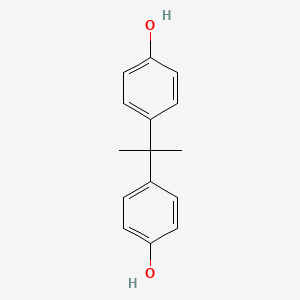
Bisphenol A (BPA; IUPAC name: 4,4'-(propane-2,2-diyl)diphenol) is a synthetic organic compound belonging to the bisphenol chemical family. It was first synthesized in the 1890s and has since become one of the most extensively produced industrial chemicals globally, serving primarily as a monomer in the manufacture of polycarbonate (PC) plastics and epoxy resins. Its widespread use in food packaging, thermal paper, medical devices, and consumer goods has led to ubiquitous human exposure through ingestion, dermal contact, and inhalation of contaminated environmental media.
BPA is classified as an environmental endocrine-disrupting chemical (EDC) owing to its structural similarity to 17β-estradiol, which enables it to bind to and activate estrogen receptors, thereby interfering with hormonal signaling cascades. Beyond classical estrogenic activity, BPA has been shown to interact with a broad range of nuclear receptors and signaling proteins—including members of the STAT family and components of the PI3K/Akt signaling pathway—making its toxicological profile highly pleiotropic. At trace environmental concentrations, BPA can perturb gene expression, epigenetic regulation (notably via EZH2-mediated histone methylation), cell cycle control (implicating Cyclin-dependent kinase 1 (CDK1)), and immune homeostasis, with downstream associations spanning hepatocellular carcinoma, breast cancer, and systemic inflammatory diseases.
Where the papers sit
10 papers from the last 6 months study Bisphenol A directly · updated from PubMed 6 Oct 2026
Study type 0 clinical trials · 1 human data · 5 preclinical · 4 unclassified
Themes 3 themes · 1 new direction
-
Bisphenol a Toxicity Mechanisms
Oxidative stress, inflammation and metabolic disruption recur across BPA-linked diabetes, airway injury, liver disease and thyroid carcinogenesis. Multi-omics and network toxicology are converging on targets such as NQO1 and the PTEN/PI3K/AKT axis. Immune-microenvironment damage, impaired repair and disulfidptosis extend the mechanisms beyond isolated organ toxicity. The work is moving toward pathway-based biomarkers and targeted protective interventions.
6 papers · 60%
-
Computational Disease Biomarkers
Transcriptomic signatures and computational prioritization are being used to connect cell-state changes with clinically relevant disease markers. T-cell depletion and monocyte-associated signals define the lupus analysis, while network and single-cell methods examine BPA-linked clear-cell renal cell carcinoma. Differential expression, machine learning and molecular docking recur as complementary tools. The evidence supports candidate discovery, but validation of diagnostic or prognostic value remains open.
2 papers · 20%
-
Bisphenol a Detection Technologies
BPA measurement is shifting toward rapid, portable and multimodal sensing rather than conventional laboratory readouts alone. Smartphone-assisted and spectrophotometric colorimetry use enzymeless nanosensors to improve practical detection. HCR amplification and CRISPR/Cas12a add logic-gate discrimination and dual-analyte capability, with kanamycin included as a target. Detection limits, readout reliability and performance in water or biological specimens remain the key tests.
2 papers · 20%
Bisphenol A is presented as a protective treatment rather than a disease-promoting exposure
The murine spinal cord injury model studied in the BPA-treatment paper 42201472May departs from the other abstracts’ use of BPA as an environmental exposure that promotes disease, injury, or cancer. Instead, administering BPA after spinal cord injury improved locomotor recovery and reduced histopathological damage, with associated changes in oxidative-phosphorylation genes and arachidonic-acid metabolites. This gives BPA a distinct therapeutic and neuroprotective role in traumatic injury, rather than its usual pathogenic role in the set.
Papers
The 10 papers from the last 6 months that study Bisphenol A directly, newest first, by theme and by study type. Study types come from PubMed publication types and MeSH headings.
By theme
Bisphenol a Toxicity Mechanisms (6)
- Integrative Multi-Omics Analysis Identifies Key Molecular Targets Linking Bisphenol A Exposure to Gestational Diabetes Mellitus. Reproductive sciences (Thousand Oaks, Calif.) · 5 Aug 2026 PMID 42552472
- Integrative multi-omics reveals NQO1-mediated airway epithelial injury as a key mechanism of bisphenol A-induced COPD. Naunyn-Schmiedeberg's archives of pharmacology · 23 Jul 2026 PMID 42489718
- Bisphenol A exacerbates diabetic foot ulcers through disruption of immune microenvironment and repair processes: a multi-omics analysis of environmental exposure mechanisms. Drug and chemical toxicology · 15 Jun 2026 PMID 42298305
- Mitochondrial-Inflammatory Axis Dysregulation Triggers Disulfidptosis and the Multifaceted Protective Mechanism of Bisphenol A Following Spinal Cord Injury. Molecular neurobiology · 27 May 2026 PMID 42201472
- Integrating network toxicology with multi-omics approaches to elucidate molecular targets and pathway mechanisms in BPA-induced hepatocellular carcinoma. Molecular diversity · 12 May 2026 PMID 42118483
- Bisphenol A drives thyroid carcinogenesis through oxidative stress-lipid metabolic reprogramming via the PTEN/PI3K/AKT axis: Therapeutic reversal by a curcumin-modified quercetin nanomicelle system. Free radical biology & medicine · 15 Apr 2026 PMID 41985638
Computational Disease Biomarkers (2)
- Bioinformatics analysis identifies biomarkers associated with T-cell depletion in systemic lupus erythematosus. Medicine · 30 May 2026 PMID 42216358
- Employing network toxicology, molecular docking, machine learning, and single-cell analysis to analyze BPA exposure-induced ccRCC. Biochemical and biophysical research communications · 29 May 2026 PMID 42214919
Bisphenol a Detection Technologies (2)
- Dual-readout smartphone-assisted and spectrophotometric colorimetric nanosensor for enzymeless bisphenol A detection. Mikrochimica acta · 5 Oct 2026 PMID 42832064
- HCR-assisted CRISPR/Cas12a platform enables logic-gate and multimodal detection of kanamycin and bisphenol A. Analytical methods : advancing methods and applications · 3 Aug 2026 PMID 42544618
By study type
Human data, design not indexed (1)
- Bioinformatics analysis identifies biomarkers associated with T-cell depletion in systemic lupus erythematosus. Medicine · 30 May 2026 PMID 42216358
Preclinical: animal, cell and lab studies (5)
- Dual-readout smartphone-assisted and spectrophotometric colorimetric nanosensor for enzymeless bisphenol A detection. Mikrochimica acta · 5 Oct 2026 PMID 42832064
- HCR-assisted CRISPR/Cas12a platform enables logic-gate and multimodal detection of kanamycin and bisphenol A. Analytical methods : advancing methods and applications · 3 Aug 2026 PMID 42544618
- Employing network toxicology, molecular docking, machine learning, and single-cell analysis to analyze BPA exposure-induced ccRCC. Biochemical and biophysical research communications · 29 May 2026 PMID 42214919
- Mitochondrial-Inflammatory Axis Dysregulation Triggers Disulfidptosis and the Multifaceted Protective Mechanism of Bisphenol A Following Spinal Cord Injury. Molecular neurobiology · 27 May 2026 PMID 42201472
- Bisphenol A drives thyroid carcinogenesis through oxidative stress-lipid metabolic reprogramming via the PTEN/PI3K/AKT axis: Therapeutic reversal by a curcumin-modified quercetin nanomicelle system. Free radical biology & medicine · 15 Apr 2026 PMID 41985638
Unclassified: not yet indexed with MeSH (4)
- Integrative Multi-Omics Analysis Identifies Key Molecular Targets Linking Bisphenol A Exposure to Gestational Diabetes Mellitus. Reproductive sciences (Thousand Oaks, Calif.) · 5 Aug 2026 PMID 42552472
- Integrative multi-omics reveals NQO1-mediated airway epithelial injury as a key mechanism of bisphenol A-induced COPD. Naunyn-Schmiedeberg's archives of pharmacology · 23 Jul 2026 PMID 42489718
- Bisphenol A exacerbates diabetic foot ulcers through disruption of immune microenvironment and repair processes: a multi-omics analysis of environmental exposure mechanisms. Drug and chemical toxicology · 15 Jun 2026 PMID 42298305
- Integrating network toxicology with multi-omics approaches to elucidate molecular targets and pathway mechanisms in BPA-induced hepatocellular carcinoma. Molecular diversity · 12 May 2026 PMID 42118483
Written from 10 PubMed abstracts, each one listed by PMID above. Published: 2026-06-15. Last written: 2026-08-27 by GPT. Drafted by language models from published abstracts; not medical advice.