berberine
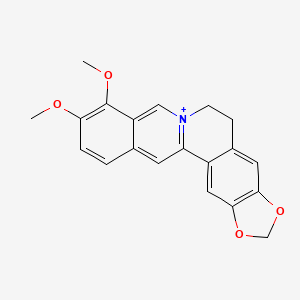
Overview
Berberine (BBR) is a naturally occurring isoquinoline alkaloid belonging to the protoberberine class, found in several medicinal plants including Berberis, Coptis chinensis, and Coscinium fenestratum. It is characterized by a distinctive yellow color and a quaternary ammonium structure that enables intercalation into nucleic acids, binding to G-quadruplex (G4) DNA structures, and interaction with a broad spectrum of protein targets. Historically significant in traditional Asian medicine for its antimicrobial and anti-inflammatory properties, berberine has attracted sustained scientific attention for its pleiotropic pharmacological effects spanning metabolic regulation, anti-inflammatory signaling, and antineoplastic activity.
Mechanistically, berberine modulates multiple oncogenic and inflammatory cascades including the PI3K/Akt signaling pathway, the β-catenin/TCF4 axis, nuclear factor kappa B (NF-κB) signaling, and the CD44/JAK2/STAT3 signaling pathway. Its ability to intercalate into DNA and compete for nucleic acid-binding sites makes it a structurally versatile scaffold for targeting both protein–DNA and protein–protein interactions relevant to cancer and infectious disease. These properties, combined with a favorable safety profile relative to synthetic chemotherapeutics, have positioned berberine as a compound of significant translational interest across oncology, immunology, and antiviral research.
Recent Publications Summary
Recent studies have continued to examine berberine as a bioactive scaffold with membrane-active properties, improved formulation potential, and multiple disease-modulating effects. A structure-activity analysis of protoberberine alkaloids found that molecular planarity, rather than conventional physicochemical descriptors, was the key determinant of membrane binding, membrane stiffening, and displacement of misfolded protein oligomers; these membrane effects were linked to reduced oligomer-induced calcium influx in cell culture, supporting a mechanistic basis for berberine’s reported bioavailability and neuroprotective properties 42593899Aug. In parallel, formulation work showed that berberine-loaded nanoemulsion designed for intranasal delivery improved nose-to-brain targeting in an Alzheimer’s intervention model, with favorable particle characteristics and in vitro evidence of reduced reactive oxygen species and restored mitochondrial membrane potential in SH-SY5Y cells 41875607Mar. Another drug-delivery study found that two berberine-loaded liposomal formulations exhibited release profiles that depended on drug-membrane affinity under low shear but converged under higher mechanical stress, underscoring the role of the carrier environment in regulating berberine release 42119862May.
Several publications focused on berberine’s anti-cancer activity. In colorectal cancer, one study reported that berberine suppressed cell viability, promoted apoptosis, and inhibited DNA damage repair by upregulating SOX17 and inactivating the β-catenin/TCF4 pathway, with downstream effects on PIM3; SOX17 knockdown partially reversed these effects and PIM3 silencing counteracted SOX17 loss 42201413May. A separate chemoproteomic and knockout-based study identified SIGMAR1 as a direct target of berberine, showing that an ionic interaction between the berberine nitrogen cation and Glu172 stabilizes an inactive SIGMAR1 trimer and suppresses function; Sigmar1 knockout abolished berberine’s anti-tumor effects, including reduced proliferation, increased apoptosis, lowered PD-L1, and microbiota remodeling, while mechanistic data linked SIGMAR1 binding to inhibition of MKK7 and EIF2AK2 with suppression of MAPK and NF-κB signaling 42172984May. Berberine was also reported to enhance cisplatin efficacy in Ehrlich ascites carcinoma, reducing tumor burden and cell counts while ameliorating cisplatin-associated hepato-renal toxicity and downregulating Akt1, Axl, Mertk, and Gas6, consistent with modulation of the PI3K/Akt pathway and efferocytosis 42049890Apr. In another context, berberine served as a comparator in an anti-adipogenic study, where a newly isolated compound showed greater potency than berberine in inhibiting lipid accumulation in 3T3-L1 preadipocytes 42229863Jun.
Other reports extended berberine research to inflammation, diabetes-associated neurodegeneration, and infectious disease-related targets. In a mouse model of hyperglycemia-induced neurodegeneration, berberine attenuated cognitive and neuronal injury through modulation of Nrf2 expression, highlighting a redox-linked neuroprotective mechanism 42334690Jun. In a TNBS-induced zebrafish enteritis model, molecular docking implicated berberine among the constituents of Huoxiang-Huanglian as a binder of ODC1, with treatment reducing inflammatory and oxidative markers including IL-1β, TNF-α, MDA, NLRP3, Caspase-1, and NF-κB p65 42124338May. Berberine also appeared in a computational network pharmacology study of Coscinium fenestratum alkaloids against SARS-CoV-2 host dependency factors, although the strongest predicted interaction in that work was attributed to tembetarine rather than berberine 41967451Apr. Additional chemistry-focused work showed that berberine can form co-crystals with gallic acid and resveratrol, producing stable solid-state assemblies stabilized mainly by hydrogen bonding and hydrophobic interactions, suggesting a route to modify berberine’s physicochemical properties 42044560Apr.
What Changes, What Holds
1. Planarity emerges as a practical handle on berberine’s membrane activity
METHOD Structural work sharpens the baseline’s view of berberine as a membrane-active, bioactive scaffold by identifying planarity as the key driver of membrane binding, stiffening, and oligomer displacement 42593899Aug. That does not overturn the established nucleic-acid and protein-interaction account; it instead suggests why these physicochemical effects may matter for bioavailability and neuroprotection. The delivery studies extend that implication, but they remain formulation-focused rather than new therapeutic roles 41875607Mar42119862May.
2. Berberine’s anticancer profile now includes direct SIGMAR1 targeting and efferocytosis-linked chemosensitization
NEW DIRECTION Berberine is no longer best understood only through the Overview’s PI3K/Akt, β-catenin/TCF4, NF-κB, and CD44/JAK2/STAT3 axes, because direct SIGMAR1 engagement adds a distinct target class and a mechanistically separable anti-tumor route 42172984May. The colorectal-cancer and cisplatin findings reinforce the broader oncology story while expanding it into DNA-repair suppression and drug sensitization 42201413May42049890Apr. Microbiota and PD-L1 effects are intriguing but still need causal consolidation.
3. Berberine’s anti-inflammatory and redox-linked actions extend into neurodegeneration and enteritis
NEW DIRECTION Berberine’s established anti-inflammatory profile is broadened, not replaced, by evidence that it can protect against hyperglycemia-associated neurodegeneration through Nrf2-linked redox modulation and can dampen TNBS-driven enteritis signals including NLRP3, Caspase-1, and NF-κB p65 42334690Jun42124338May. The host-factor docking and co-crystal chemistry are supportive but peripheral: one points to a possible antiviral-relevant target set that remains computational, and the other suggests a way to alter solid-state behavior rather than a new biological role 41967451Apr42044560Apr.
Overview update candidates: SIGMAR1 as a direct target; planarity-dependent membrane activity as a mechanistic explanation; Nrf2-linked neuroprotection; ODC1-associated anti-enteritis signaling.
berberine
Background Contexts
In the literature, the biological baseline, pathological conditions, or disease models commonly surrounding berberine are described as follows:
- Coptis chinensis (Organism) — 2 papers: PMIDs 42166971, 42044560
- bioavailability (Other) — 1 paper: PMIDs 42593899
- BLM RecQ like helicase (Protein) — 1 paper: PMIDs 42087785
- Blood-brain barrier permeation (Biological Process) — 1 paper: PMIDs 42593899
- Caspase-11 (Protein) — 1 paper: PMIDs 42166971
- Chronic Intestinal Disorder (Disease) — 1 paper: PMIDs 42570804
- Cognitive decline (Disease) — 1 paper: PMIDs 41875607
- colon cancer liver metastasis (Disease) — 1 paper: PMIDs 42087785
- colorectal cancer (Disease) — 1 paper: PMIDs 42172984
- COVID-19 (Disease) — 1 paper: PMIDs 41967451
- COVID-19 cytokine storm (Other) — 1 paper: PMIDs 41967451
- cytotoxicity (Clinical Metric) — 1 paper: PMIDs 42593899
Methodologies & Technologies Used
Researchers utilize the following experimental methods, imaging platforms, computational models, or biological reagents to study berberine:
- Network Pharmacology (Technology) — 4 papers: PMIDs 42570804, 42166971, 42124338, 42035999
- ELISA (Technology) — 2 papers: PMIDs 42570804, 42166971
- Histopathology (Clinical Metric) — 2 papers: PMIDs 42570804, 42166971
- molecular docking (Technology) — 2 papers: PMIDs 42570804, 42035999
- 16S ribosomal RNA sequencing (Technology) — 1 paper: PMIDs 42570804
- 3T3-L1 preadipocytes (Cell Line) — 1 paper: PMIDs 42229863
- 4-hydroperoxycyclophosphamide (Chemical) — 1 paper: PMIDs 42035999
- adult female zebrafish (Organism) — 1 paper: PMIDs 42124338
- ANS fluorescence (Technology) — 1 paper: PMIDs 42593899
- autism spectrum disorder (Disease) — 1 paper: PMIDs 42166971
- biochemical analysis (Other) — 1 paper: PMIDs 42049890
- Biomimetic Liposome (Technology) — 1 paper: PMIDs 42593899
Molecular Interventions & Targets
The primary molecular pathways, regulatory genes, enzymes, or therapeutic agents actively targeted and manipulated in relation to berberine include:
- [(2S)-3-[[(2S)-2,3-dihydroxypropoxy]-hydroxyphosphoryl]oxy-2-hexadecanoyloxypropyl] hexadecanoate (Chemical) — 1 paper: PMIDs 42119862
- AMP-activated protein kinase alpha 1 (AMPKα1) (Protein) — 1 paper: PMIDs 42390621
- apoptotic cell clearance (Biological Process) — 1 paper: PMIDs 42049890
- BLM promoter G-quadruplex (Other) — 1 paper: PMIDs 42087785
- Bupi Yichang Pill (Therapy) — 1 paper: PMIDs 42570804
- Caspase-11 signaling (Pathway) — 1 paper: PMIDs 42166971
- CD44/JAK2/STAT3 signaling pathway (Pathway) — 1 paper: PMIDs 41967451
- Cell membrane (Cellular Component) — 1 paper: PMIDs 42593899
- cisplatin (Therapy) — 1 paper: PMIDs 42049890
- Coscinium fenestratum (Other) — 1 paper: PMIDs 41967451
- diarylpentanoid (Chemical) — 1 paper: PMIDs 42229863
- Ehrlich ascites carcinoma (Disease) — 1 paper: PMIDs 42049890
Observed Outcomes & Phenotypes
The phenotypic changes, physiological endpoints, or clinical metrics observed and measured in connection with berberine include:
- oxidative stress (Biological Process) — 3 papers: PMIDs 42313622, 42035999, 42002905
- Interleukin 1 beta (Protein) — 2 papers: PMIDs 42570804, 42166971
- Protein kinase B (PKB) (Protein) — 2 papers: PMIDs 42570804, 42049890
- 10-day EC50 values (Clinical Metric) — 1 paper: PMIDs 42229863
- Aeromonas veronii (Organism) — 1 paper: PMIDs 42044560
- AKT Serine/Threonine Kinase (Protein) — 1 paper: PMIDs 42570804
- amino acid metabolism (Biological Process) — 1 paper: PMIDs 42570804
- anti-adipogenic (Biological Process) — 1 paper: PMIDs 42229863
- anti-inflammatory cytokines (Biological Process) — 1 paper: PMIDs 42124338
- Antibacterial activity (Clinical Metric) — 1 paper: PMIDs 42044560
- antioxidant response (Biological Process) — 1 paper: PMIDs 42035999
- apoptotic process (Biological Process) — 1 paper: PMIDs 42172984
General Takeaways & Clinical Potentials
The high-level concepts, clinical translations, and overarching conclusions proposed in the research surrounding berberine are summarized below:
- AMPK-Nrf2 axis (Pathway) — 1 paper: PMIDs 42390621
- Berberine benzylisoquinoline scaffold (Chemical) — 1 paper: PMIDs 42593899
- berberine-loaded nanoemulsion (Other) — 1 paper: PMIDs 41875607
- berberine-metformin co-treatment (Therapy) — 1 paper: PMIDs 42390621
- biomarker (Other) — 1 paper: PMIDs 42002905
- boundary-layer diffusion (Other) — 1 paper: PMIDs 42119862
- Bupi Yichang Pill (Therapy) — 1 paper: PMIDs 42570804
- C. fenestratum alkaloids (Other) — 1 paper: PMIDs 41967451
- Caspase-11 (Protein) — 1 paper: PMIDs 42166971
- chemotherapy (Therapy) — 1 paper: PMIDs 42172984
- colorectal cancer (Disease) — 1 paper: PMIDs 42172984
- Cytokine amplification (Biological Process) — 1 paper: PMIDs 42166971