venetoclax
Overview
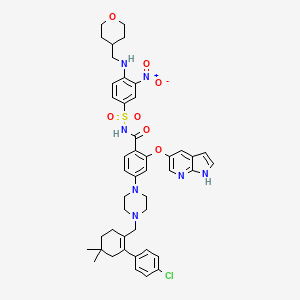
Venetoclax is an orally administered small-molecule inhibitor of B-cell lymphoma 2 (BCL-2), the anti-apoptotic protein malignant cells frequently overexpress to escape programmed death. It is a BH3-mimetic: by occupying the BH3-binding groove of BCL-2 it displaces the pro-apoptotic effectors held there, restoring mitochondrial outer membrane permeabilization, cytochrome c release and caspase activation involving Caspase-3 (CASP3). Its selectivity is the point of its design — the earlier dual inhibitor navitoclax also blocked BCL-xL, on which circulating platelets depend, and the dose-limiting thrombocytopenia that followed prompted a molecule that spares it. Because many hematologic malignancies are held alive by BCL-2 alone, the resulting apoptosis is rapid and near-complete, and the tumor lysis it can precipitate is why treatment begins with a weekly dose ramp under hydration and uric-acid-lowering cover rather than at full dose. Resistance typically reflects a shift in dependence to related survival proteins such as MCL1, or mutation of the BH3 groove itself. Metabolism by cytochrome P450 3A4 means strong CYP3A inhibitors require dose adjustment.
In the clinic it is a cornerstone of chronic lymphocytic leukemia (CLL) and acute myeloid leukemia (AML) treatment, and is being studied in higher-risk myelodysplastic syndrome (MDS). In CLL it anchors fixed-duration, chemotherapy-free regimens with anti-CD20 antibodies such as obinutuzumab or with BTK inhibitors including ibrutinib and acalabrutinib; because its mechanism runs downstream of the DNA damage response, it retains activity in del(17p)/TP53-disrupted disease that resists chemotherapy. In AML, particularly in older or unfit patients, it is most often paired with hypomethylating agents such as azacitidine, turning a population once offered supportive care alone into one with a standard active regimen, and it is under study with intensive cytarabine-based backbones, in transplant conditioning, and alongside cellular therapies such as CD123-directed CAR-T cells.
Beyond direct killing, venetoclax suppresses oxidative phosphorylation through effects on Mitochondrial respiratory chain complex I, a mechanism implicated in its activity against leukemic stem cells, while its effect on normal lymphocytes and natural killer cells is relevant when combined with immune-based treatments. Newer, more potent BCL-2 inhibitors such as sonrotoclax are now being evaluated head-to-head against it.
Recent Publications Summary
Recent clinical research has established venetoclax in combination with hypomethylating agents (HMA) as a standard frontline approach for newly diagnosed acute myeloid leukemia (AML) in patients ineligible for intensive chemotherapy. An international retrospective cohort study of 576 patients found that venetoclax plus HMA resulted in significantly higher composite complete remission rates (63.7% vs. 46.0%) and numerically higher median overall survival compared to non-venetoclax regimens in patients ≥75 years or with ≥1 comorbidity 42525505Jul. Similarly, a multicenter phase II trial of rosuvastatin combined with venetoclax-azacitidine in older/unfit AML patients achieved a complete response rate of 55.5% and composite complete remission rate of 72.2%, with 84.6% of responders achieving measurable residual disease <10⁻³ 42082682May. These findings underscore the efficacy of venetoclax-based therapy as a cornerstone treatment in elderly and medically compromised populations.
Time-limited venetoclax-HMA therapy is emerging as a feasible strategy in select patients who achieve remission. A case series of seven AML or high-risk myelodysplastic syndrome patients who discontinued HMA-venetoclax after six months of complete remission reported sustained remission in six patients over 7–50 months, with five showing clearance of somatic mutations to <1% and resolution of cytogenetic abnormalities 42171770May. In newly diagnosed unfit AML patients receiving 28-day cycles of venetoclax-azacitidine, an overall response rate of 64.9% was achieved across 134 patients with median age 70 years, with 87% completing ≥1 cycle with response assessment 41685656Feb. A prognostic model integrating mutational and cytogenetic profiles in 506 AML patients treated with first-line HMA-venetoclax identified TP53, KRAS, JAK2, and U2AF1 mutations as adverse prognostic factors, while IDH1/2 mutations were favorable, stratifying patients into low-, intermediate-, and high-risk groups with median overall survival of 54.2, 22.3, and 7.5 months respectively 41671569Feb.
In chronic lymphocytic leukemia (CLL), fixed-duration venetoclax combinations have become a standard first-line treatment. The phase 3 CLL13/GAIA trial in 926 fit patients without TP53 aberrations comparing 12-cycle fixed-duration regimens of venetoclax-rituximab, venetoclax-obinutuzumab, and venetoclax-obinutuzumab-ibrutinib against chemoimmunotherapy demonstrated 5-year progression-free survival rates of 57.4%, 69.8%, and 81.3% respectively versus 50.7% with chemoimmunotherapy 41911073Mar. In relapsed/refractory CLL, a phase II study of ibrutinib followed by ibrutinib-venetoclax combination for 24 cycles achieved best complete remission/CRi rates of 67% with bone marrow undetectable MRD in 61% of patients and estimated 7-year progression-free survival of 63.3% 41678768Feb. A registry analysis of 274 venetoclax-treated CLL patients demonstrated 1-year overall survival of 94.2%, with improved outcomes when used as first-line therapy (96.3%) versus later lines (92.1%) 41978941Apr.
Therapeutic drug monitoring is emerging as an important consideration for optimizing venetoclax therapy. A retrospective analysis of 123 acute leukemia patients identified significant differences in plasma trough and peak concentrations between those who developed febrile neutropenia (median trough 1519.55 ng/mL, peak 2834.50 ng/mL) and those who did not (1400.32 ng/mL, 2337.74 ng/mL), suggesting potential for concentration-based dose optimization 42541584Aug. Clinically significant drug-drug interactions with CYP3A4 inhibitors warrant monitoring; venetoclax combined with posaconazole or voriconazole substantially increased venetoclax concentrations in patients with myeloid neoplasms 41915767Mar. Venetoclax-based therapy has been associated with major adverse cardiac events in newly diagnosed AML patients 42089196May, and integration of ex vivo drug sensitivity testing with mutational analysis revealed that DNMT3A mutations are associated with greater resistance to venetoclax while CEBPA mutations correlate with increased sensitivity 42209825May.
Emerging evidence supports venetoclax in combination with multiple novel agents and additional disease settings. A phase 1/2 trial of duvelisib plus venetoclax in 35 relapsed/refractory CLL patients and 9 with Richter transformation demonstrated overall response rates of 91% and complete response rates of 60% 41886642Mar. Venetoclax combined with high-dose cytarabine and mitoxantrone is being evaluated as salvage therapy for relapsed or refractory AML 41791831Mar. Preliminary studies demonstrate that venetoclax can enhance CD123 CAR-T cell cytotoxicity against myeloid neoplasms in a concentration-dependent manner 42277354Jun, and a Phase Ib trial combining enzalutamide and venetoclax in castration-resistant prostate cancer showed reduced circulating tumor cells in responding patients, suggesting potential applications beyond hematologic malignancies 42067541May.
What Changes, What Holds
1. Venetoclax-HMA is now the reference frontline arm for unfit AML, not merely an option
REINFORCES Retrospective comparison against non-venetoclax regimens in older and comorbid patients supplies the outcome data the baseline's claim of "most often paired with hypomethylating agents" was asserting without 42525505Jul, and the statin add-on is another combination against an established backbone rather than a new class of claim 42082682May. Nothing here revises mechanism or indication; it raises confidence in the positioning already stated. The open question is whether the retrospective comparison survives randomised testing, since selection of fitter patients into venetoclax arms is not excluded.
2. Remission on venetoclax-HMA can be deep enough to stop the drug
NEW DIRECTION Discontinuation after sustained remission, with molecular and cytogenetic clearance in most patients, addresses durability off treatment — something the Overview covers only in CLL, where fixed duration is standard, while describing AML use as continuous 42171770May. The evidence is a seven-patient case series and cannot yet license stopping outside trials. Mutational risk stratification separating TP53/KRAS/JAK2/U2AF1 from favourable IDH1/2 also gives the baseline's undifferentiated AML population an internal structure it lacked 41671569Feb.
3. Adding a BTK inhibitor to venetoclax-obinutuzumab buys further disease control in fit, untreated CLL
REINFORCES Five-year outcomes ranking the triplet above the doublet above venetoclax-rituximab, all above chemoimmunotherapy, confirm both the fixed-duration principle and the specific partners the Overview names 41911073Mar. Registry survival favouring first-line over later-line use sharpens sequencing without altering the account 41978941Apr. Longer follow-up is needed on whether the triplet's advantage translates into survival rather than progression-free time, and at what toxicity cost.
4. Plasma exposure and mutational background both predict who tolerates and who responds to venetoclax
NEW DIRECTION Concentration differences tracking febrile neutropenia open the possibility of therapeutic drug monitoring, a level of individualisation absent from the Overview's account, which handles exposure only through fixed ramp-up and CYP3A dose reduction 42541584Aug. Cardiac events in newly diagnosed AML sit in an organ system the baseline does not discuss at all 42089196May. DNMT3A-associated resistance also broadens a resistance account the Overview attributes largely to MCL1 dependence 42209825May; the trough-toxicity association is correlative and the overlapping distributions argue against a threshold being actionable yet.
5. Venetoclax shows activity in castration-resistant prostate cancer
NEW DIRECTION Activity in a solid tumour departs from an Overview that frames BCL-2 dependence, and therefore this drug, as a property of hematologic malignancies 42067541May. The signal is a Phase Ib circulating-tumour-cell readout in responders only, far from establishing benefit, and it needs a response-rate endpoint in a randomised setting. Duvelisib combination in relapsed CLL and Richter transformation 41886642Mar and the CD123 CAR-T enhancement are additional partners for uses the baseline already anticipates.
Overview update candidates: fixed-duration triplet superiority in first-line CLL; mutation-based risk stratification for AML on venetoclax-HMA; DNMT3A as a resistance determinant alongside MCL1.
venetoclax
Background Contexts
In the literature, the biological baseline, pathological conditions, or disease models commonly surrounding venetoclax are described as follows:
- acute myeloid leukemia (Disease) — 17 papers: PMIDs 42525505, 42504815, 42209825, 42171770, etc.
- chronic lymphocytic leukemia (Disease) — 11 papers: PMIDs 42484277, 42425121, 42241337, 42166034, etc.
- Allogeneic hematopoietic stem cell transplantation (Therapy) — 2 papers: PMIDs 42159161, 41914434
- Chemoimmunotherapy (Therapy) — 2 papers: PMIDs 42241337, 41627367
- myeloid neoplasms (Disease) — 2 papers: PMIDs 42277354, 41915767
- acute graft versus host disease (Disease) — 1 paper: PMIDs 41915889
- acute leukemia (Disease) — 1 paper: PMIDs 42541584
- acute megakaryoblastic leukemia (Disease) — 1 paper: PMIDs 42178012
- allogeneic hematopoietic cell transplantation (Therapy) — 1 paper: PMIDs 42504815
- ASXL1 mutations (Gene) — 1 paper: PMIDs 42089434
- B-cell lymphoma 2 (Bcl-2) (Protein) — 1 paper: PMIDs 42085602
- bendamustine (Therapy) — 1 paper: PMIDs 42103972
Methodologies & Technologies Used
Researchers utilize the following experimental methods, imaging platforms, computational models, or biological reagents to study venetoclax:
- bendamustine-rituximab (Therapy) — 2 papers: PMIDs 41911073, 41587482
- gilteritinib (Therapy) — 2 papers: PMIDs 42504815, 42139346
- 25mg twice daily duvelisib plus 400mg daily venetoclax (Therapy) — 1 paper: PMIDs 41886642
- 3D-QSAR (CoMFA) model (Technology) — 1 paper: PMIDs 41638593
- Age (Other) — 1 paper: PMIDs 42525505
- AML xenograft model (Organism) — 1 paper: PMIDs 42178012
- AMPLIFY study (Other) — 1 paper: PMIDs 41587482
- AR pathway inhibitors (Therapy) — 1 paper: PMIDs 42067541
- azacitidine (Therapy) — 1 paper: PMIDs 42504815
- bendamustine lymphodepletion (Therapy) — 1 paper: PMIDs 42241337
- bexobrutideg (Therapy) — 1 paper: PMIDs 42484277
- BH3-mimetics (Chemical) — 1 paper: PMIDs 42036409
Molecular Interventions & Targets
The primary molecular pathways, regulatory genes, enzymes, or therapeutic agents actively targeted and manipulated in relation to venetoclax include:
- B-cell lymphoma 2 (Bcl-2) (Protein) — 8 papers: PMIDs 42166034, 42139346, 42067541, 41941729, etc.
- hypomethylating agent (Therapy) — 4 papers: PMIDs 42525505, 42171770, 41914434, 41671569
- acalabrutinib (Therapy) — 3 papers: PMIDs 42103972, 41978941, 41587482
- Bruton tyrosine kinase inhibitor (Therapy) — 3 papers: PMIDs 41978941, 41974594, 41627367
- ibrutinib (Therapy) — 3 papers: PMIDs 41978941, 41911073, 41678768
- azacitidine (Therapy) — 2 papers: PMIDs 42082682, 41685656
- bcl-2 family (Protein) — 2 papers: PMIDs 42118656, 42036409
- cytarabine (Therapy) — 2 papers: PMIDs 42118656, 41791831
- DNMT3A (Gene) — 2 papers: PMIDs 42209825, 42139346
- FLT3 ITD (Gene) — 2 papers: PMIDs 42171770, 42089434
- Myeloid cell leukemia 1 (MCL1) (Protein) — 2 papers: PMIDs 41935056, 41638593
- TP53 (Gene) — 2 papers: PMIDs 42089434, 41671569
Observed Outcomes & Phenotypes
The phenotypic changes, physiological endpoints, or clinical metrics observed and measured in connection with venetoclax include:
- hazard ratio (Clinical Metric) — 3 papers: PMIDs 42425121, 41978941, 41587482
- progression-free survival (Clinical Metric) — 3 papers: PMIDs 42425121, 41911073, 41886642
- complete remission (Clinical Metric) — 2 papers: PMIDs 42209825, 42171770
- complete response (Clinical Metric) — 2 papers: PMIDs 42082682, 41886642
- composite complete remission (Clinical Metric) — 2 papers: PMIDs 42525505, 42082682
- diarrhea (Clinical Metric) — 2 papers: PMIDs 42425121, 41886642
- overall and progression-free survival (OS, PFS) (Clinical Metric) — 2 papers: PMIDs 42082682, 41671569
- overall survival (Clinical Metric) — 2 papers: PMIDs 42525505, 41978941
- undetectable minimal residual disease (Clinical Metric) — 2 papers: PMIDs 42241337, 41886642
- 10-years OS (Clinical Metric) — 1 paper: PMIDs 41911073
- 1236 C>T (Gene) — 1 paper: PMIDs 42541584
- 14 Months (Clinical Metric) — 1 paper: PMIDs 42171770
General Takeaways & Clinical Potentials
The high-level concepts, clinical translations, and overarching conclusions proposed in the research surrounding venetoclax are summarized below:
- NCT06010017 (Other) — 2 papers: PMIDs 41911073, 41886642
- standard therapy (Therapy) — 2 papers: PMIDs 41978941, 41974594
- 24-cycle ibrutinib + venetoclax combination (Therapy) — 1 paper: PMIDs 41678768
- acute leukemia (Disease) — 1 paper: PMIDs 42541584
- adoptive T cell therapies (Therapy) — 1 paper: PMIDs 42036409
- advanced disease (Other) — 1 paper: PMIDs 41978941
- allogeneic hematopoietic cell transplantation (Therapy) — 1 paper: PMIDs 42504815
- AML PDXs (Cell Line) — 1 paper: PMIDs 41576348
- anti-HCC activity (Biological Process) — 1 paper: PMIDs 41638593
- AR+/-BCL-2+/- PCa cell subpopulation dynamics (Biological Process) — 1 paper: PMIDs 42067541
- BCL-2 as a vital therapeutic target (Other) — 1 paper: PMIDs 42067541
- BH3-mimetics (Chemical) — 1 paper: PMIDs 41935056