Ruxolitinib
Ruxolitinib is a selective, orally administered small-molecule inhibitor of Janus kinase 1 (JAK1) and Janus kinase 2 (JAK2), two tyrosine kinases that play central roles in cytokine signaling through the JAK/STAT pathway.
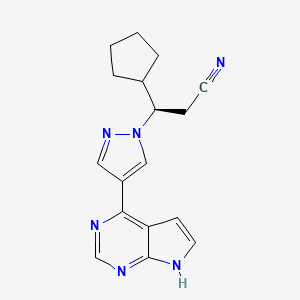
Ruxolitinib is a selective, orally administered small-molecule inhibitor of Janus kinase 1 (JAK1) and Janus kinase 2 (JAK2), two tyrosine kinases that play central roles in cytokine signaling through the JAK/STAT pathway. By blocking JAK1 and JAK2 activity, ruxolitinib suppresses downstream signaling through transcription factors such as STAT1 and STAT5A, thereby attenuating the aberrant cytokine-driven inflammation and cell proliferation that underlies several hematologic malignancies and immune-mediated disorders. It was among the first JAK inhibitors to receive regulatory approval and belongs to the broader class of Janus kinase inhibitors that has transformed the management of myeloproliferative neoplasms and inflammatory conditions.
Ruxolitinib is approved for the treatment of intermediate- or high-risk myelofibrosis (MF), polycythemia vera (PV) in patients who are resistant to or intolerant of hydroxyurea, and steroid-refractory acute and chronic graft-versus-host disease (GVHD). Its mechanism centers on the inhibition of JAK1 and JAK2, suppressing signaling driven by constitutively active or mutant JAK2 (including JAK2 V617F) and JAK2 gain-of-function mutations, which drive pathological activation of the JAK2/STAT3 signaling pathway and CD44/JAK2/STAT3 signaling pathway in malignant hematopoietic cells. By dampening these cascades, ruxolitinib reduces splenomegaly, alleviates disease-related symptoms, and modulates immune responses relevant to both cancer and autoimmune disease contexts.
Where the papers sit
14 papers from the last 6 months study ruxolitinib directly · updated from PubMed 12 Oct 2026
Study type 4 clinical trials · 8 observational · 1 human data · 1 unclassified
Themes 3 themes · 1 new direction
-
Broad JAK Inhibitor Use
Ruxolitinib is being used across myelofibrosis, immune-mediated disease, and inflammatory skin disorders rather than within one disease pathway. Selinexor combination therapy is being tested in JAK inhibitor-naïve myelofibrosis, while topical JAK inhibition targets facial vitiligo and atopic dermatitis. Emapalumab combinations address pediatric HLH, and ruxolitinib is reported for corticosteroid-refractory hypereosinophilic syndrome. Pharmacokinetics and exposure-toxicity relationships remain a recurring concern across hematologic and immune indications.
7 papers · 50%
-
Myeloproliferative Neoplasm Care
Ruxolitinib remains central to real-world management of polycythemia vera and myelofibrosis, with outcomes tracked beyond registration trials. Hydroxycarbamide comparisons, long-term prognostic modeling, and high-dose exposure studies focus on response, safety, and treatment durability. After ruxolitinib failure, momelotinib is emerging as a practical option, with predictors of benefit under study. Hemorrhagic and thrombotic events remain important endpoints in selecting dose and sequencing therapy.
4 papers · 28.6%
-
Graft-Versus-Host Disease
JAK inhibition is extending from treatment of established GVHD to prevention after haploidentical transplantation and local control of skin disease. Low-dose ruxolitinib is being tested prophylactically, while topical treatment targets chronic cutaneous GVHD with intra-patient randomized comparisons. Long-term follow-up addresses durability across acute and chronic GVHD and helps define delayed toxicity. The key open question is how preventive, systemic, and topical strategies should be sequenced.
3 papers · 21.4%
Ruxolitinib becomes a candidate for therapeutic drug monitoring and exposure-guided dosing
The pharmacokinetics of ruxolitinib in hematologic malignancies and immune-mediated diseases were studied prospectively, rather than treating it solely as an intervention or outcome predictor. The study found marked between-patient variability in clearance and substantial effects of CYP3A4 and dual CYP2C9/CYP3A4 inhibitors, and it explicitly evaluated exposure-response relationships for possible therapeutic drug monitoring. This changes ruxolitinib’s role from a fixed-dose therapy to a drug whose concentrations and interactions may guide individualized dosing 42338396Jun.
Papers
The 14 papers from the last 6 months that study ruxolitinib directly, newest first, by theme and by study type. Study types come from PubMed publication types and MeSH headings.
By theme
Broad JAK Inhibitor Use (7)
- Budget Impact Analysis of System-Level Costs Associated With Topical Janus Kinase Inhibitor Therapies for Moderate Atopic Dermatitis in Germany. Value in health regional issues · 28 Sept 2026 PMID 42805028
- Ruxolitinib for life-threatening corticosteroid-refractory hypereosinophilic syndrome: A multicenter case series. Clinical immunology (Orlando, Fla.) · 24 Jul 2026 PMID 42498149
- Noninvasive imaging for the evaluation of JAK inhibitors efficacy in the management of facial vitiligo. The Journal of dermatological treatment · 20 Jul 2026 PMID 42473916
- Emapalumab plus conventional therapy with or without ruxolitinib for pediatric hemophagocytic lymphohistiocytosis: a single center retrospective study. Immunologic research · 3 Jul 2026 PMID 42397658
- Ruxolitinib Pharmacokinetics and Exposure-Toxicity Relationship in Hematologic Malignancies and Immune-Mediated Diseases: A Prospective Observational Study. Clinical pharmacology and therapeutics · 24 Jun 2026 PMID 42338396
- Selinexor Plus Ruxolitinib in Janus Kinase Inhibitor-Naïve Myelofibrosis: Phase III SENTRY Trial. Journal of clinical oncology : official journal of the American Society of Clinical Oncology · 2 Jun 2026 PMID 42227656
- Real-world patient characteristics and clinical outcomes in patients with myelofibrosis in Japan. PloS one · 8 May 2026 PMID 42102170
Myeloproliferative Neoplasm Care (4)
- A dynamic prognostic model for polycythemia vera long-term outcomes in patients treated with ruxolitinib. Blood advances · 11 Jun 2026 PMID 42275537
- Clinical benefit and predictors of response to momelotinib after ruxolitinib failure: A cooperative real-world study. Cancer · 12 May 2026 PMID 42118670
- Prospective, non-interventional study of ruxolitinib therapy in patients with polycythaemia vera - German real-world data (PaVe study). Annals of hematology · 12 May 2026 PMID 42118306
- High-dose ruxolitinib (25 mg twice daily) in myelofibrosis: feasibility, safety, and long-term treatment exposure in a real-world cohort. Annals of hematology · 4 May 2026 PMID 42081119
Graft-Versus-Host Disease (3)
- Topical ruxolitinib for chronic cutaneous graft-versus-host disease: a single-centre, randomised, double-blind, intra-patient-controlled phase 2 trial. The Lancet. Haematology · 16 Sept 2026 PMID 42748944
- Long-term follow-up of ruxolitinib pre-approval use in acute and chronic graft-versus-host disease. Annals of hematology · 6 Aug 2026 PMID 42560429
- Low-dose ruxolitinib for graft-versus-host disease prevention in haploidentical haematopoietic stem-cell transplantation: a multicentre, open-label, randomised, controlled, phase 3 trial. The Lancet. Haematology · 30 Jul 2026 PMID 42532067
By study type
Clinical trials (4)
- Topical ruxolitinib for chronic cutaneous graft-versus-host disease: a single-centre, randomised, double-blind, intra-patient-controlled phase 2 trial. The Lancet. Haematology · 16 Sept 2026 PMID 42748944
- Low-dose ruxolitinib for graft-versus-host disease prevention in haploidentical haematopoietic stem-cell transplantation: a multicentre, open-label, randomised, controlled, phase 3 trial. The Lancet. Haematology · 30 Jul 2026 PMID 42532067
- Selinexor Plus Ruxolitinib in Janus Kinase Inhibitor-Naïve Myelofibrosis: Phase III SENTRY Trial. Journal of clinical oncology : official journal of the American Society of Clinical Oncology · 2 Jun 2026 PMID 42227656
- Prospective, non-interventional study of ruxolitinib therapy in patients with polycythaemia vera - German real-world data (PaVe study). Annals of hematology · 12 May 2026 PMID 42118306
Observational studies and case reports (8)
- Long-term follow-up of ruxolitinib pre-approval use in acute and chronic graft-versus-host disease. Annals of hematology · 6 Aug 2026 PMID 42560429
- Ruxolitinib for life-threatening corticosteroid-refractory hypereosinophilic syndrome: A multicenter case series. Clinical immunology (Orlando, Fla.) · 24 Jul 2026 PMID 42498149
- Noninvasive imaging for the evaluation of JAK inhibitors efficacy in the management of facial vitiligo. The Journal of dermatological treatment · 20 Jul 2026 PMID 42473916
- Emapalumab plus conventional therapy with or without ruxolitinib for pediatric hemophagocytic lymphohistiocytosis: a single center retrospective study. Immunologic research · 3 Jul 2026 PMID 42397658
- Ruxolitinib Pharmacokinetics and Exposure-Toxicity Relationship in Hematologic Malignancies and Immune-Mediated Diseases: A Prospective Observational Study. Clinical pharmacology and therapeutics · 24 Jun 2026 PMID 42338396
- Clinical benefit and predictors of response to momelotinib after ruxolitinib failure: A cooperative real-world study. Cancer · 12 May 2026 PMID 42118670
- Real-world patient characteristics and clinical outcomes in patients with myelofibrosis in Japan. PloS one · 8 May 2026 PMID 42102170
- High-dose ruxolitinib (25 mg twice daily) in myelofibrosis: feasibility, safety, and long-term treatment exposure in a real-world cohort. Annals of hematology · 4 May 2026 PMID 42081119
Human data, design not indexed (1)
- A dynamic prognostic model for polycythemia vera long-term outcomes in patients treated with ruxolitinib. Blood advances · 11 Jun 2026 PMID 42275537
Unclassified: not yet indexed with MeSH (1)
- Budget Impact Analysis of System-Level Costs Associated With Topical Janus Kinase Inhibitor Therapies for Moderate Atopic Dermatitis in Germany. Value in health regional issues · 28 Sept 2026 PMID 42805028
Written from 14 PubMed abstracts, each one listed by PMID above. Published: 2026-06-16. Last written: 2026-08-26 by GPT. Corrections: 2026-09-26 by GPT. Drafted by language models from published abstracts; not medical advice.