Dexmedetomidine
Dexmedetomidine is a highly selective and potent α2-adrenergic receptor agonist widely used as a sedative, analgesic, and anxiolytic agent in both surgical and nonsurgical clinical settings.
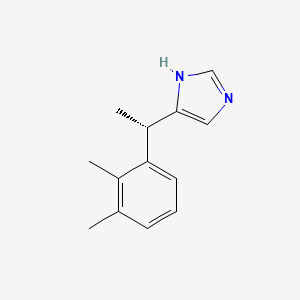
Dexmedetomidine is a highly selective and potent α2-adrenergic receptor agonist widely used as a sedative, analgesic, and anxiolytic agent in both surgical and nonsurgical clinical settings. It exerts its primary effects by binding to α2-adrenergic receptors in the central and peripheral nervous system, producing dose-dependent sedation, analgesia, and sympatholysis without causing significant respiratory depression—a property that distinguishes it from many classical sedatives. Originally approved for intravenous use in intensive care and procedural sedation, dexmedetomidine has more recently been formulated in novel delivery formats including sublingual, nasal spray, and topical ophthalmic preparations, reflecting a broader expansion of its therapeutic applications. Its pharmacological profile also encompasses anti-inflammatory and neuroprotective properties, making it a subject of increasing interest beyond the perioperative setting.
Beyond sedation, dexmedetomidine has attracted significant attention for its neuroprotective effects in acute and chronic neurological conditions. Its ability to modulate neuroinflammation, support neuronal survival signaling, and interact with metabolic regulatory pathways such as AMPK/mTOR and Sirtuin 1 (SIRT1) (Sirt1) has positioned it as a candidate therapeutic agent in models of ischemic brain injury, neonatal hypoxic-ischemic encephalopathy, and neurodegenerative diseases including Alzheimer's disease (AD). These emerging mechanistic insights are driving a wave of preclinical and clinical research aimed at characterizing the full scope of dexmedetomidine's biological activity.
Where the papers sit
9 papers from the last 6 months study dexmedetomidine directly · updated from PubMed 10 Oct 2026
Study type 3 clinical trials · 2 observational · 4 preclinical
Themes one subject
Those 9 are all about one subject.
-
Sedation and Neuroprotection
Perioperative use is moving beyond sedation toward delirium prevention, sleep recovery, and protection of vulnerable brain tissue. Studies assess administration timing and nasal dosing alongside respiratory and circulatory safety, bulbocavernosus reflex reliability, and intraocular pressure after laser capsulotomy. Experimental work links protection to AMPK/SIRT1, reduced microglial activation through Rbm47, and BDNF-TrkB signaling in Alzheimer disease, hypoxic-ischemic injury, and ischemia. Clinical protocols remain exploratory, so the optimal dose, timing, and balance between neurological benefit and adverse events remain open.
Papers
The 9 papers from the last 6 months that study dexmedetomidine directly, newest first, by theme and by study type. Study types come from PubMed publication types and MeSH headings.
By theme
Sedation and Neuroprotection (9)
- Is the bulbocavernosus reflex reliable under dexmedetomidine administration in children? -An analysis during tethered cord surgery. Child's nervous system : ChNS : official journal of the International Society for Pediatric Neurosurgery · 28 Aug 2026 PMID 42663672
- Impact of dexmedetomidine administration timing on postoperative delirium in elderly patients with lower limb fractures: a study protocol for a randomised controlled trial. BMJ open · 28 Jun 2026 PMID 42366003
- The protective effects of dexmedetomidine via AMPK/SIRT1 pathway activation in a rat model of alzheimer's disease: evidence from preliminary findings. Molecular biology reports · 10 Jun 2026 PMID 42268445
- The Prophylactic Effect of Dexmedetomidine 0.008% Versus Brimonidine 0.2% on IOP Elevation After Nd: YAG Laser Capsulotomy. Pharmacology research & perspectives · 27 May 2026 PMID 42192576
- Effect of evening dexmedetomidine nasal spray on postoperative sleep disturbance in patients undergoing laparoscopic cholecystectomy: protocol for a multicentre, prospective, randomised, double-blind, controlled trial. BMJ open · 5 May 2026 PMID 42086269
- Dexmedetomidine Exerts Multi-level Effects to Ameliorate Alzheimer's Disease Pathology in the Adult Zebrafish Brain. Molecular neurobiology · 4 May 2026 PMID 42082800
- Dexmedetomidine Attenuates Neonatal Hypoxic-Ischemic Encephalopathy by Inhibiting Microglia Activation Through Upregulating Rbm47. FASEB journal : official publication of the Federation of American Societies for Experimental Biology · 1 May 2026 PMID 42065818
- Risk Factors for Adverse Circulatory and Respiratory Events in Patients Undergoing Esophageal Endoscopic Submucosal Dissection Under Dexmedetomidine-Based Sedation. The Korean journal of gastroenterology = Taehan Sohwagi Hakhoe chi · 24 Apr 2026 PMID 42026961
- Mechanisms of dexmedetomidine-induced cerebral protection following ischemic brain injury via the brain-derived neurotrophic factor-tyrosine kinase receptor B pathway. Neuroreport · 22 Apr 2026 PMID 42015734
By study type
Clinical trials (3)
- Impact of dexmedetomidine administration timing on postoperative delirium in elderly patients with lower limb fractures: a study protocol for a randomised controlled trial. BMJ open · 28 Jun 2026 PMID 42366003
- The Prophylactic Effect of Dexmedetomidine 0.008% Versus Brimonidine 0.2% on IOP Elevation After Nd: YAG Laser Capsulotomy. Pharmacology research & perspectives · 27 May 2026 PMID 42192576
- Effect of evening dexmedetomidine nasal spray on postoperative sleep disturbance in patients undergoing laparoscopic cholecystectomy: protocol for a multicentre, prospective, randomised, double-blind, controlled trial. BMJ open · 5 May 2026 PMID 42086269
Observational studies and case reports (2)
- Is the bulbocavernosus reflex reliable under dexmedetomidine administration in children? -An analysis during tethered cord surgery. Child's nervous system : ChNS : official journal of the International Society for Pediatric Neurosurgery · 28 Aug 2026 PMID 42663672
- Risk Factors for Adverse Circulatory and Respiratory Events in Patients Undergoing Esophageal Endoscopic Submucosal Dissection Under Dexmedetomidine-Based Sedation. The Korean journal of gastroenterology = Taehan Sohwagi Hakhoe chi · 24 Apr 2026 PMID 42026961
Preclinical: animal, cell and lab studies (4)
- The protective effects of dexmedetomidine via AMPK/SIRT1 pathway activation in a rat model of alzheimer's disease: evidence from preliminary findings. Molecular biology reports · 10 Jun 2026 PMID 42268445
- Dexmedetomidine Exerts Multi-level Effects to Ameliorate Alzheimer's Disease Pathology in the Adult Zebrafish Brain. Molecular neurobiology · 4 May 2026 PMID 42082800
- Dexmedetomidine Attenuates Neonatal Hypoxic-Ischemic Encephalopathy by Inhibiting Microglia Activation Through Upregulating Rbm47. FASEB journal : official publication of the Federation of American Societies for Experimental Biology · 1 May 2026 PMID 42065818
- Mechanisms of dexmedetomidine-induced cerebral protection following ischemic brain injury via the brain-derived neurotrophic factor-tyrosine kinase receptor B pathway. Neuroreport · 22 Apr 2026 PMID 42015734
Written from 9 PubMed abstracts, each one listed by PMID above. Published: 2026-06-16. Last written: 2026-08-30 by GPT. Drafted by language models from published abstracts; not medical advice.