curcumin
Overview
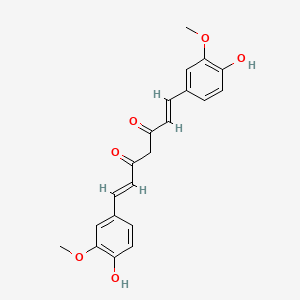
Curcumin is a lipophilic polyphenol (a diarylheptanoid, chemically 1,7-bis(4-hydroxy-3-methoxyphenyl)hepta-1,6-diene-3,5-dione, also called diferuloylmethane) isolated from the rhizome of Curcuma longa, or turmeric. It is the principal curcuminoid pigment of turmeric and is used commercially as the food colorant C.I. Natural Yellow 3 (E 100). Its structure — two phenolic feruloyl groups joined by an α,β-unsaturated β-diketone linker — underlies both its radical-scavenging chemistry and its keto–enol tautomerism, and it exists as a conjugated yellow-orange solid that is essentially insoluble in water but readily partitions into lipid environments such as phospholipid bilayers.
Biologically, curcumin behaves as a promiscuous, multi-target modulator rather than a single-receptor ligand. It suppresses inflammatory signaling through the NF-κB axis, including upstream TLR4/MyD88 activation, with downstream reduction of proinflammatory cytokines such as IL-6 and IL-1β, chemokines such as CXCL8, and enzymes including COX-2 and MMP-9. It also engages the PI3K/Akt–mTOR pathway, affecting autophagy, proliferation, and apoptosis; modulates TGF-β signaling implicated in fibrosis; and activates NRF2-driven antioxidant responses that lower reactive oxygen species and influence redox-dependent cell death programs such as ferroptosis. These overlapping activities account for the breadth of preclinical work on curcumin in oncology, metabolic disease, dermatologic and neurodegenerative conditions, and infection, where it is frequently studied alongside other polyphenols such as resveratrol, quercetin, and epigallocatechin gallate.
The dominant limitation of curcumin as a therapeutic is pharmacokinetic rather than pharmacodynamic: poor aqueous solubility, chemical instability at physiological pH, rapid intestinal and hepatic glucuronidation and sulfation, and low systemic exposure after oral dosing, compounded by limited penetration of the blood–brain barrier. Much contemporary research therefore concerns formulation — nanocrystals, liposomes and lipid-based carriers, polymeric and micellar systems using excipients such as chitosan, hyaluronic acid, or pectin, and Pickering emulsions stabilized by biopolymer particles — intended to raise bioavailability, direct tissue targeting, or enable stimulus-responsive release. The same optical and physicochemical properties that complicate its use as a drug also make it useful as an intrinsic fluorescence probe and as a chromogenic reporter in biosensing and photochemotherapy applications.
Recent Publications Summary (latest 30 papers)
Recent studies have predominantly focused on overcoming curcumin's limitations in bioavailability and poor solubility through innovative delivery system design. A curcumin-copper complex demonstrated superior inhibition of intracellular lipid accumulation in cellular and murine models of metabolic dysfunction-associated fatty liver disease (MAFLD), with multi-omics studies revealing modulation of hepatic metabolic pathways 42584672Aug. lipid nanoparticles encapsulating curcumin were developed for photodynamic therapy of non-melanoma skin cancer, with formulations exhibiting mean particle sizes between 169–189 nm and high encapsulation efficiency 42508506Jul. Covalent grafting of hyaluronic acid to curcumin nanocrystals enhanced mucosal targeting and permeation, achieving 37.3% drug deposition in ex vivo tissue studies 42300103Jun. A copper-doped Prussian blue nanoplatform encapsulating curcumin demonstrated enhanced photothermal effects and chemodynamic therapy efficacy through synergistic glutathione depletion and amplified Fenton-like catalysis 42142675May. chitosan-based α-aminophosphonate conjugates loaded with curcumin exhibited pH-responsive release kinetics and notable antibacterial activity, with one formulation achieving 75.9% loading efficiency 42120914May. Casein-carboxymethyl chitosan complexes modified through enzymatic glycosylation stabilized high internal phase emulsions with improved curcumin encapsulation and lipid oxidative stability 42107576May. reactive oxygen species-responsive polyprodrug copolymers enabled codelivery of curcumin with cinnamaldehyde to disrupt tumor redox homeostasis 42090188May. Polysaccharide-based soluble microneedles functionalized with curcumin-loaded mesoporous polydopamine nanoparticles demonstrated 70.9% antibacterial activity against Propionibacterium acnes and synergistic effects with photothermal therapy for acne treatment 42084949May. Additional platforms included β-cyclodextrin metal-organic frameworks for neural delivery 42530656Jul, ovalbumin-peanut protein isolate emulsion gels with synergistic antioxidant activity when co-formulated with quercetin 42349593Jun, and lignin nanoparticle-based Pickering emulsions maintaining 85.09% curcumin retention at 60°C and 88.9% under UV exposure 42264249Jun.
Curcumin and its synthetic analogues demonstrated diverse anticancer mechanisms across multiple cancer types. Two synthetic curcumin analogues, B-143 and B-155, exhibited differential effects in ovarian cancer cells, with B-155 showing significantly greater cytotoxicity, G2/M cell-cycle arrest, and increased apoptosis through distinct signaling networks 42550311Aug. Curcumin induced ferroptosis in papillary thyroid carcinoma cells through downregulation of glutathione peroxidase 4, increasing malondialdehyde and reactive oxygen species while depleting glutathione, effects confirmed as ferroptosis-dependent using ferrostatin-1 42550316Aug. In esophageal squamous cell carcinoma, both curcumin and nano-curcumin inhibited proliferation through calcium signaling and endoplasmic reticulum stress pathways, with nanoformulation demonstrating improved bioavailability 42139764May. Magnetically actuated microrobots fabricated with encapsulated curcumin demonstrated enhanced bioavailability and free radical scavenging for targeted periodontitis therapy, reducing inflammation and bone resorption in murine models through macrophage phenotype modulation 42555738Aug. A pH-responsive chromogenic nanoreagent with high curcumin loading enabled sensitive colorimetric biosensing of extracellular vesicle membrane proteins relevant to ovarian cancer diagnostics 42319083Jun.
Curcumin formulations promoted tissue repair and neuroprotection across multiple pathological contexts. silver-curcumin hydrocolloid dressings demonstrated superior tensile strength and a swelling ratio of 428.76%, surpassing commercial wound dressings for chronic wound management 42586992Aug. Nanocurcumin attenuated brain injury in rats with desert dry-heat-induced exertional heat stroke through suppression of TLR4/MyD88/NF-κB signaling 42396648Jul. Curcumin nanoparticles combined with mesenchymal stem cell–derived exosomes embedded in gelatin hydrogel enhanced fibroblast proliferation, migration, and angiogenesis in vitro and accelerated wound healing in rat deep second-degree burn models compared to single-agent formulations 42119497May. Curcumin attenuated cuproptosis in Parkinson's disease models through autophagy activation via AKT/mTOR/P70S6K pathway inhibition, reversing MPTP-induced dopaminergic neuronal damage and α-synuclein accumulation 42410284Jul. However, gestational deltamethrin exposure exacerbated post-traumatic epileptiform activity in offspring, diminishing curcumin's neuroprotective efficacy despite its ability to attenuate molecular and histological injury when applied alone 42384231Jul. Three-dimensional collagen hydrogel scaffolds combined with curcumin delivery via β-cyclodextrin metal-organic frameworks mitigated hyperglycemia-induced spinal neuronal damage through PTEN gene modulation 42530656Jul.
Curcumin demonstrated therapeutic efficacy in metabolic and inflammatory diseases through multiple molecular mechanisms. Curcumin alleviated depression-aggravated psoriasis by downregulating matrix metallopeptidase 9 (MMP9), identified as a central causal gene through multi-omics and Mendelian randomization analyses, thereby disrupting MMP9-mediated apoptotic pathways shared between both conditions 42231964Jun. Dietary turmeric extract supplementation in broiler chickens improved growth performance and feed conversion ratio while modulating myogenic gene expression and intestinal histomorphology 42223732Jun. Curcumin's membrane partitioning in POPC liposomes exhibited a high partition coefficient (Kp = 1.98 × 10⁶) with accessibility influenced by cholesterol-induced bilayer ordering, providing mechanistic insights for delivery system design 42324759Jun. EGFR-targeted extracellular vesicles delivering curcumin inhibited MAOA expression for asthma treatment 42153286May. Curcumin nanoparticles combined with narlumosbart regulated wnt/β-catenin signaling in osteoblast-like cells 42170973May. Deep eutectic solvents formed from choline chloride or betaine enhanced curcumin solubility through dynamic free volume alterations and favorable hydrogen-bonding networks 42309199Jun. Metabolic engineering of Nicotiana benthamiana achieved coordinated production of curcumin (187.7 μg/g dry weight), demethoxycurcumin (41.8 μg/g), and bisdemethoxycurcumin (31 μg/g) with proportions matching turmeric rhizomes 42115500May. Bibliometric analyses identified curcumin among the most studied natural compounds in Alzheimer's disease and hepatocellular carcinoma research, reflecting its prominence in phytochemical-based drug discovery 42216664May42061133Apr.
What Changes, What Holds
1. Multifunctional nanocarriers demonstrate curcumin efficacy across inflammatory and metabolic diseases
REINFORCES Multi-component nanocarriers (copper-doped Prussian blue, ROS-responsive copolymers, tissue-targeted hydrocolloids) achieve quantified efficacy across MAFLD, skin cancer, periodontitis, and burn wounds in preclinical models, validating the formulation-focused strategy central to the Overview. Particle sizes (169–189 nm), loading efficiencies (up to 75.9%), and thermal stability (85.09% retention) represent incremental refinement of platforms rather than novel mechanisms 42584672Aug42300103Jun. Clinical translation remains absent, underscoring the practical challenge of selecting which formulation will achieve human efficacy.
2. Chemical modification of curcumin enables enhanced potency in specific cancer types
REINFORCES Synthetic curcumin analogue B-155 achieves significantly greater cytotoxicity than natural curcumin in ovarian cancer cells, while ferroptosis induction in thyroid cancer confirms the Overview's redox-dependent cell-death pathway as a curcumin mechanism 42550311Aug42550316Aug. Rational chemical modification sharpens potency in specific contexts, though advantage over natural compound plus improved formulation remains unresolved. Application to esophageal cancer and diagnostic biomarkers extends the established oncology framework without displacing core mechanisms or addressing bioavailability constraints that historically limit clinical translation.
3. Prenatal toxin exposure limits curcumin's neuroprotective efficacy in vulnerable populations
NEW DIRECTION Gestational deltamethrin exposure attenuates curcumin's neuroprotective effects despite its established ability to suppress neuroinflammation and dopaminergic injury when applied alone 42384231Jul. Concurrent environmental toxin exposure can override curcumin protection, revealing a boundary condition for its therapeutic window in populations with combined prenatal or environmental insults. Multi-component approaches (curcumin + MSC exosomes, curcumin-loaded metal-organic frameworks) amplify tissue repair in burn and neuronal injury models 42410284Jul, confirming neuroprotection as an active research area. However, the deltamethrin interaction implies efficacy cannot be assumed in complex pharmacological or environmental contexts.
4. MMP9 emerges as a shared inflammatory mediator linking depression and psoriasis
REINFORCES MMP9 identification as a convergence point between depression and psoriasis (via Mendelian randomization) reveals how curcumin's established MMP-9 suppression mechanism can treat comorbid conditions simultaneously 42231964Jun. Known anti-inflammatory pathways (NF-κB/cytokine/MMP-9 axis) gain new application rather than new mechanism. Formulation advancement continues as dominant priority, with deep eutectic solvents and plant-based synthesis extending bioavailability approaches 42309199Jun. No novel mechanisms emerge; curcumin's framework applies to newly recognized comorbidities while solubility barriers persist as the primary constraint on clinical translation.
Overview update candidates: none.
curcumin
Background Contexts
In the literature, the biological baseline, pathological conditions, or disease models commonly surrounding curcumin are described as follows:
- acute kidney injury (Disease) — 2 papers: PMIDs 42579429, 42479943
- atherosclerosis (Disease) — 2 papers: PMIDs 42475218, 42012656
- Cancer (Disease) — 2 papers: PMIDs 42508506, 41875680
- infection (Disease) — 2 papers: PMIDs 42586992, 42119497
- inflammation (Biological Process) — 2 papers: PMIDs 42119497, 42033875
- inflammatory bowel diseases (Disease) — 2 papers: PMIDs 42036630, 42025660
- metabolic dysfunction–associated steatotic liver disease (Disease) — 2 papers: PMIDs 42201771, 41725216
- Neuroinflammation (Biological Process) — 2 papers: PMIDs 42521900, 42026237
- obesity (Disease) — 2 papers: PMIDs 42363788, 41875680
- ovarian cancer (Disease) — 2 papers: PMIDs 42550311, 42319083
- periodontitis (Disease) — 2 papers: PMIDs 42555738, 42056079
- photochemotherapy (Biological Process) — 2 papers: PMIDs 42508506, 41844085
Methodologies & Technologies Used
Researchers utilize the following experimental methods, imaging platforms, computational models, or biological reagents to study curcumin:
- fourier-transform infrared spectroscopy (Technology) — 3 papers: PMIDs 42300103, 41996327, 41930858
- gold nanoparticles (Technology) — 3 papers: PMIDs 42579429, 42475218, 41974179
- molecular docking (Technology) — 3 papers: PMIDs 42550316, 42550311, 42521900
- proton NMR (Technology) — 3 papers: PMIDs 42300103, 41996327, 41973041
- dynamic light scattering (Technology) — 2 papers: PMIDs 42586992, 41996327
- energy-dispersive X-ray spectroscopy (Technology) — 2 papers: PMIDs 42586992, 42472871
- Gold (Chemical) — 2 papers: PMIDs 42579429, 42555738
- hyaluronic acid (Chemical) — 2 papers: PMIDs 42475218, 42300103
- Hydrogen bonding (Biological Process) — 2 papers: PMIDs 42349593, 42309199
- immunohistochemistry (Technology) — 2 papers: PMIDs 42550316, 42384231
- lipopolysaccharide (Other) — 2 papers: PMIDs 42586992, 42479943
- molecular dynamics simulation (Technology) — 2 papers: PMIDs 42550311, 42269888
Molecular Interventions & Targets
The primary molecular pathways, regulatory genes, enzymes, or therapeutic agents actively targeted and manipulated in relation to curcumin include:
- quercetin (Chemical) — 3 papers: PMIDs 42349593, 42061133, 41831974
- betaine (Chemical) — 2 papers: PMIDs 42309199, 42223732
- fluorouracil (Therapy) — 2 papers: PMIDs 42309199, 41996327
- NF-κB (Pathway) — 2 papers: PMIDs 42396648, 42319075
- Phosphatase and Tensin Homolog (PTEN) (Protein) — 2 papers: PMIDs 42530656, 41882965
- resveratrol (Chemical) — 2 papers: PMIDs 42216664, 42061133
- (E)-cinnamaldehyde (Chemical) — 1 paper: PMIDs 42090188
- acetyl-CoA carboxylase (Protein) — 1 paper: PMIDs 41875680
- adipose-derived mesenchymal stem cell exosomes (Other) — 1 paper: PMIDs 41846095
- Aggrecan (ACAN) (Protein) — 1 paper: PMIDs 42319075
- Amyloid regulation (Biological Process) — 1 paper: PMIDs 42521900
- Aspergillus brasiliensis (Organism) — 1 paper: PMIDs 41943310
Observed Outcomes & Phenotypes
The phenotypic changes, physiological endpoints, or clinical metrics observed and measured in connection with curcumin include:
- apoptotic process (Biological Process) — 6 papers: PMIDs 42550316, 42550311, 42479943, 42231964, etc.
- cell viability (Clinical Metric) — 5 papers: PMIDs 42550316, 42530656, 42033875, 41930858, etc.
- inflammation (Biological Process) — 5 papers: PMIDs 42586992, 42584672, 42555738, 42479943, etc.
- reactive oxygen species (Chemical) — 5 papers: PMIDs 42584672, 42550316, 42139764, 42033875, etc.
- biocompatibility (Other) — 4 papers: PMIDs 42530656, 42055359, 41999919, 41930858
- mitochondrial membrane potential (Biological Process) — 4 papers: PMIDs 42139764, 42090188, 42033875, 41974179
- oxidative stress (Biological Process) — 4 papers: PMIDs 42586992, 42061133, 42036630, 41875680
- angiogenesis (Biological Process) — 3 papers: PMIDs 42550311, 42119497, 42033875
- Migration (Biological Process) — 3 papers: PMIDs 42550316, 42550311, 42119497
- Proliferation (Biological Process) — 3 papers: PMIDs 42550316, 42139764, 42119497
- Bax (Protein) — 2 papers: PMIDs 42139764, 42033875
- BCL2 apoptosis regulator (Protein) — 2 papers: PMIDs 42396648, 42139764
General Takeaways & Clinical Potentials
The high-level concepts, clinical translations, and overarching conclusions proposed in the research surrounding curcumin are summarized below:
- autophagy (Biological Process) — 2 papers: PMIDs 42479943, 42410284
- ferroptosis (Biological Process) — 2 papers: PMIDs 42550316, 41725216
- active ingredient (Other) — 1 paper: PMIDs 42061133
- acute kidney injury (Disease) — 1 paper: PMIDs 42579429
- AD prevention and treatment strategies (Other) — 1 paper: PMIDs 42216664
- adipocyte (Cellular Component) — 1 paper: PMIDs 41875680
- advanced bioimaging (Other) — 1 paper: PMIDs 42244174
- AKT/mTOR/P70S6K signaling pathway (Pathway) — 1 paper: PMIDs 42410284
- angiogenesis (Biological Process) — 1 paper: PMIDs 42119497
- anti-atherosclerotic effects (Other) — 1 paper: PMIDs 42012656
- anti-proliferative activity (Clinical Metric) — 1 paper: PMIDs 42550311
- anticancer activity (Biological Process) — 1 paper: PMIDs 42550311