Artemisinin
Artemisinin (ART) is the principal bioactive compound of Artemisia annua and an important antimalarial therapeutic.
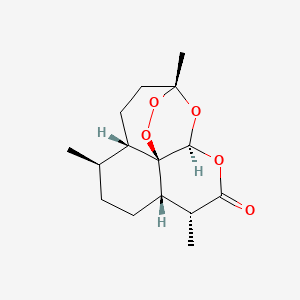
Artemisinin (ART) is the principal bioactive compound of Artemisia annua and an important antimalarial therapeutic. Recent studies have also examined its formulation and pharmacology because of physicochemical instability and pharmacokinetic limitations. Research has evaluated artemisinin in plant extracts, albumin nanoparticles, liposomes, hydrogels, and conjugated drug systems, including approaches intended to modulate its exposure in malaria parasites and infected animals.
Beyond malaria, artemisinin is being investigated experimentally across several therapeutic areas. Nanomedicine studies have used its iron-dependent activation and reactive oxygen species (ROS)-associated activity to promote cytotoxicity, apoptosis, or ROS-driven STING activation in cancer models, including breast cancer and hematologic malignancies. Other preclinical work has explored effects involving macrophage autophagy in diabetic wound healing, the PI3K/AKT/mTOR pathway and inflammatory mediators in diabetic kidney disease, and neuroprotection in an Alzheimer’s disease model combined with N-acetylcysteine, resveratrol, and hesperidin. These findings represent diverse experimental applications rather than a single established mechanism or therapeutic direction.
Where the papers sit
9 papers from the last 6 months study artemisinin directly · updated from PubMed 11 Oct 2026
Study type 0 clinical trials · 3 human data · 6 preclinical
Themes no clear themes
Those 9 do not share a common subject.
-
Artemisinin-related work here spans cancer nanomedicine, malaria pharmacology, diabetic wound and kidney disease, neuroprotection, and hematologic cytotoxicity. Studies test liposomes, nanoparticles, hydrogels, phytochemical combinations, network pharmacology, and host pharmacokinetic modulation. Reported mechanisms include ROS-driven STING activation, TIGIT/CD155 signaling, macrophage autophagy, and selective proteasome-related toxicity. The topics and endpoints are too diverse to support a shared therapeutic direction.
Papers
The 9 papers from the last 6 months that study artemisinin directly, newest first, by theme and by study type. Study types come from PubMed publication types and MeSH headings.
By theme
No clear themes (9)
- Self-exploding tumor microenvironment-responsive nanomedicine as "ROS Bomb" ignites STING pathway for triple-negative breast cancer immunotherapy. Journal of controlled release : official journal of the Controlled Release Society · 3 Aug 2026 PMID 42546818
- Artemisinin liposomes regulates breast cancer metastasis and apoptosis through TIGIT/CD155 signal axis. Apoptosis : an international journal on programmed cell death · 27 Jul 2026 PMID 42507162
- A Combination of Artemisinin, N-acetylcysteine, Resveratrol, and Hesperidin Ameliorates Hippocampal Damage and Pathological Features in an Experimental Model of Alzheimer's Disease. Neurochemical research · 13 Jul 2026 PMID 42440180
- Asymmetric hydrogel with "spear-shield" properties promotes diabetic foot ulcer healing by modulating macrophage autophagy. Journal of controlled release : official journal of the Controlled Release Society · 6 Jul 2026 PMID 42409241
- Quality-by-design optimized albumin nanoparticles encapsulating Artemisia annua L. phytochemicals using artemisinin as a quantitative marker. International journal of biological macromolecules · 29 Jun 2026 PMID 42372896
- Exploring the potential targets and mechanisms of artemisinin in the treatment of diabetic kidney disease using network pharmacology and molecular docking. Functional & integrative genomics · 1 Jun 2026 PMID 42223693
- Intracellular Activation of Dual-Pharmacophore Artezomib Enhances Selective Cytotoxicity in Hematologic Malignancies. Journal of medicinal chemistry · 2 May 2026 PMID 42068300
- Inhibitors of cytochrome c biogenesis pathways. mBio · 20 Apr 2026 PMID 42007688
- Differential synergistic antimalarial effects of an A. annua extract on artemisinin via host pharmacokinetic modulation. Journal of ethnopharmacology · 16 Apr 2026 PMID 41990923
By study type
Human data, design not indexed (3)
- Quality-by-design optimized albumin nanoparticles encapsulating Artemisia annua L. phytochemicals using artemisinin as a quantitative marker. International journal of biological macromolecules · 29 Jun 2026 PMID 42372896
- Exploring the potential targets and mechanisms of artemisinin in the treatment of diabetic kidney disease using network pharmacology and molecular docking. Functional & integrative genomics · 1 Jun 2026 PMID 42223693
- Inhibitors of cytochrome c biogenesis pathways. mBio · 20 Apr 2026 PMID 42007688
Preclinical: animal, cell and lab studies (6)
- Self-exploding tumor microenvironment-responsive nanomedicine as "ROS Bomb" ignites STING pathway for triple-negative breast cancer immunotherapy. Journal of controlled release : official journal of the Controlled Release Society · 3 Aug 2026 PMID 42546818
- Artemisinin liposomes regulates breast cancer metastasis and apoptosis through TIGIT/CD155 signal axis. Apoptosis : an international journal on programmed cell death · 27 Jul 2026 PMID 42507162
- A Combination of Artemisinin, N-acetylcysteine, Resveratrol, and Hesperidin Ameliorates Hippocampal Damage and Pathological Features in an Experimental Model of Alzheimer's Disease. Neurochemical research · 13 Jul 2026 PMID 42440180
- Asymmetric hydrogel with "spear-shield" properties promotes diabetic foot ulcer healing by modulating macrophage autophagy. Journal of controlled release : official journal of the Controlled Release Society · 6 Jul 2026 PMID 42409241
- Intracellular Activation of Dual-Pharmacophore Artezomib Enhances Selective Cytotoxicity in Hematologic Malignancies. Journal of medicinal chemistry · 2 May 2026 PMID 42068300
- Differential synergistic antimalarial effects of an A. annua extract on artemisinin via host pharmacokinetic modulation. Journal of ethnopharmacology · 16 Apr 2026 PMID 41990923
Written from 9 PubMed abstracts, each one listed by PMID above. Published: 2026-10-11. Drafted by language models from published abstracts; not medical advice.