Hesperidin
Hesperidin is a naturally occurring flavonoid glycoside, best known as a citrus-derived phenolic compound.
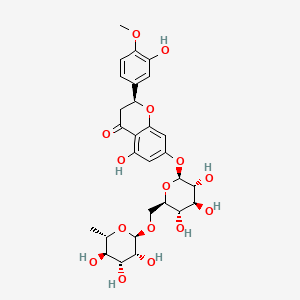
Hesperidin is a naturally occurring flavonoid glycoside, best known as a citrus-derived phenolic compound. Chemically, it belongs to the flavanone class and is commonly discussed in the context of plant secondary metabolism, antioxidant chemistry, and bioactive food constituents. In biomedical research, hesperidin is of interest because it has been investigated for potential antioxidant, anti-inflammatory, and anticancer-related properties, as well as for its ability to interact with molecular targets relevant to disease pathways.
Recent studies have positioned hesperidin as both a phytochemical marker in plant and food analysis and as a candidate therapeutic payload or target-interacting ligand in experimental drug-delivery systems. In the publications provided, it was examined in relation to breast cancer therapy, colorectal cancer cell models, and nanotechnology-based delivery platforms, with molecular docking and simulation work suggesting favorable interactions with the checkpoint kinase 1 (Chk1) protein. It has also been quantified in citrus and other plant extracts using chromatographic and mass spectrometric methods, reflecting its importance in phytochemical profiling.
Where the papers sit
10 papers from the last 6 months study hesperidin directly · updated from PubMed 3 Oct 2026
Study type 1 clinical trial · 8 preclinical · 1 unclassified
Themes 3 themes · 1 new direction
-
Oxidative Stress and Inflammation
Redox control links radiation-related oxidative stress, anti-inflammatory extracts, and antibacterial skin therapies. Nanoparticle studies pair targeted delivery with photothermal or chemodynamic ROS generation, while glutathione depletion and lysosomal escape support activity. Extract studies instead emphasize neutrophil and inflammatory readouts. Whether these platforms improve safety and efficacy beyond extract-level effects remains open.
5 papers · 50%
-
Alzheimer’s Cognitive Protection
Neuroinflammation, tau pathology, and impaired learning are being targeted together in Alzheimer’s disease models. Hesperidin is linked to ERK/MAPK signaling, reduced tau immunoreactivity, and improved Morris water navigation and working memory. Combination treatment with artemisinin, N-acetylcysteine, and resveratrol points toward multi-component neuroprotection rather than a single pathway. Translation beyond chemically induced animal disease remains unresolved.
2 papers · 20%
-
Others — Therapeutic Applications across Diseases
Clinical lymphedema prevention, probiotic conversion of hesperidin to hesperetin, and Chk1-targeted breast-cancer liposomes share no clear biological question. The studies separately pursue postoperative edema reduction, SIRT1/CISD2-linked metabolic improvement, and cytotoxic cancer therapy. Their evidence spans a prospective intervention, aging-mouse microbiome work, and integrated computational, cellular, and animal testing. No common therapeutic direction or mechanism emerges.
3 papers · 30%
Hesperidin becomes a functional construction and heat-response component of a biofilm-targeted therapeutic nanoplatform, not merely a delivered flavonoid
The biofilm-associated skin-abscess model studied by the HF@PBA nanoplatform paper treated hesperidin not simply as a pharmacologically active payload, but as a metal-phenolic ligand that helps assemble the particles and contributes near-infrared photothermal activity. The study further found that released hesperidin suppresses heat-stress tolerance and interferes with quorum sensing and virulence responses, while the platform's iron chemistry generates additional hydroxyl radicals. This gives hesperidin a new materials-engineering and self-amplifying anti-biofilm role alongside its biological activity, expanding its function beyond the therapeutic flavonoid or nanoparticle cargo roles used elsewhere in the set 42468758Jul.
Papers
The 10 papers from the last 6 months that study hesperidin directly, newest first, by theme and by study type. Study types come from PubMed publication types and MeSH headings.
By theme
Oxidative Stress and Inflammation (5)
- A hesperidin-engineered metal-phenolic nanoplatform for biofilm-targeted and self-amplified photothermal/chemodynamic therapy of skin abscesses. Journal of controlled release : official journal of the Controlled Release Society · 17 Jul 2026 PMID 42468758
- Anti-inflammatory activity of orange peel aqueous extract and hesperidin: integrated evidence from neutrophil assays, in vivo models, and in silico analyses. Food & function · 22 Jun 2026 PMID 42324976
- CaO2-Powered Nanomotors with Enhanced Cellular Uptake and Lysosomal Escape for Cuproptosis and Reactive Oxygen Species-Mediated Synergistic Cancer Therapy. ACS applied materials & interfaces · 13 May 2026 PMID 42126988
- Hyaluronic Acid-functionalized Hesperidin-loaded Solid Lipid Nanoparticles for Mitigating Oxidative Stress: A Potential Strategy for Radiation-induced Skin Injury. Applied biochemistry and biotechnology · 28 Apr 2026 PMID 42047963
- Integrated Phytochemical Profiling and Multifunctional Bioactivities of Bellis annua Extracts Obtained by Distinct Extraction Techniques. ChemistryOpen · 21 Apr 2026 PMID 42012914
Alzheimer’s Cognitive Protection (2)
- Hesperidin attenuates aluminum chloride-induced cognitive impairment by modulating ERK/MAPK Signaling, tau protein immunoexpression, neuroinflammation, and microglial activation in mice. Metabolic brain disease · 18 Aug 2026 PMID 42611390
- A Combination of Artemisinin, N-acetylcysteine, Resveratrol, and Hesperidin Ameliorates Hippocampal Damage and Pathological Features in an Experimental Model of Alzheimer's Disease. Neurochemical research · 13 Jul 2026 PMID 42440180
Others — Therapeutic Applications across Diseases (3)
- A probiotic Bifidobacterium pseudocatenulatum converts hesperidin to bioactive hesperetin and improves metabolic dysfunction in aging mice. Gut microbes · 23 Sept 2026 PMID 42776010
- Prevention of lymphedema after extended pelvic lymphadenectomy using diosmin, bromelain, melilotus, and hesperidin: results from a prospective randomized study (PRELYNE trial). Journal of robotic surgery · 19 Aug 2026 PMID 42616207
- Chk1-Targeted Hesperidin Liposomes for Breast Cancer Therapy: An Integrated In Silico, In Vitro, and In Vivo Evaluation. ACS applied bio materials · 21 May 2026 PMID 42166124
By study type
Clinical trials (1)
- Prevention of lymphedema after extended pelvic lymphadenectomy using diosmin, bromelain, melilotus, and hesperidin: results from a prospective randomized study (PRELYNE trial). Journal of robotic surgery · 19 Aug 2026 PMID 42616207
Preclinical: animal, cell and lab studies (8)
- A probiotic Bifidobacterium pseudocatenulatum converts hesperidin to bioactive hesperetin and improves metabolic dysfunction in aging mice. Gut microbes · 23 Sept 2026 PMID 42776010
- Hesperidin attenuates aluminum chloride-induced cognitive impairment by modulating ERK/MAPK Signaling, tau protein immunoexpression, neuroinflammation, and microglial activation in mice. Metabolic brain disease · 18 Aug 2026 PMID 42611390
- A hesperidin-engineered metal-phenolic nanoplatform for biofilm-targeted and self-amplified photothermal/chemodynamic therapy of skin abscesses. Journal of controlled release : official journal of the Controlled Release Society · 17 Jul 2026 PMID 42468758
- A Combination of Artemisinin, N-acetylcysteine, Resveratrol, and Hesperidin Ameliorates Hippocampal Damage and Pathological Features in an Experimental Model of Alzheimer's Disease. Neurochemical research · 13 Jul 2026 PMID 42440180
- Anti-inflammatory activity of orange peel aqueous extract and hesperidin: integrated evidence from neutrophil assays, in vivo models, and in silico analyses. Food & function · 22 Jun 2026 PMID 42324976
- Chk1-Targeted Hesperidin Liposomes for Breast Cancer Therapy: An Integrated In Silico, In Vitro, and In Vivo Evaluation. ACS applied bio materials · 21 May 2026 PMID 42166124
- CaO2-Powered Nanomotors with Enhanced Cellular Uptake and Lysosomal Escape for Cuproptosis and Reactive Oxygen Species-Mediated Synergistic Cancer Therapy. ACS applied materials & interfaces · 13 May 2026 PMID 42126988
- Integrated Phytochemical Profiling and Multifunctional Bioactivities of Bellis annua Extracts Obtained by Distinct Extraction Techniques. ChemistryOpen · 21 Apr 2026 PMID 42012914
Unclassified: not yet indexed with MeSH (1)
- Hyaluronic Acid-functionalized Hesperidin-loaded Solid Lipid Nanoparticles for Mitigating Oxidative Stress: A Potential Strategy for Radiation-induced Skin Injury. Applied biochemistry and biotechnology · 28 Apr 2026 PMID 42047963
Written from 10 PubMed abstracts, each one listed by PMID above. Published: 2026-07-14. Last written: 2026-09-25 by GPT. Drafted by language models from published abstracts; not medical advice.