empagliflozin
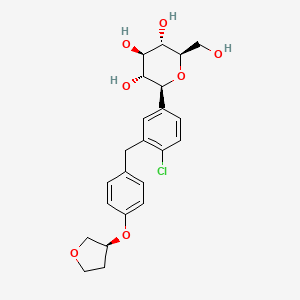
Overview
Empagliflozin is a selective inhibitor of sodium-glucose cotransporter-2 (SGLT2), the transporter that reabsorbs most filtered glucose in the proximal tubule. Blocking it lowers the renal threshold for glucose, so glucose is excreted in the urine and blood levels fall without any action on insulin secretion — which is why the drug does not cause hypoglycemia by itself and works regardless of remaining β-cell function. Glucose lost in the urine carries water and sodium with it, producing a mild osmotic diuresis and natriuresis, and the restored sodium delivery to the macula densa reactivates tubuloglomerular feedback, constricting the afferent arteriole and lowering intraglomerular pressure. That last effect explains the characteristic early dip in estimated glomerular filtration rate that precedes long-term renal preservation, and is the leading account of why the class protects kidneys.
Originally approved for type 2 diabetes, empagliflozin's indications now extend to heart failure with reduced or preserved ejection fraction and to chronic kidney disease, in both cases with benefit in patients who do not have diabetes at all — evidence that the cardiorenal effect is not a consequence of glucose lowering. Proposed mechanisms include reduced preload and afterload, a shift in myocardial fuel use toward ketone bodies, reduced cardiac fibrosis and inflammation, and effects on sodium-hydrogen exchange. Its action is complementary to agents working through other pathways, such as dipeptidyl peptidase-4 (DPP-4) inhibitors, which enhance glucose-dependent insulin secretion, and metformin, which chiefly suppresses hepatic glucose production and improves insulin sensitivity, making it a frequent combination partner.
The predictable adverse effects follow from the mechanism: glucose in the urine promotes genital mycotic infection, the diuresis can cause volume depletion and hypotension in patients already on diuretics, and shifting metabolism toward fat oxidation while glucose is excreted can precipitate ketoacidosis at near-normal blood glucose, which is easy to miss and warrants perioperative interruption. Beyond glycemic control, reported pleiotropic actions across cardiovascular, renal and gut tissue — modulation of AMPK/mTOR signaling, reduced proinflammatory cytokines, attenuated oxidative stress — are pursued as explanations for benefits that exceed what SGLT2 inhibition alone would predict, though the boundary between class effect and off-target action remains unsettled.
Recent Publications Summary
Recent studies have continued to evaluate empagliflozin as a sodium-glucose cotransporter-2 (SGLT2) inhibitor in both comparative effectiveness and mechanistic settings. In a nationwide propensity-matched study of adults with type 2 diabetes, empagliflozin showed broadly similar outcomes to dapagliflozin, with lower risks of hypoglycemia and all-cause hospitalization, and it was also associated with lower risks of all-cause hospitalization and kidney events compared with dipeptidyl peptidase-4 inhibitors 42342812Jun. In a real-world prospective cohort study in heart failure with reduced ejection fraction, dapagliflozin and empagliflozin were described as having equivalent Class IA guideline recommendations, reflecting their comparable positioning in this setting 42357835Jun.
Several publications explored empagliflozin in combination with other interventions or in disease-specific models. In diabetic kidney disease, empagliflozin was studied alongside Morin, where the combination was reported to enhance renoprotective effects through the ATF6-DAPK1 signaling axis; empagliflozin was described as indirectly downregulating DAPK1 through relief of endoplasmic reticulum stress. In diabetic mice subjected to myocardial ischemia/reperfusion injury, empagliflozin combined with pyridoxamine, an advanced glycation end-products inhibitor, was reported to suppress AGEs accumulation and mitigate injury-related pathology 42176503May. In glycogen storage disease type Ib with refractory inflammatory bowel disease, empagliflozin was reported to promote ulcer healing and mucin production in patients, reduce disease severity and goblet cell depletion in a murine model, and restore the colonic mucous barrier through an AMPK/SOX4-dependent pathway 42133539May.
Cardiometabolic and organ-protective effects were also examined in preclinical models. In streptozotocin-diabetic and non-diabetic rats subjected to ischemia/reperfusion, chronic empagliflozin pretreatment improved glucose and lipid profiles, improved biomarkers of myocardial damage, inflammation, oxidative stress, and angiocrine imbalance, and tended to restore myocardial metabolic markers 41995817Apr. Another study reported that empagliflozin and dapagliflozin may improve cognitive dysfunctions in streptozotocin/nicotinamide-induced type 2 diabetes, with in silico analyses targeting oxidative stress-, inflammation-, and neuroprotection-related proteins and in vivo behavioral and biochemical assessments in rats 41819428Mar. Empagliflozin was also evaluated in a phase 3 trial as part of dual therapy with metformin, where anagliptin was added to metformin and empagliflozin in patients with type 2 diabetes inadequately controlled on dual therapy 42036072Apr.
Additional publications focused on analytical and mechanistic aspects of empagliflozin use. A spectrofluorimetric method was developed for the simultaneous determination of empagliflozin and sitagliptin in tablets and plasma, supporting combined use of these agents in type 2 diabetes management 42162103May. Overall, the recent literature portrays empagliflozin as a widely studied SGLT2 inhibitor with consistent comparative effectiveness in diabetes care, established cardiovascular and renal relevance, and emerging mechanistic roles in tissue protection and barrier restoration across diverse disease models 42342812Jun42357835Jun42176503May42133539May41995817Apr41819428Mar.
What Changes, What Holds
1. Empagliflozin’s comparative profile now looks broadly interchangeable with dapagliflozin, with some advantages over DPP-4 inhibitors
REINFORCES Comparative effectiveness data do not alter the baseline view of empagliflozin as a standard SGLT2 inhibitor for diabetes and cardiorenal disease, but they do sharpen its place in class-level decision-making. The new work suggests that, in routine care, it performs similarly to another leading SGLT2 inhibitor while retaining expected advantages over DPP-4 inhibitors for hospitalization and kidney outcomes 42342812Jun42357835Jun.
2. Empagliflozin is being extended into disease-specific combination strategies and barrier repair models
NEW DIRECTION These studies move beyond the Overview’s cardiometabolic and organ-protective framing into more specific therapeutic combinations and a gut-mucus-barrier role that the baseline does not cover. The diabetic kidney disease and myocardial injury findings are still mechanistic and preclinical, but the inflammatory bowel disease work suggests a distinct mucosal-restorative effect that would need clinical confirmation before it can be folded into routine understanding42176503May42133539May.
3. Empagliflozin’s protective biology is being broadened to ischemic injury and cognition, but the evidence remains preclinical
REINFORCES These experiments fit the existing account of anti-inflammatory, antioxidative, and cytoprotective actions rather than challenging it, and they extend those effects into myocardial ischemia/reperfusion and diabetic cognitive dysfunction. The phase 3 dual-therapy study also stays within established diabetes management, adding no new role beyond combination use with metformin 41995817Apr41819428Mar42036072Apr.
4. Empagliflozin is now also a measurable co-formulation partner, not just a therapeutic one
METHOD The analytical assay changes how the drug can be studied and monitored, but it does not add a new biological role or clinical indication. It supports combined tablet and plasma measurement with sitagliptin, which is useful for combination therapy research and quality control, yet leaves the baseline account of empagliflozin’s actions unchanged 42162103May.
Overview update candidates: comparative positioning within the SGLT2 class; possible mucosal barrier restoration and combination-based renoprotection.
empagliflozin
Background Contexts
In the literature, the biological baseline, pathological conditions, or disease models commonly surrounding empagliflozin are described as follows:
- hyperinsulinemic T2D patients (Disease) — 3 papers: PMIDs 42342812, 42036072, 41995817
- diabetes status (Disease) — 2 papers: PMIDs 42162103, 41819428
- Myocardial Ischemia-Reperfusion Injury (Disease) — 2 papers: PMIDs 42176503, 41995817
- Akita (Organism) — 1 paper: PMIDs 42213650
- cognitive diseases (Disease) — 1 paper: PMIDs 41819428
- diabetic nephropathy (Disease) — 1 paper: PMIDs 42215155
- glycogen storage disease due to glucose-6-phosphatase deficiency type IB (Disease) — 1 paper: PMIDs 42133539
- heart failure with reduced ejection fraction (Disease) — 1 paper: PMIDs 42357835
- overt diabetes (Disease) — 1 paper: PMIDs 42176503
- sodium glucose cotransporter-2 (SGLT2) inhibitors (Therapy) — 1 paper: PMIDs 41819428
- TsM_000695200.1 (Protein) — 1 paper: PMIDs 42357835
Methodologies & Technologies Used
Researchers utilize the following experimental methods, imaging platforms, computational models, or biological reagents to study empagliflozin:
- AGREEprep (Other) — 1 paper: PMIDs 42162103
- antimycin A (Chemical) — 1 paper: PMIDs 42176503
- antioxidant (Other) — 1 paper: PMIDs 42176503
- Blue Applicability Grade Index (BAGI) (Other) — 1 paper: PMIDs 42162103
- Caco-2 cell monolayers (Cell Line) — 1 paper: PMIDs 42133539
- Carbon Footprint Reduction Index (CaFRI) (Other) — 1 paper: PMIDs 42162103
- cell thermal shift assay (CETSA) (Technology) — 1 paper: PMIDs 42215155
- CompMoGAPI (Other) — 1 paper: PMIDs 42162103
- Cox proportional hazards models (Technology) — 1 paper: PMIDs 42342812
- dextran sulfate sodium (Chemical) — 1 paper: PMIDs 42133539
- Direct RNA Sequencing (Technology) — 1 paper: PMIDs 42213650
- Eco-Scale (Other) — 1 paper: PMIDs 42162103
Molecular Interventions & Targets
The primary molecular pathways, regulatory genes, enzymes, or therapeutic agents actively targeted and manipulated in relation to empagliflozin include:
- SGLT2 inhibitor dapagliflozin (Therapy) — 3 papers: PMIDs 42357835, 42342812, 41819428
- receptor for advance glycation end-products (Protein) — 2 papers: PMIDs 42176503, 41819428
- acetylcholinesterase (Protein) — 1 paper: PMIDs 41819428
- advanced glycation end-product (Other) — 1 paper: PMIDs 42176503
- AIM2-ZBP1 PANoptosome (Other) — 1 paper: PMIDs 42176503
- AMPK/mTOR (Pathway) — 1 paper: PMIDs 42133539
- anagliptin (Therapy) — 1 paper: PMIDs 42036072
- ATF6-DAPK1 signaling (Pathway) — 1 paper: PMIDs 42215155
- DAPK1 (Gene) — 1 paper: PMIDs 42215155
- dipeptidyl peptidase-4 inhibitors (Therapy) — 1 paper: PMIDs 42342812
- Glucagon like peptide 1 receptor (Protein) — 1 paper: PMIDs 42213650
- glucose transporter type 4 (Protein) — 1 paper: PMIDs 41995817
Observed Outcomes & Phenotypes
The phenotypic changes, physiological endpoints, or clinical metrics observed and measured in connection with empagliflozin include:
- 2'-deoxyadenosine triphosphate (Biological Process) — 1 paper: PMIDs 42176503
- all-cause hospitalization (Clinical Metric) — 1 paper: PMIDs 42342812
- Analytical performance (Other) — 1 paper: PMIDs 42162103
- Apelin (Protein) — 1 paper: PMIDs 41995817
- blood glucose (Clinical Metric) — 1 paper: PMIDs 42215155
- cardiac recovery (Other) — 1 paper: PMIDs 42176503
- Cardioprotective pathways (Biological Process) — 1 paper: PMIDs 41995817
- cell adhesion (Biological Process) — 1 paper: PMIDs 42213650
- cellular proliferation (Biological Process) — 1 paper: PMIDs 42213650
- cellular response to stress (Biological Process) — 1 paper: PMIDs 42213650
- Cellular stress response (Biological Process) — 1 paper: PMIDs 42213650
- cortex and hippocampus (Cellular Component) — 1 paper: PMIDs 41819428
General Takeaways & Clinical Potentials
The high-level concepts, clinical translations, and overarching conclusions proposed in the research surrounding empagliflozin are summarized below:
- AMPK/SOX4/MUC2 signaling axis (Pathway) — 1 paper: PMIDs 42133539
- Cerebral ischemia-reperfusion injury (Disease) — 1 paper: PMIDs 41995817
- combination drug (Therapy) — 1 paper: PMIDs 42215155
- eco-friendly profile (Other) — 1 paper: PMIDs 42162103
- epithelial barrier dysfunction (Biological Process) — 1 paper: PMIDs 42133539
- Future directions (Other) — 1 paper: PMIDs 42162103
- multiple metabolic pathways (Other) — 1 paper: PMIDs 41819428
- observational study design (Other) — 1 paper: PMIDs 42342812
- renoprotective effects (Other) — 1 paper: PMIDs 42215155
- T2D-associated AD (Disease) — 1 paper: PMIDs 41819428
- therapeutic avenues (Other) — 1 paper: PMIDs 42213650