cyclophosphamide
Overview
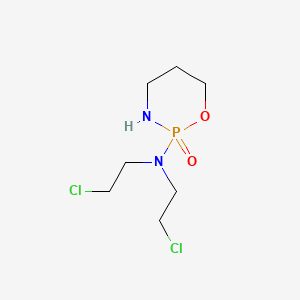
Cyclophosphamide is a widely used cytotoxic alkylating agent in oncology and immunology. It is a prodrug that requires metabolic activation in the liver to generate active metabolites that damage DNA, leading to inhibition of cell division and cell death, particularly in rapidly proliferating malignant and immune cells. Because of this mechanism, cyclophosphamide has long been incorporated into combination regimens for hematologic malignancies, solid tumors, and certain immune-mediated conditions.
Clinically, cyclophosphamide is used in multiple established treatment backbones, including regimens for diffuse large B-cell lymphoma, neuroblastoma, ovarian cancer models, and Ewing sarcoma. In research settings, it is also frequently used to induce immunosuppression or to model chemotherapy-related immune effects in animals. Recent studies have examined its role not only as a direct antineoplastic agent, but also as a modifier of the tumor immune microenvironment, gut microbiota, and treatment-related toxicity. Related entities such as interferon gamma (IFNG), cytotoxic T cell, Programmed cell death 1 (PD-1), and human gut flora appear in these contexts because cyclophosphamide can influence immune signaling, immune-cell composition, and host-microbe interactions.
Recent Publications Summary
Recent publications on cyclophosphamide have focused on its role within combination regimens and on its biologic effects on the immune system. In a preclinical ovarian cancer model, an intermittent low-dose cyclophosphamide regimen was combined with DPX-Survivac and anti-PD-1 immunotherapy; MRI-based monitoring showed significantly lower tumor volumes in the treatment group than in controls, along with higher densities of SPIO-labeled myeloid and CD8+ T cells within tumors 41957244Apr. In a separate mouse-and-human study, cyclophosphamide-containing chemotherapy was linked to reactive myelopoiesis and the emergence of immunosuppressive neutrophil-like monocytes, with similar cells detected in the peripheral blood of lymphoma patients receiving cyclophosphamide-containing regimens 41945895Apr.
Cyclophosphamide was also evaluated in hematologic and pediatric oncology combination therapies. A retrospective multi-institutional study examined topotecan/cyclophosphamide/dinutuximab for relapsed or refractory high-risk neuroblastoma, reflecting ongoing interest in this regimen after incomplete response or progression on irinotecan hydrochloride/temozolomide/dinutuximab-based therapy, although the abstract provided does not report outcomes 41823156Mar. In diffuse large B-cell lymphoma, polatuzumab vedotin, rituximab, cyclophosphamide, doxorubicin, and prednisone (Pola-R-CHP) was assessed as frontline therapy in patients older than 80 years to address the limited evidence base in this age group 42373284Jun.
Other studies examined cyclophosphamide-related toxicity, host response, and drug interactions. In mice, cyclophosphamide-induced immunodeficiency was used as the model for testing Monopterus albus slime protein, which improved body weight, immune organ indices, blood cell counts, IFNG, IL-2, IgA, intestinal integrity, and oxidative stress markers including SOD, while also modulating gut microbiota 41794480Mar. In breast cancer rats, pharmacokinetic profiling showed that cyclophosphamide altered the disposition of Sijunzi Decoction components, increasing absorption of ginsenosides while reducing exposure and accelerating clearance of several licorice-derived compounds, supporting the presence of complex herb-drug interactions 41762480Feb.
Long-term survivorship data in Ewing sarcoma also included cyclophosphamide-containing treatment regimens as part of comparisons across evolving chemotherapy approaches. Among five-year survivors diagnosed between 1970 and 1999, the study reported elevated late mortality and chronic health condition risks relative to the general population and siblings, and compared outcomes by chemotherapy regimen, underscoring the importance of treatment-related late effects in survivors exposed to regimens that included cyclophosphamide 42390889Jul.
What Changes, What Holds
1. Cyclophosphamide is still being used as an immune-modulating partner, but its effects on myeloid suppression may be more complex than simple lymphodepletion
REINFORCES The combination data fit the established view of cyclophosphamide as a regimen component that can reshape the tumor immune microenvironment rather than acting only as a direct cytotoxin 41957244Apr. At the same time, the mouse-and-human myelopoiesis findings suggest that some immune effects may be counterproductive, with treatment-associated neutrophil-like monocytes potentially blunting antitumor immunity 41945895Apr. That tension does not overturn the baseline, but it sharpens the need to distinguish beneficial immune priming from immunosuppressive rebound.
2. Cyclophosphamide remains a backbone drug in difficult combination regimens, including in older lymphoma patients and relapsed neuroblastoma
REINFORCES These reports extend the established clinical role of cyclophosphamide in hematologic malignancies and pediatric solid tumors without changing its basic place in therapy 41823156Mar42373284Jun. The main implication is not a new use, but continued reliance on cyclophosphamide-containing backbones when evidence is limited or salvage options are needed. The older-adult lymphoma study also highlights that frontline use is being adapted to frailer populations, while the neuroblastoma report underscores ongoing regimen refinement after prior treatment failure.
3. Cyclophosphamide-induced immunodeficiency can be used as a model of host injury, but the model may also capture microbiome and herb-drug interaction effects
NEW DIRECTION The immunodeficiency model is consistent with the baseline’s use of cyclophosphamide to induce immune suppression in animals, but the added findings broaden what that model can reveal 41794480Mar. Rather than only marking immune-cell depletion, it appears useful for studying gut barrier disruption, oxidative stress, and microbiota shifts. The pharmacokinetic interaction data in rats further show that cyclophosphamide can alter exposure to coadministered herbal components 41762480Feb, a role not covered in the Overview and relevant to supportive-care or combination-exposure settings.
4. Cyclophosphamide-containing regimens carry important late-effect implications in long-term Ewing sarcoma survivorship
NEW DIRECTION Long-term survivorship analysis adds a toxicity and late-morbidity dimension to the baseline, which otherwise emphasizes cyclophosphamide’s antineoplastic and immunologic uses 42390889Jul. The new work does not contradict established efficacy, but it shows that exposure within historical regimens must be weighed against chronic health burden and excess late mortality in survivors. That makes cyclophosphamide part of the broader late-effects discussion in Ewing sarcoma, where treatment choice is not only about immediate disease control but also decades-long risk.
cyclophosphamide
Background Contexts
In the literature, the biological baseline, pathological conditions, or disease models commonly surrounding cyclophosphamide are described as follows:
- triple-negative breast cancer (Disease) — 2 papers: PMIDs 42442848, 41931605
- AL amyloidosis (Disease) — 1 paper: PMIDs 42212672
- Amomum villosum Lour. (Organism) — 1 paper: PMIDs 42437650
- anti-NMDA receptor encephalitis (Disease) — 1 paper: PMIDs 42154348
- Atractylodes macrocephala Koidz (Organism) — 1 paper: PMIDs 41794444
- Autoimmune small-vessel cerebral vasculitis (Disease) — 1 paper: PMIDs 42315243
- Blood deficiency syndrome (Disease) — 1 paper: PMIDs 42437650
- Chemoimmunotherapy (Therapy) — 1 paper: PMIDs 41823156
- CIC::DUX4 sarcoma (Disease) — 1 paper: PMIDs 42156088
- cryptogenic organizing pneumonia (Disease) — 1 paper: PMIDs 41125339
- cytotoxic T cell (Cellular Component) — 1 paper: PMIDs 41957244
- diffuse large B-cell lymphoma (Disease) — 1 paper: PMIDs 42373284
Methodologies & Technologies Used
Researchers utilize the following experimental methods, imaging platforms, computational models, or biological reagents to study cyclophosphamide:
- doxorubicin (Therapy) — 5 papers: PMIDs 42329463, 42229339, 42210589, 42156088, etc.
- vincristine (Therapy) — 5 papers: PMIDs 42229339, 42210589, 42156088, 42082264, etc.
- carboplatin (Therapy) — 3 papers: PMIDs 42442848, 42329463, 42210589
- epirubicin (Therapy) — 3 papers: PMIDs 42442848, 42008768, 41125339
- rituximab (Therapy) — 3 papers: PMIDs 42442848, 42154348, 42082264
- dexamethasone (Therapy) — 2 papers: PMIDs 42212672, 42082264
- etoposide (Therapy) — 2 papers: PMIDs 42210589, 42082264
- intravenous immunoglobulin (Therapy) — 2 papers: PMIDs 42339679, 42154348
- methotrexate (Therapy) — 2 papers: PMIDs 42217044, 42082264
- mycophenolate mofetil (Therapy) — 2 papers: PMIDs 42217044, 42160240
- taxane (Therapy) — 2 papers: PMIDs 42329463, 41125339
- (chemo)radiotherapy (Biological Process) — 1 paper: PMIDs 41125339
Molecular Interventions & Targets
The primary molecular pathways, regulatory genes, enzymes, or therapeutic agents actively targeted and manipulated in relation to cyclophosphamide include:
- rituximab (Therapy) — 2 papers: PMIDs 42050300, 41637634
- AMPA Receptors (Protein) — 1 paper: PMIDs 42154348
- Anselamimab (Therapy) — 1 paper: PMIDs 42212672
- Arthrospira platensis (Organism) — 1 paper: PMIDs 42115237
- bortezomib (Therapy) — 1 paper: PMIDs 41560662
- C15orf48 (Gene) — 1 paper: PMIDs 41931605
- CD19 molecule (Protein) — 1 paper: PMIDs 42339679
- checkpoint inhibitor (Therapy) — 1 paper: PMIDs 42160348
- cystitis (Disease) — 1 paper: PMIDs 42160240
- daratumumab (Therapy) — 1 paper: PMIDs 41560662
- dexamethasone (Therapy) — 1 paper: PMIDs 41560662
- doxorubicin (Therapy) — 1 paper: PMIDs 42373284
Observed Outcomes & Phenotypes
The phenotypic changes, physiological endpoints, or clinical metrics observed and measured in connection with cyclophosphamide include:
- 5-year Overall Survival (Clinical Metric) — 2 papers: PMIDs 42008768, 41637634
- hazard ratio (Clinical Metric) — 2 papers: PMIDs 42390889, 42212672
- heart rate (Clinical Metric) — 2 papers: PMIDs 42008768, 41637634
- human gut flora (Biological Process) — 2 papers: PMIDs 42437650, 41794480
- lymphocyte (Clinical Metric) — 2 papers: PMIDs 42250384, 41794480
- Mortality risk (Clinical Metric) — 2 papers: PMIDs 42390889, 42156088
- PI3K/Akt signaling pathway (Pathway) — 2 papers: PMIDs 42444162, 42437650
- white blood cell count (Clinical Metric) — 2 papers: PMIDs 42437650, 41794480
- 5-year overall survival (OS) (Clinical Metric) — 1 paper: PMIDs 41637634
- 5-year relative survival (Clinical Metric) — 1 paper: PMIDs 41637634
- 7-year iDFS rates (Clinical Metric) — 1 paper: PMIDs 42008768
- abnormal lung fields (Clinical Metric) — 1 paper: PMIDs 41125339
General Takeaways & Clinical Potentials
The high-level concepts, clinical translations, and overarching conclusions proposed in the research surrounding cyclophosphamide are summarized below:
- antifibril antibody (Protein) — 1 paper: PMIDs 42212672
- antiplasma cell dyscrasia therapy (Therapy) — 1 paper: PMIDs 42212672
- apoptotic process (Biological Process) — 1 paper: PMIDs 41931605
- Autoimmune Status Epilepticus (Disease) — 1 paper: PMIDs 42154348
- B-cell-centric model (Other) — 1 paper: PMIDs 42339679
- bioactive compound (Other) — 1 paper: PMIDs 42250384
- blood-tonifying herbal preparation (Other) — 1 paper: PMIDs 42437650
- CD19-directed chimeric antigen receptor T-cell therapies (Therapy) — 1 paper: PMIDs 42339679
- checkpoint inhibition (Therapy) — 1 paper: PMIDs 42008768
- chemotherapy (Therapy) — 1 paper: PMIDs 41931605
- cognitive frailty (Clinical Metric) — 1 paper: PMIDs 42315243
- cyclophosphamide toxicity (Other) — 1 paper: PMIDs 42115237