oxaliplatin
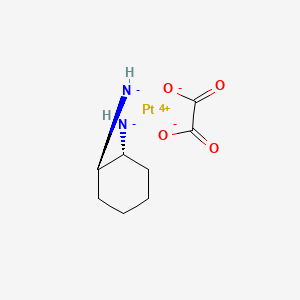
Overview
Oxaliplatin is a platinum-based chemotherapeutic agent used primarily in the treatment of gastrointestinal malignancies, especially colorectal and gastric Cancers. It is a third-generation platinum compound and is structurally distinct from cisplatin and carboplatin, with a broader clinical role in combination regimens such as fluorouracil/leucovorin-based therapy, capecitabine plus oxaliplatin (CapeOX or XELOX), and oxaliplatin-containing multi-drug protocols.
Biologically, oxaliplatin exerts antitumor activity through platinum-DNA adduct formation, leading to DNA damage, replication stress, and cell death. In recent research, it has also been studied in relation to resistance mechanisms, immunogenic cell death, ferroptosis, autophagy, and tumor microenvironment remodeling. These studies reflect its continuing importance not only as a standard cytotoxic drug, but also as a reference compound in investigations of combination therapy, drug delivery systems, and mechanisms of chemotherapy resistance.
Recent Publications Summary
Recent clinical trials demonstrated oxaliplatin's efficacy in combination with checkpoint inhibitors and targeted agents across multiple cancer types. In diffuse large B-cell lymphoma, glofitamab plus gemcitabine and oxaliplatin showed superior overall survival compared to rituximab plus gemcitabine-oxaliplatin, with a 3-year median OS of 25.5 versus 12.5 months 42269085Jun. In gastric cancer, pembrolizumab combined with capecitabine and oxaliplatin induced distinct myeloid immune phenotypes associated with clinical response 41915048Mar, while camrelizumab plus capecitabine and oxaliplatin with subsequent maintenance therapy demonstrated improved outcomes 41819560Mar. A gemcitabine-oxaliplatin regimen combined with lenvatinib and anti-programmed death-1 antibodies showed promise in neoadjuvant treatment of intrahepatic cholangiocarcinoma 41780001Mar. In locally advanced gastric cancer, neoadjuvant docetaxel-oxaliplatin-S-1 achieved higher major pathological response rates than oxaliplatin-S-1 alone without increased perioperative complications 41450028Dec. Adjuvant hepatic arterial infusion of oxaliplatin combined with intravenous fluorouracil and leucovorin was evaluated for efficacy and safety in patients with resected colorectal liver metastases 42018958Apr.
Molecular mechanisms underlying oxaliplatin resistance were characterized across multiple pathways and tumor contexts. SMS1 overexpression in ovarian cancer protected cells against cisplatin- and paclitaxel-induced apoptosis, identifying a key mediator of platinum chemotherapy resistance 42593674Aug. In gastric cancer, RAD1 promoted oxaliplatin resistance by reinforcing NRF2-driven antioxidant defense and DNA damage checkpoint signaling 42217457May, while the long noncoding RNA SNHG15/microRNA-451a/Caveolin-1 axis regulated oxaliplatin resistance through fatty acid β-oxidation 41972796Apr. Colorectal cancer cells demonstrated enhanced oxaliplatin resistance via elevated Ca²⁺/calmodulin-dependent protein kinase II activity, which could be reversed by pharmacological inhibition 42086109May. Conversely, artesunate overcame oxaliplatin resistance in colorectal cancer by inducing ferroptosis through CDK5 inhibition and suppression of the Nrf2/GPX4 antioxidant pathway 42178429May.
Oxaliplatin's cellular effects were mechanistically linked to nucleolar stress, oxidative damage, and ferroptotic pathways. In colorectal cancer models, oxaliplatin induced nucleolar stress, suppressed nascent ribosomal RNA synthesis, and activated p53 signaling, responses attenuated in oxaliplatin-resistant cells 42373768Jun. The drug induced robust reactive oxygen species production and genotoxic damage in a dose-dependent manner 41870588Mar. A significant clinical concern is oxaliplatin-induced cognitive impairment (chemobrain), which was ameliorated in rat models by thymol nanoparticles through modulation of Nrf2/HO-1 signaling, endoplasmic reticulum stress, and NLRP3 inflammasome activation 42202464May.
Novel delivery systems and combination approaches enhanced oxaliplatin efficacy while reducing toxicity. Biomimetic adhesive hydrogel microspheres encapsulating oxaliplatin with polydopamine nanoparticles and nitric oxide donors achieved multimodal therapy in gastric cancer models, combining chemotherapy, photothermal, and gas therapy effects 42285389Jun. Marine polysaccharide nanoparticles enabling co-delivery of oxaliplatin and fruquintinib induced immunogenic cell death while remodeling the immunosuppressive tumor microenvironment in colorectal cancer 41943296Apr. A thermosensitive nanogel formulation achieved sustained oxaliplatin release over five days with enhanced tumor retention, reducing tumor volume more effectively than free drug 41581319Jan. Supramolecular host-guest systems using macrocyclic carriers were investigated for controlled platinum drug release triggered by polyamine biomarkers 41911660Mar, while bispecific CD40 agonist antibodies showed synergistic antitumor activity when combined with oxaliplatin 41989931Apr.
What Changes, What Holds
1. Checkpoint inhibitors and targeted agents served as effective oxaliplatin partners in diverse Cancers
REINFORCES pembrolizumab, camrelizumab, and lenvatinib combinations produced clinical benefit across DLBCL, gastric cancer, and cholangiocarcinoma 42269085Jun41915048Mar. The Overview already covers "oxaliplatin-containing multi-drug protocols" without restricting to specific partners; these trials extend that established principle to immunotherapy and targeted agents, confirming the drug's versatility in combinations rather than establishing a new use.
2. Specific molecular nodes controlling oxaliplatin resistance were identified as intervention targets
REINFORCES SMS1, RAD1, SNHG15, and calcium signaling emerged as distinct mediators of resistance in ovarian, gastric, and colorectal Cancers 42593674Aug42217457May. The Overview flags resistance mechanisms as an established area of investigation; these findings specify actionable nodes within pathways the baseline already anticipates would be systematically characterized, including pharmacological reversal via artesunate's CDK5 inhibition.
3. Oxaliplatin-induced cognitive impairment represents a previously undocumented neurotoxic effect
NEW DIRECTION Thymol nanoparticles prevented chemobrain in rodent models by modulating Nrf2/HO-1 signaling and NLRP3 inflammasome activation 42202464May. The Overview covers antitumor mechanisms and resistance without addressing systemic toxicities beyond the tumor microenvironment; cognitive impairment fills this gap, though clinical incidence, risk factors, and prevention strategies remain undefined beyond rodent experiments.
4. Nanotechnology-based delivery platforms enabled multimodal therapeutic effects through tumor microenvironment remodeling
REINFORCES Biomimetic hydrogels, marine polysaccharides, and thermosensitive nanogels achieved improved efficacy through combined chemotherapy, photothermal, and immunogenic effects 42285389Jun41943296Apr. The Overview identifies drug delivery systems as an active investigation area; these formulations exemplify that approach with increasingly sophisticated multimodal mechanisms already anticipated in the baseline's discussion of immunogenic cell death.
Overview update candidates: Oxaliplatin-induced cognitive impairment (chemobrain) as a recognized adverse effect.
oxaliplatin
Background Contexts
In the literature, the biological baseline, pathological conditions, or disease models commonly surrounding oxaliplatin are described as follows:
- colorectal cancer (Disease) — 4 papers: PMIDs 42560559, 42532656, 42086109, 41510948
- checkpoint inhibitor (Therapy) — 3 papers: PMIDs 42495710, 42247598, 41915048
- advanced gastric cancer (Disease) — 2 papers: PMIDs 42593634, 42247598
- cisplatin/fluorouracil (Therapy) — 2 papers: PMIDs 42363989, 42350154
- Colon Tumor (Disease) — 2 papers: PMIDs 42373768, 42350154
- Gastro-oesophageal junction adenocarcinoma (Disease) — 2 papers: PMIDs 42225112, 41819560
- Human epidermal growth factor receptor 2 (HER2) (Protein) — 2 papers: PMIDs 42247598, 42126571
- peritoneal metastasis (Disease) — 2 papers: PMIDs 42285389, 42225301
- advanced GEA (Disease) — 1 paper: PMIDs 42217457
- Age (Other) — 1 paper: PMIDs 42269085
- anaerobic bacteria (Organism) — 1 paper: PMIDs 42532656
- autologous stem cell transplant (Therapy) — 1 paper: PMIDs 42269085
Methodologies & Technologies Used
Researchers utilize the following experimental methods, imaging platforms, computational models, or biological reagents to study oxaliplatin:
- capecitabine (Therapy) — 6 papers: PMIDs 42593634, 42532656, 42495710, 42330152, etc.
- HT-29 (Cell Line) — 4 papers: PMIDs 42560559, 42171754, 42086109, 41943296
- human HEK-293 and HCT-116 cell lines (Cell Line) — 3 papers: PMIDs 42202464, 41943296, 41870588
- Apoptosis (Biological Process) — 2 papers: PMIDs 42593674, 42086109
- bevacizumab (Therapy) — 2 papers: PMIDs 42532656, 42360560
- carboplatin (Therapy) — 2 papers: PMIDs 42050839, 42001507
- chemotherapy (Therapy) — 2 papers: PMIDs 42593674, 42495710
- cisplatin (Therapy) — 2 papers: PMIDs 42171754, 42050839
- fluorouracil (Therapy) — 2 papers: PMIDs 42171754, 41510948
- gemcitabine (Therapy) — 2 papers: PMIDs 42385183, 42001507
- HCT 116 (Cell Line) — 2 papers: PMIDs 42560559, 42086109
- nivolumab (Therapy) — 2 papers: PMIDs 42330152, 42247598
Molecular Interventions & Targets
The primary molecular pathways, regulatory genes, enzymes, or therapeutic agents actively targeted and manipulated in relation to oxaliplatin include:
- capecitabine (Therapy) — 4 papers: PMIDs 42126571, 41915048, 41819560, 41450028
- gemcitabine (Therapy) — 3 papers: PMIDs 42269085, 41989931, 41780001
- docetaxel (Therapy) — 2 papers: PMIDs 41989931, 41450028
- fluorouracil (Therapy) — 2 papers: PMIDs 42018958, 41870588
- Nrf-2-SLC7A11-GSH pathway (Pathway) — 2 papers: PMIDs 42217457, 42202464
- ramucirumab (Organism) — 2 papers: PMIDs 42360560, 42247598
- taxane (Therapy) — 2 papers: PMIDs 42247598, 41870588
- (R)-46 (Chemical) — 1 paper: PMIDs 42065935
- 3-methoxypropanamide (Chemical) — 1 paper: PMIDs 42065935
- all-trans retinoic acid (Chemical) — 1 paper: PMIDs 42363989
- Anti-programmed cell death 1 (Protein) — 1 paper: PMIDs 41989931
- anti-programmed death 1 antibody (Chemical) — 1 paper: PMIDs 41780001
Observed Outcomes & Phenotypes
The phenotypic changes, physiological endpoints, or clinical metrics observed and measured in connection with oxaliplatin include:
- hazard ratio (Clinical Metric) — 5 papers: PMIDs 42593634, 42298056, 42269085, 42247598, etc.
- apoptotic process (Biological Process) — 3 papers: PMIDs 42171754, 41972796, 41722376
- overall survival (Clinical Metric) — 3 papers: PMIDs 42593634, 42269085, 42247598
- tumor cell proliferation (Clinical Metric) — 3 papers: PMIDs 42285389, 41943296, 41722376
- confidence interval (Other) — 2 papers: PMIDs 42593634, 42247598
- disease-free survival (Clinical Metric) — 2 papers: PMIDs 41548612, 41450028
- ferroptosis (Biological Process) — 2 papers: PMIDs 42178429, 41722376
- lipid peroxidation (Biological Process) — 2 papers: PMIDs 42593674, 41722376
- Major pathological response (Clinical Metric) — 2 papers: PMIDs 42495710, 41450028
- objective response rate (Clinical Metric) — 2 papers: PMIDs 42593634, 42001507
- oxidative stress (Biological Process) — 2 papers: PMIDs 42593674, 42202464
- P-value (Other) — 2 papers: PMIDs 42593634, 42493739
General Takeaways & Clinical Potentials
The high-level concepts, clinical translations, and overarching conclusions proposed in the research surrounding oxaliplatin are summarized below:
- colorectal cancer (Disease) — 2 papers: PMIDs 42560559, 42086109
- Oxaliplatin Resistance (Biological Process) — 2 papers: PMIDs 42560559, 41972796
- 7-year (Other) — 1 paper: PMIDs 41548612
- 7-year DFS (Clinical Metric) — 1 paper: PMIDs 41548612
- 96.6% success rate (Clinical Metric) — 1 paper: PMIDs 42050839
- antitumor efficacy (Clinical Metric) — 1 paper: PMIDs 41581319
- APC activation markers (Clinical Metric) — 1 paper: PMIDs 41989931
- APC and T-cell activation markers (Clinical Metric) — 1 paper: PMIDs 41989931
- ATR inhibitors (Therapy) — 1 paper: PMIDs 42201394
- bevacizumab (Therapy) — 1 paper: PMIDs 42532656
- biomarker-mediated drug delivery (Therapy) — 1 paper: PMIDs 41911660
- BOLD-100 (Therapy) — 1 paper: PMIDs 42171754