cannabidiol
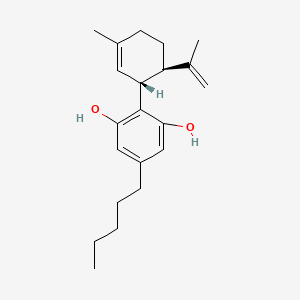
Overview
Cannabidiol (CBD) is a naturally occurring, non-intoxicating phytocannabinoid — a small-molecule chemical compound isolated from Cannabis sativa. Unlike tetrahydrocannabinol (THC), it does not produce euphoria, which has made it attractive as a therapeutic agent. It is a lipophilic, poorly water-soluble molecule, and this physicochemical profile is central to both its pharmacology and the practical challenges of formulating it for clinical use.
CBD is studied as a pleiotropic bioactive with reported anti-inflammatory, neuroprotective, and analgesic activity, and it has been investigated across a wide range of conditions including neuropathic pain, hyperglycemia and its vascular complications, HIV-associated neurocognitive impairment, and osteoarthritis. Its effects are attributed to modulation of the endocannabinoid system together with actions on inflammatory signaling rather than to a single molecular target. A dominant theme in the current literature is CBD's poor oral bioavailability — on the order of a few percent — driven by low aqueous solubility and extensive first-pass metabolism. This has motivated extensive delivery and formulation research, including self-nanoemulsifying systems, nanostructured lipid carriers, amorphous phospholipid dispersions, and microfluidic nanoparticles, as well as co-delivery strategies pairing CBD with absorption enhancers such as piperine or with complementary bioactives like hesperetin and apigenin. Full-spectrum cannabis preparations combining CBD with THC have likewise been explored, for example as perioperative sedatives in veterinary surgery.
Recent Publications Summary
Recent publications on cannabidiol (CBD) have focused heavily on improving its delivery and oral exposure, reflecting the compound’s well-known limitations in solubility and first-pass metabolism. A phospholipid complex self-nanoemulsifying drug delivery system (CBD-PLC-SNEDDS) produced nanoemulsions with favorable particle characteristics and rapid in vitro release, and in rats it markedly increased systemic exposure, with a calculated absolute bioavailability of 92% versus 47% for an oleic acid control 42487275Jul. Similarly, coencapsulation with piperine in food-grade nanostructured lipid carriers improved oral absorption in mice, with the CBD isolate-based system showing high bioaccessibility in digestion studies and doubled systemic exposure in vivo 42311044Jun. Other formulation approaches included amorphous PVP K30-phosphatidylcholine dispersions prepared by hot-melt extrusion for fixed-dose co-delivery of hesperetin and CBD, which improved solubility and dissolution in the best-performing formulation 42315741Jun, as well as exosome-based oral delivery systems for breast cancer, where folic acid-functionalized exosomes loaded with CBD showed preserved exosomal properties and enhanced oral delivery behavior under simulated gastrointestinal conditions 41812824Mar.
Several studies examined CBD in neurological, inflammatory, and pain-related disease models. In aged HIV-1 Tat transgenic mice, chronic CBD treatment for 12 weeks improved recognition memory specifically in female Tat(+) mice and altered nociceptive responses, while also modulating endocannabinoid ligands, enzymes, and receptors across multiple brain and spinal regions 42475352Jul. In a neuropathic pain rat model, oromucosal administration of a cannabidiol-enriched Cannabis sp. extract for 2 weeks moderately reduced cold hyperalgesia 42248695Jun. In hyperglycemic zebrafish, concurrent CBD exposure during glucose induction was investigated for its effects on visual dysfunction and retinal changes, with the study reporting improved performance after CBD treatment 42118736May. In ischemic stroke, CBD was incorporated into multifunctional biomimetic nanoparticles together with polysaccharide and apigenin, and macrophage membrane coating was used to enhance the platform’s biological properties and therapeutic evaluation in a middle cerebral artery occlusion model 42003696Apr. For osteoarthritis, a microfluidics-enabled nanoparticle built on a zein core preloaded with CBD and coated with a magnesium-modified chondroitin sulfate polymer was reported to improve lubrication, sustain release, and support anti-inflammatory and cartilage-protective effects 42261255Jun.
CBD was also studied in inflammatory and autoimmune contexts, including rheumatoid arthritis, where it was reported to synergize with methotrexate and attenuate disease through STAT3/NF-κB signaling-mediated M1 macrophage polarization 41955700Apr. In veterinary anesthesia, a full-spectrum cannabis oil containing CBD and THC was evaluated in female dogs undergoing mastectomy and ovariohysterectomy for sedative and anesthetic-sparing effects 42348039Jun. In healthy participants, a randomized phase I crossover study compared a powdered CBD formulation (CBtru®) with an oil-based product (Epidyolex®/Epidiolex®) under fasted and fed conditions to assess pharmacokinetics, tolerability, and safety 41888503Mar. Across these publications, CBD was most often investigated as a bioactive with therapeutic promise but limited by delivery challenges, prompting extensive work on nanocarriers, co-delivery systems, and biomimetic formulations to improve exposure and target-specific effects.
What Changes, What Holds
1. Oral exposure can be raised far beyond the baseline expectation
REINFORCES Work on phospholipid-complex and lipid-based delivery mainly sharpens the established problem of CBD’s poor oral bioavailability and the field’s response to it. The new studies do not overturn that account; they show that formulation engineering can substantially improve absorption and release behavior, including in vivo exposure, while leaving the underlying limitation intact. That makes the delivery challenge look more tractable, not solved. 42487275Jul42311044Jun
2. CBD’s effects extend into disease models where benefit remains model-dependent and sex-sensitive
REINFORCES These studies fit the existing view of CBD as a pleiotropic bioactive with neuroprotective, analgesic, and anti-inflammatory potential, but they also show that effects are not uniform across models or sexes. The HIV-Tat work suggests region-specific endocannabinoid modulation, while the pain and stroke studies support continued interest in neurological indications. The zebrafish and osteoarthritis findings add support, but none displace the baseline mechanism-centered account. 42475352Jul42248695Jun
3. New inflammatory and translational uses broaden the map without replacing the old one
NEW DIRECTION CBD’s reported synergy with methotrexate in rheumatoid arthritis and its evaluation in veterinary anesthesia extend the baseline into autoimmune and perioperative settings that the overview did not specifically cover. These are additions, not contradictions: they broaden the range of proposed uses while leaving the established anti-inflammatory and analgesic framing standing. The phase I human formulation comparison also reinforces the delivery theme rather than changing what CBD is understood to do. 41955700Apr42348039Jun
Overview update candidates: improved oral exposure with advanced formulations; sex- and model-dependent neurological effects; expanded exploratory use in rheumatoid arthritis and veterinary anesthesia.
cannabidiol
Background Contexts
In the literature, the biological baseline, pathological conditions, or disease models commonly surrounding cannabidiol are described as follows:
- Cannabis sativa L. (Other) — 2 papers: PMIDs 42248695, 41512620
- advanced and metastatic cancers (Disease) — 1 paper: PMIDs 41429435
- bitch (Organism) — 1 paper: PMIDs 42348039
- cannabinoid receptor (Biological Process) — 1 paper: PMIDs 42248695
- Classic late infantile neuronal ceroid lipofuscinosis (Disease) — 1 paper: PMIDs 42475369
- diabetes status (Disease) — 1 paper: PMIDs 42118736
- epilepsy (Disease) — 1 paper: PMIDs 42085339
- first pass effect (Biological Process) — 1 paper: PMIDs 42487275
- HIV (Organism) — 1 paper: PMIDs 42475352
- host-pathogen interaction data (Other) — 1 paper: PMIDs 42249966
- hyperglycemia (Biological Process) — 1 paper: PMIDs 42118736
- ischemic stroke (Disease) — 1 paper: PMIDs 42003696
Methodologies & Technologies Used
Researchers utilize the following experimental methods, imaging platforms, computational models, or biological reagents to study cannabidiol:
- adult zebrafish (Organism) — 2 papers: PMIDs 42118736, 42085339
- 2LabsToGo-Eco (Technology) — 1 paper: PMIDs 41512620
- anxiety-like behavior (Clinical Metric) — 1 paper: PMIDs 42475352
- automated behavioral analysis (Technology) — 1 paper: PMIDs 42085339
- Box-Behnken design (DoE) (Technology) — 1 paper: PMIDs 42315741
- Cannabis sp. extract (Chemical) — 1 paper: PMIDs 42248695
- CBD extract (Chemical) — 1 paper: PMIDs 42311044
- CBD isolate (Chemical) — 1 paper: PMIDs 42311044
- CBtru® (Therapy) — 1 paper: PMIDs 41888503
- centrality metrics (Other) — 1 paper: PMIDs 42249966
- CLN2 model mice (Organism) — 1 paper: PMIDs 42475369
- design of experiments (Technology) — 1 paper: PMIDs 42487275
Molecular Interventions & Targets
The primary molecular pathways, regulatory genes, enzymes, or therapeutic agents actively targeted and manipulated in relation to cannabidiol include:
- apigenin (Chemical) — 1 paper: PMIDs 42003696
- cannabinoids (Chemical) — 1 paper: PMIDs 41512620
- CAV1 (Gene) — 1 paper: PMIDs 42249966
- CDC42 (Gene) — 1 paper: PMIDs 42249966
- dibutyl phthalate (Chemical) — 1 paper: PMIDs 41512620
- diisobutyl phthalate (Chemical) — 1 paper: PMIDs 41512620
- ExoCBD (Therapy) — 1 paper: PMIDs 41812824
- FA-ExoCBD (Therapy) — 1 paper: PMIDs 41812824
- free CBD (Therapy) — 1 paper: PMIDs 41812824
- full-spectrum cannabis oil (Therapy) — 1 paper: PMIDs 42348039
- hesperetin (Other) — 1 paper: PMIDs 42315741
- Jun proto-oncogene, AP-1 transcription factor subunit (Gene) — 1 paper: PMIDs 42249966
Observed Outcomes & Phenotypes
The phenotypic changes, physiological endpoints, or clinical metrics observed and measured in connection with cannabidiol include:
- Oral bioavailability (Clinical Metric) — 2 papers: PMIDs 42487275, 41812824
- safety and immunogenicity (Other) — 2 papers: PMIDs 41955700, 41888503
- absolute bioavailability (Clinical Metric) — 1 paper: PMIDs 42487275
- adverse effect (Clinical Metric) — 1 paper: PMIDs 42348039
- Alix (Protein) — 1 paper: PMIDs 41812824
- Amorphization (Other) — 1 paper: PMIDs 42487275
- anesthetic requirement (Clinical Metric) — 1 paper: PMIDs 42348039
- Antimicrobial Compounds (Biological Process) — 1 paper: PMIDs 41512620
- Area Under the Curve (Clinical Metric) — 1 paper: PMIDs 42487275
- bioaccessibility (Clinical Metric) — 1 paper: PMIDs 42311044
- biocompatibility (Other) — 1 paper: PMIDs 42003696
- biological or toxicological endpoints (Other) — 1 paper: PMIDs 41512620
General Takeaways & Clinical Potentials
The high-level concepts, clinical translations, and overarching conclusions proposed in the research surrounding cannabidiol are summarized below:
- anticancer efficacy (Clinical Metric) — 1 paper: PMIDs 41812824
- Cannabis sativa L. (Other) — 1 paper: PMIDs 42348039
- Cerebral Stroke (Disease) — 1 paper: PMIDs 42003696
- Cytotoxic activity (Clinical Metric) — 1 paper: PMIDs 41955700
- host-directed therapeutic discovery (Other) — 1 paper: PMIDs 42249966
- hyperglycemic sequelae (Other) — 1 paper: PMIDs 42118736
- microvascular complications (Disease) — 1 paper: PMIDs 42118736
- multimodal anesthesia (Other) — 1 paper: PMIDs 42348039
- neuroHIV (Disease) — 1 paper: PMIDs 42475352
- oral CBD absorption (Clinical Metric) — 1 paper: PMIDs 42311044
- promising translational strategy (Other) — 1 paper: PMIDs 42261255
- safer, more effective cannabinoids (Therapy) — 1 paper: PMIDs 42085339