levodopa
Overview
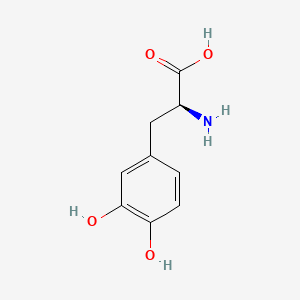
Levodopa, also known as L-DOPA, is a dopamine precursor used as a cornerstone therapy for Parkinson’s disease and other dopamine-responsive movement disorders. After administration, it crosses the blood-brain barrier and is converted to dopamine in the central nervous system, helping to restore deficient dopaminergic signaling. Because dopamine itself does not readily enter the brain, levodopa remains the most effective symptomatic treatment for motor features of Parkinson’s disease.
Clinically, levodopa is commonly given in combination with peripheral decarboxylase inhibitors such as carbidopa or benserazide, and sometimes with adjunctive agents such as entacapone, to improve bioavailability and reduce peripheral metabolism. Its therapeutic effect is well established, but response can vary between patients, and long-term treatment may be associated with complications including motor fluctuations and other levodopa-related adverse effects.
Recent Publications Summary
Recent publications on levodopa focused on both its therapeutic performance and its safety profile in Parkinson’s disease and related movement disorders. In a randomized controlled trial, levodopa-carbidopa-entacapone and levodopa-benserazide were compared for short-term effects on plasma dopamine in patients with early-stage, unilateral Parkinson’s disease, reflecting ongoing efforts to clarify biochemical differences among standard levodopa regimens 42175483May. Another study examined levodopa responsiveness in the context of mitochondrial biology, reporting that levodopa short-duration response may relate to mitochondrial complex I and mitochondrial genomic factors in Brazilian admixed populations, underscoring the potential contribution of oxidative phosphorylation to levodopa efficacy 41734429Feb.
Several studies addressed levodopa-related response and complications in preclinical models. In a repeated low-dose reserpine rodent model, acute and chronic L-DOPA treatment was used to test predictive validity against motor impairments and striatal dopamine depletion; acute L-DOPA improved motor deficits, supporting its established role as the gold-standard symptomatic therapy in Parkinson’s disease models 42113197May. Another animal study investigated transcriptomic signatures linked to both antiparkinsonian benefit and L-DOPA-induced dyskinesia, identifying SB-0107 and a deuterated analog SB-0110 as compounds that may boost L-DOPA’s benefits while reducing dyskinesia in model systems 42455901Jul.
Levodopa was also explored in combination strategies and delivery-focused research. quercetin nanoparticles were tested alone or with levodopa/carbidopa in a reserpine-induced rat model, where the levodopa-containing treatment arm was part of a broader comparison of effects on motor dysfunction and neurochemical alterations 42557291Aug. In addition, a DFT-based nanoplatform study evaluated silicon-doped graphdiyne functionalized with amino acid derivatives as a potential levodopa carrier, reporting stable adsorption and favorable solvation stabilization energies for L-Dopa loading 42372013Jun.
safety and pharmacovigilance studies further expanded the recent levodopa literature. A FAERS disproportionality analysis compared levodopa with pramipexole using reports from 2004 to 2025, identifying distinct reporting patterns and a strong signal for respiratory, thoracic and mediastinal disorders at the System Organ Class level for levodopa, as well as marked association with saliva discolouration at the Preferred Term level 42550252Aug. Outside Parkinson’s disease, a case report of dopa-responsive dystonia highlighted the “exquisite responsiveness” of this disorder to low-dose levodopa, reinforcing its diagnostic and therapeutic relevance in inherited movement disorders 42154052May.
What Changes, What Holds
1. Biochemical comparisons do not alter levodopa’s established place in treatment
REINFORCES Plasma dopamine comparisons across standard levodopa regimens and the mitochondrial-response association both stay within the existing account: levodopa remains a cornerstone symptomatic therapy, while patient-to-patient response heterogeneity is further sharpened by evidence that biochemical handling and mitochondrial biology may help explain variability 42175483May41734429Feb. Nothing here displaces the dopamine-precursor model or the established use of carbidopa/benserazide and entacapone; it mainly adds mechanistic nuance to why response differs.
2. Preclinical studies continue to support levodopa as the reference symptomatic therapy
REINFORCES Acute improvement of motor deficits in a low-dose reserpine rodent model and the dyskinesia-focused transcriptomic work both strengthen the baseline view that L-DOPA is the gold-standard symptomatic agent, while also highlighting the familiar tradeoff between benefit and dyskinesia risk 42113197May42455901Jul. The new compounds are model-system modifiers, not a reversal of levodopa’s role; they sharpen the sense that efficacy can potentially be preserved while adverse motor complications are reduced.
3. Formulation and carrier studies extend levodopa into delivery and combination research without changing its core use
NEW DIRECTION quercetin nanoparticles co-tested with levodopa/carbidopa and the graphdiyne carrier study move into formulation science that the Overview does not cover, namely how levodopa might be packaged or loaded rather than how it works once given 42557291Aug42372013Jun. That broadens the research agenda around administration and drug delivery, but it does not overturn the established therapeutic account; it mainly opens a new development track.
4. safety signals and inherited-dystonia responsiveness add adverse-event and diagnostic dimensions
NEW DIRECTION FAERS signal mining suggests respiratory and saliva-discoloration reporting patterns that the Overview does not mention, so the recent work expands levodopa’s safety profile rather than contradicting its established benefit 42550252Aug. Low-dose responsiveness in dopa-responsive dystonia likewise reinforces a broader movement-disorder role beyond Parkinson’s disease. Together these findings add pharmacovigilance and diagnostic relevance, but they do not unsettle levodopa’s core status as a symptomatic treatment.
Overview update candidates: expanded safety signals in pharmacovigilance; broader inherited-movement-disorder responsiveness; delivery/formulation research as a new development area.
levodopa
Background Contexts
In the literature, the biological baseline, pathological conditions, or disease models commonly surrounding levodopa are described as follows:
- Parkinson's disease (Disease) — 9 papers: PMIDs 42557291, 42550252, 42507749, 42484650, etc.
- constipation (Disease) — 1 paper: PMIDs 42507749
- diet (Other) — 1 paper: PMIDs 42507749
- dopamine-responsive dystonia (Disease) — 1 paper: PMIDs 42154052
- epilepsy (Disease) — 1 paper: PMIDs 42154052
- Freezing of gait (Biological Process) — 1 paper: PMIDs 42484650
- juvenile-onset Parkinson disease (Disease) — 1 paper: PMIDs 42154052
- Laxatives (Therapy) — 1 paper: PMIDs 42507749
- mitochondrial DNA (Gene) — 1 paper: PMIDs 41734429
- Motor fluctuations (Biological Process) — 1 paper: PMIDs 42484650
- multimodal cerebral palsy (CP) dataset (Disease) — 1 paper: PMIDs 42154052
- oxidative phosphorylation (Biological Process) — 1 paper: PMIDs 41734429
Methodologies & Technologies Used
Researchers utilize the following experimental methods, imaging platforms, computational models, or biological reagents to study levodopa:
- (-)-octopamine (Chemical) — 1 paper: PMIDs 42372013
- amino acid derivatives (Chemical) — 1 paper: PMIDs 42372013
- Anthropometric measurements (Clinical Metric) — 1 paper: PMIDs 42507749
- Bayesian confidence propagation neural network (Other) — 1 paper: PMIDs 42550252
- blood-based biomarkers (Other) — 1 paper: PMIDs 42035924
- Constipation Scoring System (Clinical Metric) — 1 paper: PMIDs 42507749
- dementia (Disease) — 1 paper: PMIDs 42507749
- demographics (Other) — 1 paper: PMIDs 42507749
- density functional theory (Technology) — 1 paper: PMIDs 42372013
- deuterated analogs (Chemical) — 1 paper: PMIDs 42455901
- Diet plan (Technology) — 1 paper: PMIDs 42507749
- Dietary recall (Technology) — 1 paper: PMIDs 42507749
Molecular Interventions & Targets
The primary molecular pathways, regulatory genes, enzymes, or therapeutic agents actively targeted and manipulated in relation to levodopa include:
- Carbidopa (Therapy) — 2 papers: PMIDs 42557291, 42175483
- animal gait (Biological Process) — 1 paper: PMIDs 42484650
- benserazide (Therapy) — 1 paper: PMIDs 42175483
- Early-stage, unilateral Parkinson's disease (Disease) — 1 paper: PMIDs 42175483
- entacapone (Therapy) — 1 paper: PMIDs 42175483
- ferroptosis (Biological Process) — 1 paper: PMIDs 42035924
- foslevodopa/foscarbidopa (Therapy) — 1 paper: PMIDs 42484650
- GTP cyclohydrolase 1 (Gene) — 1 paper: PMIDs 42154052
- pramipexole (Therapy) — 1 paper: PMIDs 42550252
- protein kinase A type II (Protein) — 1 paper: PMIDs 42455901
- SB-0107 (Therapy) — 1 paper: PMIDs 42455901
- SB-0110 (Therapy) — 1 paper: PMIDs 42455901
Observed Outcomes & Phenotypes
The phenotypic changes, physiological endpoints, or clinical metrics observed and measured in connection with levodopa include:
- dopamine (Chemical) — 3 papers: PMIDs 42557291, 42175483, 42113197
- striatum (Other) — 2 papers: PMIDs 42557291, 42113197
- 30 Days (Clinical Metric) — 1 paper: PMIDs 42550252
- Acetylcholinesterase (AChE) (Protein) — 1 paper: PMIDs 42557291
- beta oscillation (Biological Process) — 1 paper: PMIDs 41388789
- body composition (Biological Process) — 1 paper: PMIDs 42507749
- broad-beta band activity (Biological Process) — 1 paper: PMIDs 41388789
- Carbidopa (Therapy) — 1 paper: PMIDs 42557291
- catalepsy (Biological Process) — 1 paper: PMIDs 42113197
- Choking sensation (Clinical Metric) — 1 paper: PMIDs 42550252
- Constipation Scoring System (Clinical Metric) — 1 paper: PMIDs 42507749
- desorption barrier (Other) — 1 paper: PMIDs 42372013
General Takeaways & Clinical Potentials
The high-level concepts, clinical translations, and overarching conclusions proposed in the research surrounding levodopa are summarized below:
- animal gait (Biological Process) — 1 paper: PMIDs 42484650
- combination therapy (Therapy) — 1 paper: PMIDs 42550252
- Constipation symptoms (Clinical Metric) — 1 paper: PMIDs 42507749
- Dopaminergic exposure (Clinical Metric) — 1 paper: PMIDs 42484650
- drug-specific monitoring strategies (Other) — 1 paper: PMIDs 42550252
- foslevodopa/foscarbidopa (Therapy) — 1 paper: PMIDs 42484650
- Freezing of gait (Biological Process) — 1 paper: PMIDs 42484650
- l-dopa therapy (Therapy) — 1 paper: PMIDs 42455901
- Motor fluctuations (Biological Process) — 1 paper: PMIDs 42484650
- neurodegenerative processes (Other) — 1 paper: PMIDs 42113197
- neurological disorder (Disease) — 1 paper: PMIDs 42372013
- phase-specific stimulation strategies (Other) — 1 paper: PMIDs 41388789