fluorouracil
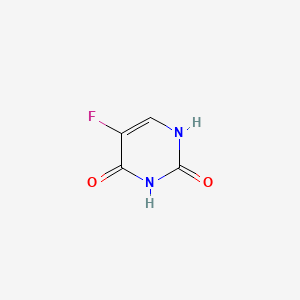
Overview
Fluorouracil (5-FU) is an antimetabolite chemotherapy drug, a fluorinated analog of the pyrimidine base uracil, used in the treatment of a wide range of solid tumors. It has been a backbone of cytotoxic chemotherapy for decades and is central to the management of colorectal cancer, gastric cancer, pancreatic ductal adenocarcinoma, head and neck Cancers including oral squamous cell carcinoma, and nasopharyngeal carcinoma. It is given intravenously for systemic disease and applied topically for certain skin lesions, and its oral prodrug capecitabine offers an alternative route of administration.
After cellular uptake, 5-FU is converted to active nucleotide metabolites. Its principal cytotoxic action is inhibition of thymidylate synthase, which depletes the thymidine nucleotides required for DNA synthesis and repair; incorporation of fluorinated metabolites into RNA and DNA contributes further damage. The resulting replication stress and DNA damage engage TP53-dependent responses and intrinsic apoptosis, with mitochondrial depolarization and caspase-3 activation, and cell-cycle arrest through downregulation of proliferation regulators such as MYC and CDK4. In practice 5-FU is rarely used alone: it is combined with leucovorin, which stabilizes its inhibitory complex with thymidylate synthase, and paired with oxaliplatin in FOLFOX regimens, with irinotecan for colorectal and pancreatic disease, and with cisplatin in head and neck protocols, as well as in neoadjuvant and adjuvant settings. Its clinical usefulness is constrained by short plasma half-life, limited bioavailability, dose-limiting systemic toxicity, and acquired resistance, which can arise through survival signaling such as PI3K/AKT, NF-κB, and MAPK/ERK/JNK pathways, altered apoptotic balance involving BCL-2, and suppression of ferroptosis. These limitations motivate continued work on nanoparticle and polymer-based delivery systems, including chitosan and cyclodextrin carriers designed for pH-responsive release, and on combination strategies with natural products and targeted agents intended to resensitize resistant tumors.
Recent Publications Summary
Recent publications on fluorouracil focused largely on improving delivery, overcoming resistance, and defining combination strategies across several cancer types. In colorectal cancer, multiple studies evaluated formulation approaches intended to enhance 5-fluorouracil (5-FU) performance, including chitosan/β-cyclodextrin nanocarriers that produced pH-responsive release, higher in vitro cytotoxicity than free 5-FU, and apoptosis-associated gene changes in HCT-116 cells 42414363Jul, as well as bacterial nanocellulose capsules that delayed release under colonic conditions and supported antitumor activity in an azoxymethane/dextran sulfate sodium-induced murine model 41740349Feb. A separate 3D GelMA-based colorectal cancer model was used to compare chemotherapeutic responses to 5-FU, showing attenuated cytotoxicity, oxidative stress, and apoptosis in 3D culture relative to 2D monolayers 42066109May. Another colorectal study identified LRG1 as a determinant of 5-FU sensitivity, linking its silencing to reduced TYMS expression and enhanced 5-FU cytotoxicity, and used this insight to design a lysosome-targeting liposomal nanochimera combining LRG1 degradation with 5-FU chemotherapy 42061681Apr. In addition, GPR15-mediated subcellular signaling was reported to boost 5-FU chemosensitivity through NAD+-linked metabolic reprogramming, with rucaparib showing synergy with 5-FU in organoid and xenograft models 41661673Feb.
Several studies addressed 5-FU resistance or sensitization in other tumor settings. In gastric cancer, PTPRE was reported to promote 5-FU resistance by suppressing ferroptosis through the Src/FAK/TRIB3 axis, suggesting that targeting this pathway may help treat 5-FU-resistant disease 42313735Jun. In nasopharyngeal carcinoma, SLC44A4 overexpression increased sensitivity to several DNA-damaging agents but decreased sensitivity to 5-fluorouracil, indicating a negative association between SLC44A4 and 5-FU response 42361082Jun. In oral squamous cell carcinoma, heteronemin was more cytotoxic than 5-FU in chemoresistant cells, underscoring the challenge of 5-FU-refractory disease in that setting [415?]. In pancreatic cancer, 5-FU appeared in both clinical-combination and economic evaluations, including liposome irinotecan plus 5-FU/leucovorin regimens for metastatic or locally advanced disease 42329888Jun41921365Apr41860175Mar, and a randomized phase II trial of postoperative hepatic arterial infusion with oxaliplatin plus IV fluorouracil/leucovorin after resection of multiple colorectal liver metastases 42018958Apr. A phase II trial in older or frail metastatic colorectal cancer patients also compared aflibercept plus 5-FU with FOLFOX 41905242Mar.
Other recent reports examined 5-FU in combination with novel agents or delivery systems. curcumin-based smart nanocarriers were developed for targeted 5-FU delivery and showed stimuli-responsive release with improved potency versus free drug in breast and liver cancer models 41996327Apr. Gold/ceria nanohybrids and other green-synthesized nanosystems were also explored as 5-FU carriers, with favorable encapsulation and physicochemical properties 42240071Jun41779332Mar. In colorectal cancer, celacarfurine and celafurine showed synergistic effects in a 5-FU-resistant HCT116 model 42297080Jun, while mycosubtilin outperformed 5-FU in inhibiting SW480 cell proliferation 42160403May. In pancreatic cancer cells, a disulfiram/copper complex was active against 5-FU-resistant cells and was linked to reactive oxygen species modulation and suppression of nuclear factor erythroid 2-related factor 2 40708305Jul. In glaucoma surgery, a nanostructured film was engineered for localized, time-controlled 5-FU release to modulate postoperative wound healing 42297313Jun.
What Changes, What Holds
1. Delivery refinements and resistance markers extend, rather than replace, the current colorectal cancer story
REINFORCES chitosan/β-cyclodextrin carriers, bacterial nanocellulose capsules, and the 3D GelMA model mainly sharpen the existing picture that 5-FU efficacy depends on formulation and microenvironment, while the LRG1 and GPR15 findings add candidate resistance/sensitization mechanisms that fit the baseline’s emphasis on acquired resistance and delivery limits. The practical implication is that better local release and biomarker-guided selection may improve response, but none of this displaces thymidylate synthase inhibition as the core mechanism. 42414363Jul41740349Feb
2. New resistance pathways and comparative data broaden the map of 5-FU failure, but do not overturn its established role
NEW DIRECTION PTPRE-mediated ferroptosis suppression in gastric cancer and SLC44A4-associated reduced 5-FU sensitivity in nasopharyngeal carcinoma add resistance biology that the Overview did not cover, while the oral squamous cell and pancreatic/colorectal combination studies mainly reinforce the need for alternatives or combinations in refractory disease. The baseline already allows for resistance, so these reports extend its molecular detail and clinical context rather than contradicting it. 42313735Jun42361082Jun
3. Combination and delivery innovations keep 5-FU central, while highlighting settings where it is outperformed or repurposed
REINFORCES curcumin-based carriers, gold/ceria and other nanosystems, and the glaucoma film all fit the established theme of improving delivery or local control, and the pancreatic and colorectal regimen studies remain within the known combination-based use of 5-FU. The more notable additions are the resistant-cell findings, where 5-FU is outperformed or paired with sensitizers, which underscore limitations already recognized in the Overview rather than changing the drug’s role. 41996327Apr42240071Jun
Overview update candidates: formulation-dependent delivery and LRG1/GPR15-linked sensitivity; PTPRE/ferroptosis resistance axis; SLC44A4 as a negative predictor of 5-FU response; localized/time-controlled release systems; additional nanocarrier platforms for 5-FU delivery.
fluorouracil
Background Contexts
In the literature, the biological baseline, pathological conditions, or disease models commonly surrounding fluorouracil are described as follows:
- rectum adenocarcinoma (Disease) — 4 papers: PMIDs 42414363, 42066109, 42061681, 41603279
- pancreatic ductal adenocarcinoma (Disease) — 3 papers: PMIDs 41860175, 41581643, 40708305
- metastatic CRC (Disease) — 2 papers: PMIDs 41905242, 41671078
- 1,2,3-Triazole (Chemical) — 1 paper: PMIDs 41621178
- 5-fluorouridine (Other) — 1 paper: PMIDs 42144396
- acinar cell carcinoma (Disease) — 1 paper: PMIDs 41860175
- adenosquamous carcinoma (Disease) — 1 paper: PMIDs 41860175
- Advanced Colorectal Cancer (Disease) — 1 paper: PMIDs 42319756
- ampulla of Vater adenocarcinoma (Disease) — 1 paper: PMIDs 41622055
- Apigeninidin (Chemical) — 1 paper: PMIDs 41653678
- aqueous humour (Biological Process) — 1 paper: PMIDs 42297313
- Bacillus subtilis (Organism) — 1 paper: PMIDs 42160403
Methodologies & Technologies Used
Researchers utilize the following experimental methods, imaging platforms, computational models, or biological reagents to study fluorouracil:
- dynamic light scattering (Technology) — 2 papers: PMIDs 42097427, 41996327
- HCT116 colon cell line (Cell Line) — 2 papers: PMIDs 42171754, 42144396
- HT-29 (Cell Line) — 2 papers: PMIDs 42171754, 42144396
- human HEK-293 and HCT-116 cell lines (Cell Line) — 2 papers: PMIDs 42297080, 41870588
- irinotecan hydrochloride (Therapy) — 2 papers: PMIDs 41671078, 41510948
- MCF-7 breast cancer cells (Cell Line) — 2 papers: PMIDs 42097427, 41795436
- MTT cell viability assay (Technology) — 2 papers: PMIDs 42097427, 41795436
- oxaliplatin (Therapy) — 2 papers: PMIDs 42171754, 41510948
- transmission electron microscopy (Technology) — 2 papers: PMIDs 42097427, 41996327
- triple-negative breast adenocarcinoma (Cell Line) — 2 papers: PMIDs 42247193, 42240071
- β-cyclodextrin (Chemical) — 2 papers: PMIDs 42414363, 42297313
- 1st line treatment (Other) — 1 paper: PMIDs 41905242
Molecular Interventions & Targets
The primary molecular pathways, regulatory genes, enzymes, or therapeutic agents actively targeted and manipulated in relation to fluorouracil include:
- cisplatin/fluorouracil (Therapy) — 2 papers: PMIDs 42361082, 42315805
- folinic acid (Therapy) — 2 papers: PMIDs 42329888, 42018958
- oxaliplatin (Therapy) — 2 papers: PMIDs 42018958, 41870588
- 1-acyl-sn-glycero-3-phosphoserine (Other) — 1 paper: PMIDs 42069203
- 5-fluorouridine (Other) — 1 paper: PMIDs 42268235
- aflibercept (Therapy) — 1 paper: PMIDs 41905242
- APN-A (Chemical) — 1 paper: PMIDs 41653678
- BCAT1 (Gene) — 1 paper: PMIDs 41603279
- bimetallic MOF (Other) — 1 paper: PMIDs 41763117
- BOLD-100 (Therapy) — 1 paper: PMIDs 42171754
- BRAF/MEK inhibitors (Therapy) — 1 paper: PMIDs 42334686
- capecitabine (Therapy) — 1 paper: PMIDs 41921365
Observed Outcomes & Phenotypes
The phenotypic changes, physiological endpoints, or clinical metrics observed and measured in connection with fluorouracil include:
- tumor cell proliferation (Clinical Metric) — 4 papers: PMIDs 42334686, 42160403, 42144396, 41740349
- B-cell lymphoma 2 (Protein) — 3 papers: PMIDs 42414363, 42315805, 42160403
- reactive oxygen species (Chemical) — 3 papers: PMIDs 42334686, 42315805, 42268235
- tumor cell apoptosis (Biological Process) — 3 papers: PMIDs 42171754, 42160403, 42144396
- apoptotic process (Biological Process) — 2 papers: PMIDs 42414363, 42061681
- Cytotoxic activity (Clinical Metric) — 2 papers: PMIDs 42171754, 42066109
- Kip (Clinical Metric) — 2 papers: PMIDs 41779332, 41713101
- mitochondrial respiration (Biological Process) — 2 papers: PMIDs 42334686, 42315805
- oxidative stress (Biological Process) — 2 papers: PMIDs 42334686, 42066109
- proinflammatory cytokine (Biological Process) — 2 papers: PMIDs 42414363, 41763117
- sorafenib (Therapy) — 2 papers: PMIDs 42178458, 41795436
- tumor metastasis (Clinical Metric) — 2 papers: PMIDs 42361082, 42154344
General Takeaways & Clinical Potentials
The high-level concepts, clinical translations, and overarching conclusions proposed in the research surrounding fluorouracil are summarized below:
- anti-tumor and anti-inflammatory activities (Biological Process) — 2 papers: PMIDs 42297080, 41763117
- therapeutic efficacy (Clinical Metric) — 2 papers: PMIDs 42069203, 41581643
- 5-fluorouracil treatment (Therapy) — 1 paper: PMIDs 41932340
- advanced pancreatic cancer (Disease) — 1 paper: PMIDs 41581643
- anti-CRC activity (Other) — 1 paper: PMIDs 42160403
- antimalarial (Therapy) — 1 paper: PMIDs 41713101
- Au-CeO2 nanoparticles (Chemical) — 1 paper: PMIDs 42240071
- bactericidal effects (Biological Process) — 1 paper: PMIDs 42268235
- bioactive plant-derived compounds (Other) — 1 paper: PMIDs 42319756
- biocompatible antioxidant-rich carriers (Other) — 1 paper: PMIDs 41779332
- BOLD-100 (Therapy) — 1 paper: PMIDs 42171754
- BRCA-mutant TME (Other) — 1 paper: PMIDs 42069203