ethanol
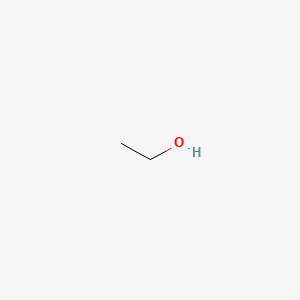
Overview
Ethanol is a small, volatile, water-miscible alcohol with broad relevance in chemistry, biology, medicine, and public health. In biomedical contexts, it is best known as the principal intoxicating component of alcoholic beverages and as a widely used laboratory solvent, preservative, and extraction medium. Because of its physicochemical properties, ethanol can interact with biological membranes, alter protein and lipid environments, and serve as a carrier or processing aid in pharmaceutical and food-related applications.
From a medical perspective, ethanol is important both as a modifiable exposure and as an experimental reagent. Alcohol consumption is a major preventable risk factor in cancer prevention research, liver disease, and behavioral health, while controlled ethanol exposure is also used in mechanistic studies of metabolism, sensory-motor function, and fermentation. Recent publications also highlight ethanol’s role as an extraction solvent for bioactive compounds, including Phenolic Acids, flavonoids, and astaxanthin, and as a component in analytical and formulation studies.
Recent Publications Summary (latest 30 papers)
Recent publications involving ethanol as a studied target span pharmaceutical characterization, interventional materials, experimental biology, and analytical chemistry. In a proof-of-principle study of real-time metered-dose inhaler aerosol analysis by secondary electrospray ionization mass spectrometry, ethanol was one of the major components detected in a multicomponent formulation (Ventoduo®) alongside beclomethasone dipropionate and oleic acid, with all major analytes successfully identified by SESI-HRMS 42319168Jun. The authors concluded that this approach enables comprehensive, real-time characterization of pharmaceutical aerosols, including formulations containing co-solvents such as ethanol 42319168Jun.
Ethanol also appeared in work on ethyl cellulose-ethanol gel sclerotherapy for vascular malformations, where the study focused on the production process, stability, and intravascular behavior of ethanol-based injectable gels 42308334Jun. The abstract emphasizes that ethanol-based sclerosing agents are already effective minimally invasive treatments, particularly for low-flow lesions, and that ethyl cellulose-based gels containing ethanol are being investigated to better understand their mechanism of action and optimize clinical use 42308334Jun.
Outside direct therapeutic applications, ethanol was examined as an exposure in a Caenorhabditis elegans model assessing the effects of 24-hour ethanol exposure, withdrawal, and withdrawal relief on sensorimotor performance 41871151Mar. The study specifically investigated the contribution of dopaminergic (dop-3) and serotonergic (tph-1) pathway genes to ethanol-related effects, indicating a role for these signaling pathways in modulating responses to alcohol consumption and cessation 41871151Mar. Ethanol was also referenced in an authentication study of bergamot essential oil, where synthetic samples were described as containing alcohols such as ethanol; the presence of synthetic ethanol was associated with spectral features used to distinguish natural from synthetic or adulterated oils 41666782Feb.
What Changes, What Holds
1. Ethanol can be part of formulations that are now characterized in real time rather than inferred indirectly
METHOD Real-time SESI-HRMS adds an analytical way to identify ethanol within complex pharmaceutical aerosols, strengthening formulation characterization without changing ethanol’s established role as a solvent or co-solvent 42319168Jun. The main change is methodological: ethanol-containing inhaler products can be profiled comprehensively and on the fly, which may improve quality control and compositional understanding, but the work does not alter what ethanol is known to do biologically.
2. Ethanol-based gels are being explored as a more controlled sclerosing format, not a new therapeutic class
REINFORCES The gel formulation extends the established use of ethanol as an effective sclerosing agent for vascular malformations, especially low-flow lesions, by focusing on stability and intravascular behavior rather than proposing a different clinical role 42308334Jun. What changes is the delivery form and the mechanistic detail, while the underlying medical use remains the same and is supported rather than challenged.
3. Ethanol exposure is now tied to specific neural pathways in recovery from withdrawal, but the baseline role of alcohol as a behavioral and neurologic exposure stands
NEW DIRECTION Work in C. elegans adds a mechanistic angle on how ethanol withdrawal and relief affect sensorimotor performance, implicating dopaminergic and serotonergic signaling in responses to exposure and cessation 41871151Mar. That goes beyond the Overview’s general mention of ethanol in behavioral health and metabolism by specifying pathway-level modulation, while the bergamot oil finding is a separate analytical/authentication use showing ethanol as a marker of synthetic or adulterated material 41666782Feb.
Overview update candidates: ethanol’s use in real-time aerosol characterization; pathway-level effects in withdrawal models; ethanol as an authentication marker in essential-oil analysis.
ethanol
Background Contexts
In the literature, the biological baseline, pathological conditions, or disease models commonly surrounding ethanol are described as follows:
- alcohol-associated hepatitis (Disease) — 1 paper: PMIDs 41941058
- alcoholism (Disease) — 1 paper: PMIDs 42399577
- Ananas comosus (Organism) — 1 paper: PMIDs 41762576
- arteriovenous malformation (Disease) — 1 paper: PMIDs 42308334
- Caenorhabditis elegans (Organism) — 1 paper: PMIDs 41871151
- calcite (Other) — 1 paper: PMIDs 41795322
- calcium carbonate (Chemical) — 1 paper: PMIDs 41795322
- Cancers (Clinical Metric) — 1 paper: PMIDs 42190157
- cardiovascular instability (Disease) — 1 paper: PMIDs 42391248
- colitis (Disease) — 1 paper: PMIDs 42385885
- Dopamine receptor 3 CELE_T14E8.3 (Gene) — 1 paper: PMIDs 41871151
- dopaminergic pathway (Pathway) — 1 paper: PMIDs 41871151
Methodologies & Technologies Used
Researchers utilize the following experimental methods, imaging platforms, computational models, or biological reagents to study ethanol:
- 1% KOH (Chemical) — 1 paper: PMIDs 42126613
- 16S rRNA gene sequencing (Technology) — 1 paper: PMIDs 42300615
- accelerated IVRTs (Technology) — 1 paper: PMIDs 41856216
- acidic and alkaline hydrolysis (Technology) — 1 paper: PMIDs 42126613
- Analytical EcoScale (Technology) — 1 paper: PMIDs 42365068
- Application of non-thermal technology in AC processing (Technology) — 1 paper: PMIDs 41762576
- argan oil (Chemical) — 1 paper: PMIDs 42126613
- biphasic methanol/olive oil solvent (Technology) — 1 paper: PMIDs 42126613
- Caenorhabditis elegans (Organism) — 1 paper: PMIDs 41762576
- CT26 (Cell Line) — 1 paper: PMIDs 42300645
- dextran sulfate sodium (Chemical) — 1 paper: PMIDs 42385885
- diazepam (Therapy) — 1 paper: PMIDs 42399577
Molecular Interventions & Targets
The primary molecular pathways, regulatory genes, enzymes, or therapeutic agents actively targeted and manipulated in relation to ethanol include:
- (±)-limonene (Chemical) — 1 paper: PMIDs 41666782
- (±)-linalyl acetate (Chemical) — 1 paper: PMIDs 41666782
- 2-phenylchromane flavonoid (Chemical) — 1 paper: PMIDs 41794533
- AC extract mixture-1 (Chemical) — 1 paper: PMIDs 41762576
- AC extract mixture-2 (Chemical) — 1 paper: PMIDs 41762576
- astaxanthin (Chemical) — 1 paper: PMIDs 42126613
- beclomethasone dipropionate (Therapy) — 1 paper: PMIDs 42319168
- Bergamot essential oil (Other) — 1 paper: PMIDs 41666782
- dipropylene glycol (DPG) (Chemical) — 1 paper: PMIDs 41666782
- endometriomas (Disease) — 1 paper: PMIDs 42053850
- ethyl cellulose-based gels (Chemical) — 1 paper: PMIDs 42308334
- exercise (Biological Process) — 1 paper: PMIDs 42172625
Observed Outcomes & Phenotypes
The phenotypic changes, physiological endpoints, or clinical metrics observed and measured in connection with ethanol include:
- body weight loss (Clinical Metric) — 2 papers: PMIDs 42385885, 42300615
- corticosterone (Chemical) — 2 papers: PMIDs 42399577, 42385885
- proinflammatory cytokine (Biological Process) — 2 papers: PMIDs 42399577, 42385885
- 1-hexanal (Chemical) — 1 paper: PMIDs 41762576
- 125 mg/g (Clinical Metric) — 1 paper: PMIDs 42126613
- 3-Heptanol (D) (Chemical) — 1 paper: PMIDs 41762576
- 3-Heptanol (M) (Chemical) — 1 paper: PMIDs 41762576
- 3-methylbutan-1-ol (Chemical) — 1 paper: PMIDs 41762576
- 35.36 mg/g (Clinical Metric) — 1 paper: PMIDs 42126613
- 65 mg/g (Clinical Metric) — 1 paper: PMIDs 42126613
- absorption band between 3600 and 3100 cm-1 (Other) — 1 paper: PMIDs 41666782
- accelerated release rates (Other) — 1 paper: PMIDs 41856216
General Takeaways & Clinical Potentials
The high-level concepts, clinical translations, and overarching conclusions proposed in the research surrounding ethanol are summarized below:
- alcoholic liver disease (Disease) — 1 paper: PMIDs 42300615
- antigen delivery (Other) — 1 paper: PMIDs 41795322
- bioactive ingredients (Other) — 1 paper: PMIDs 42300615
- cosmetics industry (Other) — 1 paper: PMIDs 42126613
- detoxification (Clinical Metric) — 1 paper: PMIDs 42391248
- Development of ACEMs in functional and flavored foods (Other) — 1 paper: PMIDs 41762576
- drug loading capacity (Clinical Metric) — 1 paper: PMIDs 41795322
- Efficient and comprehensive utilization of AC resources (Other) — 1 paper: PMIDs 41762576
- efficient astaxanthin extraction (Other) — 1 paper: PMIDs 42126613
- ethanol-induced liver injury (Disease) — 1 paper: PMIDs 42300615
- IL-6/glucocorticoid-SAA1-TLR4 axis (Pathway) — 1 paper: PMIDs 42385885
- immunostimulatory capability (Other) — 1 paper: PMIDs 41795322