clopidogrel
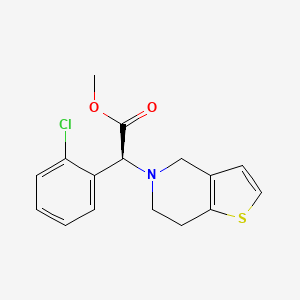
Overview
Clopidogrel is an oral antiplatelet medication used to reduce platelet activation and aggregation. It is a prodrug that requires hepatic bioactivation, primarily through Cytochrome P450 (CYP) enzymes including Cytochrome P450 2C19 (CYP2C19) (CYP2C19), to generate its active metabolite. By inhibiting platelet P2Y12 signaling, clopidogrel is widely used in settings where prevention of arterial thrombosis is important, including after percutaneous coronary intervention (PCI) and in selected patients with ischemic cerebrovascular disease.
Its clinical effect can vary substantially between individuals because of differences in CYP2C19 function and because of drug interactions that alter CYP2C19-mediated activation. Recent research has therefore focused not only on clopidogrel’s antiplatelet efficacy, but also on factors that influence its onset, potency, and safety, including proton-pump inhibitor coadministration, CYP2C19 polymorphisms, and alternative formulations designed to accelerate bioactivation.
Recent Publications Summary
Recent studies have continued to examine clopidogrel in combination strategies for acute vascular care, including dual antiplatelet therapy with aspirin and immediate intensive statin treatment in mild ischemic stroke or transient ischemic attack, with the trial designed to assess whether the two approaches have synergistic benefit 42348803Jun. In emergency coronary intervention, an intravenous micellar formulation was developed to enable rapid hepatic bioactivation of clopidogrel, addressing the delayed onset of oral clopidogrel and aiming to support urgent antiplatelet therapy in acute coronary syndrome 41692042Feb.
Several publications focused on factors that may modify clopidogrel response and clinical risk. In atrial fibrillation patients undergoing PCI and treated with oral anticoagulation plus clopidogrel, CYP2C19 polymorphism and platelet reactivity were evaluated in relation to ischemic and bleeding outcomes, reflecting ongoing interest in pharmacogenetic variability in clopidogrel effect 42153956May. Related work also examined concomitant acid-suppressive therapy, including proton pump inhibitors classified by CYP2C19 inhibitory potency, as well as P-CABs and PPIs in patients with ischemic stroke receiving clopidogrel, to assess whether these co-medications influence cardiovascular or ischemic event risk 41783931Mar41766537Mar. A nationwide cohort study likewise compared proton pump inhibitors with histamine-2 receptor antagonists in patients on clopidogrel-based dual antiplatelet therapy after PCI, reflecting continued evaluation of gastrointestinal prophylaxis choices alongside clopidogrel 41324390Dec.
Observational data also described real-world clopidogrel use in high-risk populations. In a global registry of patients with active cancer hospitalized for acute myocardial infarction, clopidogrel was the most frequently prescribed P2Y12 inhibitor, and propensity-matched analyses compared long-term mortality outcomes with ticagrelor and prasugrel 41936851Apr. Across these studies, clopidogrel was most often studied as part of dual antiplatelet therapy or in the context of drug interactions, pharmacogenetics, and formulation strategies intended to optimize antiplatelet efficacy and safety 42348803Jun42153956May41936851Apr41783931Mar41766537Mar41324390Dec41692042Feb.
What Changes, What Holds
1. Clopidogrel is being extended into combination and rapid-onset strategies, but these do not replace its established antiplatelet role
REINFORCES New work keeps clopidogrel within the same therapeutic frame described in the Overview: prevention of arterial thrombosis, now explored alongside aspirin and intensive statin treatment in acute cerebrovascular care, and in a faster intravenous formulation for urgent coronary use 42348803Jun41692042Feb. The main implication is not a new mechanism, but continued efforts to improve timing and integration with other acute vascular therapies.
2. Response variability and interaction risk remain central to clopidogrel use
REINFORCES Recent studies sharpen, rather than overturn, the established concern that CYP2C19 function and co-medications can materially alter clopidogrel effect 42153956May41783931Mar41766537Mar41324390Dec. The added value is practical: pharmacogenetic variability and acid-suppressive drug choice continue to matter in real-world patients, including those on oral anticoagulation after PCI and those receiving stroke or post-PCI prophylaxis. This supports ongoing caution around individualized response.
3. Clopidogrel remains the most common P2Y12 choice in some high-risk settings, even where alternatives may be compared
REINFORCES Observational use in active cancer with acute myocardial infarction shows clopidogrel still occupying a major real-world role, with comparative outcome analyses against ticagrelor and prasugrel 41936851Apr. That does not change the Overview’s account of clopidogrel as a standard antiplatelet option, but it does underscore that clinicians continue to rely on it in complex populations where bleeding, thrombosis, and comorbidity compete. The paragraph adds usage context, not a new indication or mechanism.
Overview update candidates: continued emphasis on pharmacogenetic variability; acid-suppressive drug interactions; and rapid-onset formulation strategies; real-world comparative use in high-risk populations.
clopidogrel
Background Contexts
In the literature, the biological baseline, pathological conditions, or disease models commonly surrounding clopidogrel are described as follows:
- myocardial infarction (Disease) — 2 papers: PMIDs 41936851, 41925864
- Percutaneous Coronary Intervention (Therapy) — 2 papers: PMIDs 42153956, 41324390
- active cancer (Disease) — 1 paper: PMIDs 41936851
- atrial fibrillation (Disease) — 1 paper: PMIDs 42153956
- diabetes status (Disease) — 1 paper: PMIDs 41925864
- drug-drug interactions (Other) — 1 paper: PMIDs 41324390
- dual anti-platelet therapy (Therapy) — 1 paper: PMIDs 41324390
- ischemic stroke (Disease) — 1 paper: PMIDs 41766537
- large ischemic stroke (Disease) — 1 paper: PMIDs 42348803
- pharmacodynamic interactions (Other) — 1 paper: PMIDs 41766537
- Potassium-competitive acid blockers (Therapy) — 1 paper: PMIDs 41766537
- Recurrent Ischemic Stroke (Disease) — 1 paper: PMIDs 42303966
Methodologies & Technologies Used
Researchers utilize the following experimental methods, imaging platforms, computational models, or biological reagents to study clopidogrel:
- ACQUITY UPLC BEH C18 column (Technology) — 1 paper: PMIDs 41650587
- anti-GPIbα antibody (Therapy) — 1 paper: PMIDs 41925864
- aspirin (Therapy) — 1 paper: PMIDs 41925864
- cangrelor (Therapy) — 1 paper: PMIDs 41925864
- CES1A1 (Gene) — 1 paper: PMIDs 42303966
- CYP2B6 (Gene) — 1 paper: PMIDs 42303966
- CYP2C19 Inhibition (Biological Process) — 1 paper: PMIDs 41783931
- CYP3A5 (Gene) — 1 paper: PMIDs 42303966
- cytochrome P450 family 1 subfamily A member 2 (Gene) — 1 paper: PMIDs 42303966
- cytochrome P450 family 3 subfamily A member 4 (Protein) — 1 paper: PMIDs 42303966
- dabigatran (Therapy) — 1 paper: PMIDs 41925864
- dual anti-platelet therapy (Therapy) — 1 paper: PMIDs 41925864
Molecular Interventions & Targets
The primary molecular pathways, regulatory genes, enzymes, or therapeutic agents actively targeted and manipulated in relation to clopidogrel include:
- cytochrome P450 family 2 subfamily C member 19 (Protein) — 3 papers: PMIDs 42303966, 42153956, 41783931
- cytochrome P450 (Protein) — 2 papers: PMIDs 42303966, 41692042
- proton-pump inhibitor (Therapy) — 2 papers: PMIDs 41783931, 41766537
- APOH (Protein) — 1 paper: PMIDs 41692042
- apolipoprotein A1 (Gene) — 1 paper: PMIDs 41692042
- Apolipoprotein B (Other) — 1 paper: PMIDs 41692042
- APOM (Protein) — 1 paper: PMIDs 41692042
- aspirin (Therapy) — 1 paper: PMIDs 42348803
- ATP binding cassette subfamily B member 1 (Protein) — 1 paper: PMIDs 42303966
- CCDC6 (Therapy) — 1 paper: PMIDs 41650587
- CG-0255 (Therapy) — 1 paper: PMIDs 41650587
- dual anti-platelet therapy (Therapy) — 1 paper: PMIDs 41936851
Observed Outcomes & Phenotypes
The phenotypic changes, physiological endpoints, or clinical metrics observed and measured in connection with clopidogrel include:
- 5-year and 10-year mortality (Clinical Metric) — 1 paper: PMIDs 41936851
- acute and subacute ischemic stroke (Disease) — 1 paper: PMIDs 42153956
- adjusted hazard ratios (Clinical Metric) — 1 paper: PMIDs 41936851
- All-cause mortality (Clinical Metric) — 1 paper: PMIDs 41936851
- AMI readmission (Clinical Metric) — 1 paper: PMIDs 41936851
- antiplatelet efficacy (Other) — 1 paper: PMIDs 41692042
- bleeding time (Clinical Metric) — 1 paper: PMIDs 41692042
- cardiovascular comorbidity (Other) — 1 paper: PMIDs 41936851
- cardiovascular event (Other) — 1 paper: PMIDs 41783931
- cardiovascular safety (Clinical Metric) — 1 paper: PMIDs 41324390
- CYP2C19 intermediate and poor metabolism (Clinical Metric) — 1 paper: PMIDs 42303966
- CYP2C9 intermediate and poor metabolism (Clinical Metric) — 1 paper: PMIDs 42303966
General Takeaways & Clinical Potentials
The high-level concepts, clinical translations, and overarching conclusions proposed in the research surrounding clopidogrel are summarized below:
- Bleeding Risk (Clinical Metric) — 1 paper: PMIDs 42153956
- Cardioprotection (Biological Process) — 1 paper: PMIDs 41925864
- clopidogrel resistance (Other) — 1 paper: PMIDs 42303966
- further evaluation of potent P2Y12 inhibitors (Other) — 1 paper: PMIDs 41936851
- Guideline use (Other) — 1 paper: PMIDs 42303966
- High Platelet Reactivity (Clinical Metric) — 1 paper: PMIDs 42153956
- Ischemic Risk (Other) — 1 paper: PMIDs 42153956
- Low Platelet Reactivity (Clinical Metric) — 1 paper: PMIDs 42153956
- quantitative evaluation of CG-0255 and its active metabolite (Clinical Metric) — 1 paper: PMIDs 41650587
- rapid-onset and reversible platelet inhibition (Other) — 1 paper: PMIDs 41692042
- recent evidence (Other) — 1 paper: PMIDs 41324390
- structure-corona-function framework (Other) — 1 paper: PMIDs 41692042