aspirin
Overview
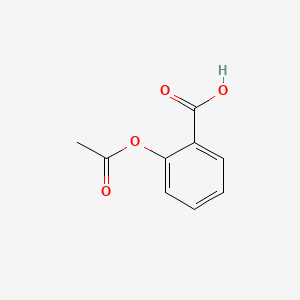
Aspirin (acetylsalicylic acid) is one of the most widely used and extensively studied pharmacological agents in medicine, classified as a non-steroidal anti-inflammatory drug (NSAID) with potent antiplatelet, analgesic, antipyretic, and anti-inflammatory properties. Its primary mechanism of action involves irreversible inhibition of cyclooxygenase (COX) enzymes — specifically COX-1 and COX-2 — which blocks the conversion of arachidonic acid to prostaglandins and thromboxane A2 (TXA2). By suppressing platelet-derived TXA2, a potent platelet activator and vasoconstrictor, aspirin reduces platelet aggregation and thrombus formation, making it a cornerstone therapy in the prevention and management of cardiovascular and cerebrovascular disease. Its antiplatelet effects are permanent for the lifespan of a given platelet (~7–10 days), as platelets lack the nuclear machinery to synthesize new COX enzyme.
Beyond cardiovascular indications, aspirin is employed in a broad range of clinical settings including obstetric complications, antiphospholipid syndrome, ischemic stroke, and chronic coronary syndrome. It is often used in combination with other antithrombotic agents — including anticoagulants such as rivaroxaban, apixaban, and warfarin, as well as P2Y12 inhibitors such as clopidogrel and ticagrelor — to achieve additive or synergistic inhibition of thrombotic pathways. Emerging research also explores novel drug delivery platforms for aspirin and its potential role in reducing mortality in aging populations, reflecting the breadth of its pharmacological relevance.
Recent Publications Summary
Recent studies have examined aspirin across several therapeutic contexts, most prominently in antithrombotic regimens. In acute mild ischemic stroke or transient ischemic attack, aspirin was studied as part of dual antiplatelet therapy with clopidogrel, alongside immediate intensive statin treatment, to assess whether the combination provided added benefit 42348803Jun. Another randomized trial evaluated early oral dual antiplatelet therapy with ticagrelor plus aspirin as an adjunct to intravenous thrombolysis in patients with ischemic stroke, addressing the efficacy and safety of adding antiplatelet therapy soon after thrombolysis 42114550May. In subclinical atrial fibrillation detected by implantable cardiac monitoring, aspirin served as the comparator to apixaban in ARTESiA subgroup analyses 40752875Aug, and in ARCADIA it was likewise used as the comparator for apixaban when assessing hemorrhage risk 41741942Feb.
Aspirin was also investigated in chronic cardiovascular prevention strategies. In the COMPASS substudy, extended dual pathway inhibition with aspirin and rivaroxaban was evaluated in chronic coronary syndrome according to updated 2024 ESC high-risk criteria, focusing on net clinical benefit 41614385Jan. Related work in the Framingham Heart Study examined systemic thromboxane A2 generation and noted that modifiable correlates of thromboxane production may include nonplatelet sources not readily affected by aspirin, with implications for cardiovascular disease risk 42021731Apr. In geriatric rehabilitation inpatients, observational data from the RESORT cohort found that aspirin use was associated with lower 1-year post-discharge mortality, although no association was seen with changes in physical function or readmission 41713660Feb.
Beyond cardiovascular disease, aspirin was studied in pregnancy-related hemostatic management and in biomaterial applications. In women with bad obstetric history, preconception enoxaparin followed by aspirin after the tenth week of pregnancy was associated with progressive improvement in hemostasis and platelet function during pregnancy 42012486Apr. In orthopedic implant research, a ZIF-L/ZIF-8 hierarchical coating on titanium was developed to enhance aspirin loading and enable pH-triggered controlled release; the coating showed high loading capacity, sustained release at physiological pH, rapid release under acidic conditions, excellent cytocompatibility, and promotion of osteoblastic cell proliferation 41990835Apr.
Aspirin was also investigated in a preclinical neuroinflammation model. In male mice exposed to prolonged high-fat diet, aspirin alleviated depressive-like behavior, with the study linking the behavioral effects to suppression of arachidonic acid-mediated microglial activation and neuroinflammation 42457861Jul. The reported mechanism involved disruption of polyunsaturated fatty acid homeostasis, elevated arachidonic acid, increased microglial activation, and higher levels of inflammatory mediators including IL-6, TNF-α, and CCL2 in the prefrontal cortex and hippocampus 42457861Jul.
What Changes, What Holds
1. Aspirin’s role is being tested as part of newer stroke regimens rather than as a stand-alone antiplatelet
NEW DIRECTION Acute stroke and TIA studies are not overturning aspirin’s established antiplatelet use, but they do extend it into early combination strategies where its incremental value and bleeding tradeoffs need to be defined. The comparator role in subclinical atrial fibrillation also keeps aspirin in the frame as a reference standard, while highlighting that apixaban is being tested against it in a setting the Overview does not cover 42348803Jun42114550May.
2. Aspirin remains a benchmark in chronic prevention, but its net benefit may depend on risk stratification and nonplatelet biology
REINFORCES The chronic coronary syndrome work supports the existing view of aspirin as part of dual-pathway prevention, while suggesting that updated high-risk criteria may help identify who benefits most from adding rivaroxaban 41614385Jan. The thromboxane findings do not displace aspirin’s mechanism; instead, they sharpen a known limitation by implying that some thromboxane generation may come from sources aspirin does not fully suppress 42021731Apr. The mortality association in geriatric inpatients is observational and hypothesis-generating 41713660Feb.
3. Aspirin’s hemostatic use in pregnancy and its materials applications are expanding, but these are new applications rather than revisions of its core pharmacology
NEW DIRECTION The obstetric report fits within the Overview’s mention of obstetric complications and adds a more specific pregnancy-management sequence, without challenging aspirin’s established antithrombotic role 42012486Apr. The implant-coating study is a separate translational direction: it concerns drug delivery engineering, not a new biological effect of aspirin, so it broadens how the drug may be deployed rather than what it is known to do 41990835Apr.
4. Aspirin may also modulate neuroinflammation-related behavior, a role not covered in the baseline account
NEW DIRECTION The mouse study points to a potential central nervous system effect through arachidonic acid and microglial pathways, which sits outside the Overview’s cardiovascular, obstetric, and antiplatelet framing 42457861Jul. Because this is preclinical evidence, it should be treated as a lead rather than a settled extension of aspirin’s clinical profile; confirmation in additional models and human studies would be needed before it changes the article’s main account 42457861Jul.
Overview update candidates: chronic prevention may merit a note on updated high-risk selection and the possibility that nonplatelet thromboxane sources limit aspirin’s effect; the pregnancy-management sequence and preclinical neuroinflammation finding are too narrow or early for the main Overview.
aspirin
Background Contexts
In the literature, the biological baseline, pathological conditions, or disease models commonly surrounding aspirin are described as follows:
- 2024 ESC criteria (Other) — 1 paper: PMIDs 41614385
- active ingredient (Other) — 1 paper: PMIDs 42177921
- acute ischaemic stroke (Disease) — 1 paper: PMIDs 42114550
- arable farming (Other) — 1 paper: PMIDs 41787959
- Artesia (Other) — 1 paper: PMIDs 40752875
- bad obstetric history (Disease) — 1 paper: PMIDs 42012486
- cardiovascular disease (Disease) — 1 paper: PMIDs 42021731
- Chronic Coronary Syndrome (Disease) — 1 paper: PMIDs 41614385
- Citrus peels (Other) — 1 paper: PMIDs 42324976
- contaminants of emerging concern (Other) — 1 paper: PMIDs 41787959
- diabetes status (Disease) — 1 paper: PMIDs 41925864
- dual anti-platelet therapy (Therapy) — 1 paper: PMIDs 42456136
Methodologies & Technologies Used
Researchers utilize the following experimental methods, imaging platforms, computational models, or biological reagents to study aspirin:
- clopidogrel (Therapy) — 2 papers: PMIDs 42456136, 41925864
- λ-carrageenan-induced peritonitis (Biological Process) — 1 paper: PMIDs 42324976
- 12-O-tetradecanoylphorbol-13-acetate (Chemical) — 1 paper: PMIDs 42324976
- anti-GPIbα antibody (Therapy) — 1 paper: PMIDs 41925864
- anti-seizure medications (Therapy) — 1 paper: PMIDs 42055763
- ARCADIA trial (Other) — 1 paper: PMIDs 41741942
- artificial pacemaker (Therapy) — 1 paper: PMIDs 40752875
- atenolol (Chemical) — 1 paper: PMIDs 42358197
- blood clot contraction assay (Technology) — 1 paper: PMIDs 42012486
- cangrelor (Therapy) — 1 paper: PMIDs 41925864
- Charlson Comorbidity Index (Clinical Metric) — 1 paper: PMIDs 41713660
- compaction pressure (Other) — 1 paper: PMIDs 42177921
Molecular Interventions & Targets
The primary molecular pathways, regulatory genes, enzymes, or therapeutic agents actively targeted and manipulated in relation to aspirin include:
- apixaban (Therapy) — 2 papers: PMIDs 41741942, 40752875
- 12-HETE (Chemical) — 1 paper: PMIDs 42457861
- ACE inhibitor (Therapy) — 1 paper: PMIDs 41713660
- angiotensin receptor antagonist (Therapy) — 1 paper: PMIDs 41713660
- arachidonic acid (Chemical) — 1 paper: PMIDs 42457861
- beta-blockers (Therapy) — 1 paper: PMIDs 41713660
- carbamazepine (Therapy) — 1 paper: PMIDs 42177921
- clopidogrel (Therapy) — 1 paper: PMIDs 42348803
- cyclooxygenases-1 (Protein) — 1 paper: PMIDs 42324976
- cyclooxygenases-2 (Protein) — 1 paper: PMIDs 42324976
- enoxaparin (Therapy) — 1 paper: PMIDs 42012486
- hesperidin (Chemical) — 1 paper: PMIDs 42324976
Observed Outcomes & Phenotypes
The phenotypic changes, physiological endpoints, or clinical metrics observed and measured in connection with aspirin include:
- 1-year post-discharge mortality (Clinical Metric) — 1 paper: PMIDs 41713660
- affirmation and negation (Biological Process) — 1 paper: PMIDs 42358197
- ash-leaf spots (Disease) — 1 paper: PMIDs 42055763
- aspirin monotherapy (Therapy) — 1 paper: PMIDs 42456136
- azoxystrobin (Chemical) — 1 paper: PMIDs 41787959
- bleeding (Clinical Metric) — 1 paper: PMIDs 41741942
- C-C motif chemokine ligand 2 (Biological Process) — 1 paper: PMIDs 42457861
- carbamazepine (Therapy) — 1 paper: PMIDs 41787959
- clinically relevant or major bleeding (Clinical Metric) — 1 paper: PMIDs 42456136
- conformational flexibility (Biological Process) — 1 paper: PMIDs 42358197
- convulsion (Disease) — 1 paper: PMIDs 42055763
- cortical tubers (Other) — 1 paper: PMIDs 42055763
General Takeaways & Clinical Potentials
The high-level concepts, clinical translations, and overarching conclusions proposed in the research surrounding aspirin are summarized below:
- anti-inflammatory properties (Other) — 1 paper: PMIDs 42324976
- Cardioprotection (Biological Process) — 1 paper: PMIDs 41925864
- contaminated fertilizers (Chemical) — 1 paper: PMIDs 41787959
- DAPT-MVD ClinicalTrials.gov number (Other) — 1 paper: PMIDs 42456136
- digital design tool (Other) — 1 paper: PMIDs 42177921
- favorable pregnancy outcome (Clinical Metric) — 1 paper: PMIDs 42012486
- inflammatory conditions (Biological Process) — 1 paper: PMIDs 42324976
- metabolic depression (Other) — 1 paper: PMIDs 42457861
- Nutritional psychiatry (Other) — 1 paper: PMIDs 42457861
- obstetric complications (Clinical Metric) — 1 paper: PMIDs 42012486
- osseointegration (Biological Process) — 1 paper: PMIDs 41990835
- survival benefit among older adults (Other) — 1 paper: PMIDs 41713660