methotrexate
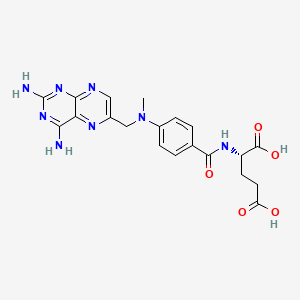
Overview
Methotrexate (MTX) is a Folate antagonist and one of the most widely used agents in both oncology and immunology. It acts by competitively inhibiting dihydrofolate reductase (DHFR), the enzyme responsible for reducing dihydrofolate to tetrahydrofolate, thereby disrupting DNA synthesis, repair, and cellular replication. This dual utility — as a cytotoxic chemotherapeutic and as an immunosuppressive disease-modifying antirheumatic drug (DMARD) — makes it a cornerstone of treatment across an exceptionally broad range of conditions, including malignancies such as osteosarcoma, acute lymphoblastic leukemia (ALL), and diffuse large B-cell lymphoma (DLBCL), as well as inflammatory and autoimmune disorders including rheumatoid arthritis, psoriasis, bullous pemphigoid, scleritis, and retroperitoneal fibrosis.
At lower doses, MTX modulates immune function by suppressing lymphocyte proliferation and downregulating pro-inflammatory cytokines, making it a preferred anchor agent in rheumatological and dermatological practice. At high doses, it exerts direct antiproliferative cytotoxicity, and its pharmacokinetics in these settings require careful monitoring given the potential for significant organ toxicity, including hepatotoxicity, nephrotoxicity, and mucositis. Because of this breadth of application and its established efficacy benchmark, MTX remains a critical comparator in experimental therapeutics and a frequent component of combination regimens evaluated in current research.
New Publications Today (1)
- PMID 42599331 — Effectiveness of oral cryotherapy in preventing methotrexate-induced oral mucositis in pediatric patients with acute lymphoblastic leukemia: a randomized controlled trial.
Recent Publications Summary
Recent investigations examined methotrexate across multiple therapeutic contexts and patient populations. In pediatric acute lymphoblastic leukemia, methotrexate-induced oral mucositis emerged as a significant treatment-related toxicity, with oral cryotherapy demonstrating potential in reducing its incidence and severity 42599331Aug, and photobiomodulation showing efficacy in managing mucositis-associated impacts on quality of life 42283739Jun. In adults, methotrexate served as a foundational therapy for rheumatoid arthritis and other inflammatory conditions; in giant cell arteritis, glucocorticoid combined with methotrexate was less effective than glucocorticoid combined with tocilizumab in reducing relapses and serious adverse events 42365805Jun. Methotrexate also demonstrated efficacy in bullous pemphigoid, with treated patients showing improved survival compared to untreated populations 42206441May, and served as a first-line therapeutic option in juvenile idiopathic arthritis-associated uveitis, with some patients requiring escalation to newer agents such as baricitinib when methotrexate response proved inadequate 40947519Sep.
Mechanistic investigations revealed that methotrexate influenced immune cell biology in ways relevant to its therapeutic action in autoimmune diseases. In rheumatoid arthritis, methotrexate potentiated oxidative stress-mediated transdifferentiation and metabolic reprogramming of neutrophils 42479252Jul, potentially contributing to its anti-inflammatory effects. Combination strategies demonstrated enhanced potential for therapeutic benefit; cannabidiol synergized with methotrexate to attenuate rheumatoid arthritis through STAT3/NF-κB signalling-mediated suppression of M1 macrophage polarization 41955700Apr. Novel peptide-drug conjugates developed for rheumatoid arthritis showed efficacy comparable to or exceeding that of methotrexate 42030082Apr.
Novel drug delivery systems were developed to optimize methotrexate's therapeutic profile and mitigate treatment-related toxicity. Controlled-release hydrogels based on okra mucilage were engineered to reduce gastrointestinal toxicity through sustained drug release 42262204Jun, while dissolving microneedles coloading methotrexate with a photosensitizer demonstrated synergistic chemo-photodynamic activity for psoriasis treatment 42126938May. In oncology applications, folate-targeted albumin nanoparticles encapsulating methotrexate were designed for enhanced breast cancer cell targeting and cytotoxicity 42092653May, and alginate nanocapsules co-delivering methotrexate with curcumin displayed sustained and pH-responsive release profiles suitable for both oral and intratumoral breast cancer therapy 41999919Apr. A randomized phase 3 trial evaluated central nervous system prophylaxis in diffuse large B-cell lymphoma using intravenous or intrathecal methotrexate, comparing CNS relapse rates between administration routes 42062177Apr. Intralesional methotrexate achieved complete resolution in 61% of keratinocytic tumours overall, while crateriform lesions demonstrated significantly higher response rates (85%) compared to noncrateriform tumours (23%) 41833446Mar.
In preclinical aging studies, methotrexate did not significantly increase lifespan in genetically heterogeneous UM-HET3 mice, despite theoretical lifespan-extending potential suggested by other models 41843349Mar, underscoring the importance of rigorous translational testing before clinical application in non-oncologic aging indications.
What Changes, What Holds
1. tocilizumab-glucocorticoid outperforms methotrexate-glucocorticoid for giant cell arteritis
NEW DIRECTION Methotrexate's role as foundational DMARD does not extend equally across inflammatory conditions. In giant cell arteritis, tocilizumab-glucocorticoid combinations reduced relapses and serious adverse events more effectively 42365805Jun. Meanwhile, methotrexate serves as adequate first-line therapy in juvenile idiopathic arthritis-associated uveitis, though some patients require escalation to newer agents 40947519Sep, together illustrating the baseline's broad characterization of immunosuppressive utility cannot predict responsiveness in specific populations or conditions.
2. Methotrexate drives oxidative stress-mediated neutrophil metabolic reprogramming relevant to anti-inflammatory effects
NEW DIRECTION oxidative stress-induced transdifferentiation and metabolic reprogramming of neutrophils represents a novel mechanism by which methotrexate modulates innate immunity 42479252Jul, expanding beyond the baseline's characterization of lymphocyte suppression and cytokine downregulation. cannabidiol synergy with methotrexate in suppressing M1 macrophage polarization via STAT3/NF-κB pathways 41955700Apr further demonstrates that MTX's immune-modulating effects can be potentiated through combination approaches, suggesting therapeutic enhancement strategies absent from the established account.
3. Intralesional methotrexate achieves high response rates in keratinocytic tumors, particularly crateriform lesions
NEW DIRECTION Intralesional methotrexate in keratinocytic tumors falls outside the baseline's scope. Direct injection achieved complete resolution in 61% of keratinocytic tumors overall, with 85% response in crateriform lesions versus 23% in noncrateriform lesions 41833446Mar, establishing a new indication and delivery route. Concurrent reports of controlled-release hydrogels, nanoparticles, and nanocapsules represent delivery system innovations for managing toxicity and enhancing targeting within established uses—METHOD advances rather than new therapeutic roles.
4. Methotrexate fails to extend lifespan in genetically heterogeneous mice, undercutting speculation from other models
NEW DIRECTION Aging and longevity applications fall outside the baseline's established uses and do not appear in its therapeutic scope. Methotrexate did not significantly extend lifespan in UM-HET3 mice despite theoretical promise from other models 41843349Mar, providing negative evidence in a domain where such benefit would substantially reframe the entity's value. The result underscores a critical translational principle: theoretical lifespan extension from one model does not predict efficacy across genetic backgrounds, arguing for caution before pursuing methotrexate in non-oncologic aging indications.
Overview update candidates: none.
methotrexate
Background Contexts
In the literature, the biological baseline, pathological conditions, or disease models commonly surrounding methotrexate are described as follows:
- rheumatoid arthritis (Disease) — 8 papers: PMIDs 42601675, 42479252, 42208105, 42184086, etc.
- acute graft versus host disease (Disease) — 3 papers: PMIDs 42532067, 41632629, 41538306
- central nervous system lymphoma (Disease) — 2 papers: PMIDs 42527076, 42486133
- psoriasis (Disease) — 2 papers: PMIDs 42592795, 42438152
- acute lymphocytic leukemia (Disease) — 1 paper: PMIDs 42599331
- acute myeloid leukemia (Disease) — 1 paper: PMIDs 41538306
- Allogeneic Bone Marrow Transplantation (Therapy) — 1 paper: PMIDs 42269078
- Alport syndrome (Disease) — 1 paper: PMIDs 41544730
- amino acid (Chemical) — 1 paper: PMIDs 42119205
- B-cell non-Hodgkin lymphoma (Disease) — 1 paper: PMIDs 42454486
- B7-2 (CD86) (Protein) — 1 paper: PMIDs 42479252
- biologic (Therapy) — 1 paper: PMIDs 42592795
Methodologies & Technologies Used
Researchers utilize the following experimental methods, imaging platforms, computational models, or biological reagents to study methotrexate:
- cyclophosphamide (Therapy) — 3 papers: PMIDs 42269078, 42217044, 42082264
- mycophenolate mofetil (Therapy) — 3 papers: PMIDs 42269078, 42217044, 41538306
- rituximab (Therapy) — 3 papers: PMIDs 42527076, 42486133, 42082264
- tacrolimus (Therapy) — 3 papers: PMIDs 42269078, 41632629, 41538306
- anti-thymocyte globulin (Therapy) — 2 papers: PMIDs 42532067, 42269078
- calcineurin inhibitor (Therapy) — 2 papers: PMIDs 42532067, 42269078
- cytarabine (Therapy) — 2 papers: PMIDs 42486133, 42082264
- dexamethasone (Therapy) — 2 papers: PMIDs 42486133, 42082264
- etoposide (Therapy) — 2 papers: PMIDs 42486133, 42082264
- fourier-transform infrared spectroscopy (Technology) — 2 papers: PMIDs 42262204, 42119205
- glutathione (Chemical) — 2 papers: PMIDs 42474418, 42030082
- ifosfamide (Therapy) — 2 papers: PMIDs 42486133, 42082264
Molecular Interventions & Targets
The primary molecular pathways, regulatory genes, enzymes, or therapeutic agents actively targeted and manipulated in relation to methotrexate include:
- oral mucositis (Disease) — 2 papers: PMIDs 42599331, 42283739
- 2-oxoglutarate(2-) (Chemical) — 1 paper: PMIDs 41843349
- 8-Phenyl-2,6-diiodo-1,3,5,7-tetramethyl BODIPY (Chemical) — 1 paper: PMIDs 42126938
- acute lymphocytic leukemia (Disease) — 1 paper: PMIDs 42283739
- aryl hydrocarbon receptor (Protein) — 1 paper: PMIDs 42208105
- astaxanthin (Chemical) — 1 paper: PMIDs 41843349
- Atorvastatin-telmisartan (Chemical) — 1 paper: PMIDs 41843349
- Autologous stem cell transplantation (Therapy) — 1 paper: PMIDs 42486133
- baricitinib (Therapy) — 1 paper: PMIDs 40947519
- Biologic Disease-Modifying Antirheumatic Drugs (Therapy) — 1 paper: PMIDs 40947519
- body mass index (Clinical Metric) — 1 paper: PMIDs 42592795
- Bone homeostasis (Biological Process) — 1 paper: PMIDs 42208105
Observed Outcomes & Phenotypes
The phenotypic changes, physiological endpoints, or clinical metrics observed and measured in connection with methotrexate include:
- overall survival (Clinical Metric) — 4 papers: PMIDs 42486133, 42269078, 42062177, 41538306
- adverse event (Clinical Metric) — 3 papers: PMIDs 42599331, 42527076, 41833446
- apoptotic process (Biological Process) — 3 papers: PMIDs 42474418, 42126938, 41806517
- chronic GVHD (Clinical Metric) — 2 papers: PMIDs 41632629, 41538306
- Cytotoxic activity (Clinical Metric) — 2 papers: PMIDs 42300254, 42116576
- neutropenia (Clinical Metric) — 2 papers: PMIDs 42532067, 42062177
- proinflammatory cytokine (Biological Process) — 2 papers: PMIDs 42184086, 42030082
- thrombocytopenia (Clinical Metric) — 2 papers: PMIDs 42532067, 42527076
- -6.47 mV (Clinical Metric) — 1 paper: PMIDs 42184086
- 1- and 10-year mortality rates (Clinical Metric) — 1 paper: PMIDs 42206441
- 1-year probabilities of overall, disease-free, and GVHD-free relapse-free survival (Clinical Metric) — 1 paper: PMIDs 41632629
- 12-week efficacy and safety (Clinical Metric) — 1 paper: PMIDs 42043935
General Takeaways & Clinical Potentials
The high-level concepts, clinical translations, and overarching conclusions proposed in the research surrounding methotrexate are summarized below:
- Therapeutic Outcomes (Other) — 2 papers: PMIDs 42030082, 41955700
- acute lymphocytic leukemia (Disease) — 1 paper: PMIDs 42599331
- anti-arthritic efficacy (Other) — 1 paper: PMIDs 42184086
- Biochemical Follow-Up (Clinical Metric) — 1 paper: PMIDs 42521630
- Bone homeostasis (Biological Process) — 1 paper: PMIDs 42208105
- central nervous system lymphoma (Disease) — 1 paper: PMIDs 42486133
- Clinical Crateriform Morphology (Clinical Metric) — 1 paper: PMIDs 41833446
- clinical translation (Other) — 1 paper: PMIDs 41806517
- CNS Prophylaxis (Other) — 1 paper: PMIDs 42062177
- combinatorial approaches (Other) — 1 paper: PMIDs 42092653
- CXCL10 (Protein) — 1 paper: PMIDs 42438152
- Cytotoxic activity (Clinical Metric) — 1 paper: PMIDs 41955700