capecitabine
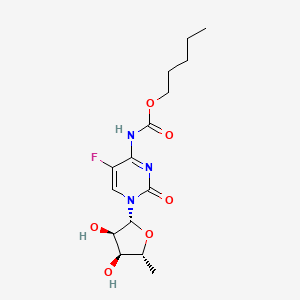
Overview
Capecitabine is an orally administered prodrug of 5-fluorouracil (5-FU), a fluoropyrimidine antimetabolite widely used in oncology. Following absorption, capecitabine undergoes a sequential three-step enzymatic conversion — first in the liver and then preferentially within tumor tissue — culminating in the release of active 5-FU. This tumor-preferential activation is mediated by thymidine phosphorylase, which is overexpressed in many malignancies, thereby concentrating cytotoxic activity at the tumor site while sparing normal tissue. Once converted to 5-FU, the drug inhibits thymidylate synthase, disrupting DNA synthesis and inducing cell death in rapidly proliferating cancer cells. Capecitabine is approved for the treatment of multiple solid tumors, including colorectal cancer, gastric cancer, and breast cancer, and is frequently combined with platinum-based agents, Targeted therapies, and immune checkpoint inhibitors to enhance efficacy.
As a cornerstone of combination regimens, capecitabine offers the practical advantage of oral administration over intravenous 5-FU infusion, improving patient convenience and quality of life. Its combination with oxaliplatin — commonly designated CAPOX or XELOX — is a standard-of-care backbone in gastric, gastro-oesophageal junction (GEJ), and colorectal Cancers. The drug is also employed in maintenance and frailty-adapted dosing strategies, reflecting its versatility across diverse patient populations and disease stages.
Recent Publications Summary
Recent publications examined capecitabine across multiple cancer indications, both as monotherapy and in combination regimens. In early-stage triple-negative breast cancer, a real-world US cohort study of 882 patients receiving adjuvant capecitabine found that most patients (>90%) received treatment following neoadjuvant therapy, with approximately 95–98% receiving capecitabine monotherapy, though survival outcomes differed by BRCA mutation status 42584742Aug. Capecitabine was also evaluated as maintenance therapy in hormone receptor-positive, HER2-negative metastatic breast cancer, where it showed inferior progression-free survival compared to fulvestrant maintenance (9.0 months vs. 17.3 months) 42168151May.
Gastric cancer studies demonstrated capecitabine predominantly in combination chemotherapy regimens. The XELOX regimen (capecitabine and oxaliplatin) combined with pembrolizumab was investigated in metastatic gastric cancer, with analysis of immune markers revealing associations between monocyte proportions and therapeutic response 41915048Mar. Camrelizumab-containing regimens incorporating CAPOX (capecitabine/oxaliplatin) were compared as first-line treatment for gastric and gastro-oesophageal junction adenocarcinoma 41819560Mar. For frail or pre-frail patients with advanced gastric cancer, alternate-day capecitabine administration combined with trastuzumab was evaluated as a lower-burden treatment strategy 42049427Apr. A single-patient pharmacokinetic case study examined capecitabine/oxaliplatin dosing and tolerability in a patient with stage IV gastric cancer undergoing hemodialysis 42126571May.
Beyond gastric and breast malignancies, capecitabine-based regimens were studied in neuroendocrine tumors and colorectal cancer. CAPTEM chemotherapy (capecitabine plus temozolomide) combined with peptide receptor radionuclide therapy was evaluated in progressive WHO Grade 1–2 pancreatic and small bowel neuroendocrine tumors 42142431May. In older patients with stage II/III colon cancer, capecitabine monotherapy was compared with oxaliplatin-based regimens for adjuvant treatment efficacy.
Pharmacogenomic considerations emerged as clinically important for capecitabine safety and efficacy. DPYD genotyping prior to capecitabine administration was identified as a cost-effective strategy to reduce fluoropyrimidine-related toxicity in metastatic breast cancer, with recommendations for ancestry-aware variant coverage and genotype-linked dose decision support 42360572Jun. Patient-reported outcomes regarding capecitabine self-management revealed that side effect severity significantly impacts patients' ability to adhere to and manage their medication, with medication beliefs mediating this relationship 42341331Jun.
What Changes, What Holds
1. Fulvestrant maintenance outperforms capecitabine monotherapy in hormone receptor-positive metastatic breast cancer
NEW DIRECTION Capecitabine maintenance achieves substantially lower progression-free survival than fulvestrant in HR+/HER2- metastatic disease 42168151May, introducing a comparative efficacy finding not addressed in the Overview's account of capecitabine's role in breast cancer. BRCA status also significantly influences adjuvant capecitabine outcomes in triple-negative breast cancer 42584742Aug, requiring stratified assessment across these populations.
2. Monocyte proportions associate with response to XELOX-pembrolizumab in metastatic gastric cancer
NEW DIRECTION Immune marker analysis identifies monocyte proportions as correlating with therapeutic response in patients receiving XELOX-pembrolizumab for metastatic gastric cancer 41915048Mar, introducing biomarker-guided response prediction not discussed in the Overview's account of capecitabine efficacy. Alternate-day capecitabine combined with trastuzumab provides a lower-burden strategy for frail or pre-frail patients 42049427Apr, exemplifying the frailty-adapted dosing mentioned in the baseline.
3. Capecitabine-temozolomide with peptide receptor radionuclide therapy shows activity in neuroendocrine tumors
NEW DIRECTION CAPTEM chemotherapy combined with peptide receptor radionuclide therapy was evaluated in progressive WHO Grade 1–2 pancreatic and small bowel neuroendocrine tumors 42142431May, representing a treatment indication entirely absent from the Overview's scope of capecitabine applications, which focuses on colorectal, gastric, and breast malignancies. This finding expands capecitabine's potential therapeutic role beyond the established solid tumors.
4. DPYD genotyping before capecitabine administration reduces fluoropyrimidine-related toxicity
NEW DIRECTION Pre-treatment DPYD genotyping with ancestry-aware variant coverage provides a cost-effective strategy to prevent fluoropyrimidine toxicity in patients with metastatic breast cancer 42360572Jun, establishing a pharmacogenomic framework absent from the Overview's account of capecitabine safety management. Patient-reported outcomes demonstrate that side effect severity substantially impairs medication adherence and self-management 42341331Jun, indicating need for patient-centered strategies.
Overview update candidates: DPYD pre-treatment genotyping for toxicity prevention (if broader clinical evidence supports routine implementation).
capecitabine
Background Contexts
In the literature, the biological baseline, pathological conditions, or disease models commonly surrounding capecitabine are described as follows:
- checkpoint inhibitor (Therapy) — 2 papers: PMIDs 42495710, 41915048
- colorectal cancer (Disease) — 2 papers: PMIDs 42532656, 41213862
- Fluoropyrimidine (Therapy) — 2 papers: PMIDs 42545499, 42508427
- Gastro-oesophageal junction adenocarcinoma (Disease) — 2 papers: PMIDs 42225112, 41819560
- locally advanced rectal cancer (Disease) — 2 papers: PMIDs 42508427, 42495710
- (RS)-tegafur (Therapy) — 1 paper: PMIDs 42545499
- advanced breast cancer (Disease) — 1 paper: PMIDs 42360572
- advanced gastric cancer (Disease) — 1 paper: PMIDs 42049427
- anaerobic bacteria (Organism) — 1 paper: PMIDs 42532656
- bacteremia (Disease) — 1 paper: PMIDs 42532656
- BRCA (Organism) — 1 paper: PMIDs 42572030
- BRCA1 (Gene) — 1 paper: PMIDs 42584742
Methodologies & Technologies Used
Researchers utilize the following experimental methods, imaging platforms, computational models, or biological reagents to study capecitabine:
- oxaliplatin (Therapy) — 5 papers: PMIDs 42532656, 42495710, 42330152, 42225112, etc.
- Germline Testing (Technology) — 2 papers: PMIDs 42584742, 42330152
- neoadjuvant or adjuvant chemotherapy (Therapy) — 2 papers: PMIDs 42225112, 41213862
- 6-month progression-free survival (PFS) (Clinical Metric) — 1 paper: PMIDs 42324245
- 60 patients (Organism) — 1 paper: PMIDs 42324245
- Abscess Culture (Technology) — 1 paper: PMIDs 42532656
- Adjuvant Capecitabine (Therapy) — 1 paper: PMIDs 42584742
- AI/machine learning (Technology) — 1 paper: PMIDs 42379750
- alternate-day administration (Other) — 1 paper: PMIDs 42049427
- Aristotle (Other) — 1 paper: PMIDs 42508427
- As-Treated Population (Other) — 1 paper: PMIDs 42508427
- bevacizumab (Therapy) — 1 paper: PMIDs 42532656
Molecular Interventions & Targets
The primary molecular pathways, regulatory genes, enzymes, or therapeutic agents actively targeted and manipulated in relation to capecitabine include:
- oxaliplatin (Therapy) — 5 papers: PMIDs 42126571, 41915048, 41819560, 41450028, etc.
- DPYD (Gene) — 2 papers: PMIDs 42360572, 41758686
- [177Lu]Lu-DOTATATE (Therapy) — 1 paper: PMIDs 42142431
- apatinib (Therapy) — 1 paper: PMIDs 41819560
- camrelizumab (Therapy) — 1 paper: PMIDs 41819560
- chemoradiotherapy (Therapy) — 1 paper: PMIDs 42508427
- docetaxel (Therapy) — 1 paper: PMIDs 41450028
- DPYD c.812delT (Gene) — 1 paper: PMIDs 42545499
- DPYD p.Asp949Val (Gene) — 1 paper: PMIDs 41758686
- DPYD variant (Gene) — 1 paper: PMIDs 41758686
- DPYD*13 (Gene) — 1 paper: PMIDs 41758686
- DPYD*2A (Gene) — 1 paper: PMIDs 41758686
Observed Outcomes & Phenotypes
The phenotypic changes, physiological endpoints, or clinical metrics observed and measured in connection with capecitabine include:
- disease-free survival (Clinical Metric) — 3 papers: PMIDs 42508427, 41548612, 41450028
- overall survival (Clinical Metric) — 3 papers: PMIDs 42584742, 42572030, 42527082
- anemia (Clinical Metric) — 2 papers: PMIDs 42572030, 42495710
- diarrhea (Clinical Metric) — 2 papers: PMIDs 42545499, 42508427
- Major pathological response (Clinical Metric) — 2 papers: PMIDs 42495710, 41450028
- neutropenia (Clinical Metric) — 2 papers: PMIDs 42572030, 42545499
- progression-free survival (Clinical Metric) — 2 papers: PMIDs 42572030, 42168151
- 11.1 months (Clinical Metric) — 1 paper: PMIDs 42324245
- 20.2 months (Clinical Metric) — 1 paper: PMIDs 42324245
- 34.8-month follow-up (Clinical Metric) — 1 paper: PMIDs 41450028
- 5-year overall survival (OS) (Clinical Metric) — 1 paper: PMIDs 41450028
- acceptability (Clinical Metric) — 1 paper: PMIDs 42527082
General Takeaways & Clinical Potentials
The high-level concepts, clinical translations, and overarching conclusions proposed in the research surrounding capecitabine are summarized below:
- 7-year (Other) — 1 paper: PMIDs 41548612
- 7-year DFS (Clinical Metric) — 1 paper: PMIDs 41548612
- Adjusted fluoropyrimidine dose (Therapy) — 1 paper: PMIDs 41758686
- Asian populations (Organism) — 1 paper: PMIDs 42545499
- bevacizumab (Therapy) — 1 paper: PMIDs 42532656
- C-C motif chemokine ligand 3 (Protein) — 1 paper: PMIDs 41915048
- C-X-C motif chemokine ligand 8 (CXCL8) (Protein) — 1 paper: PMIDs 41915048
- carbon tetrachloride (Chemical) — 1 paper: PMIDs 41915048
- Clinical Recommendations (Other) — 1 paper: PMIDs 42168151
- ClinicalTrials.gov (NCT03885219) (Other) — 1 paper: PMIDs 42324245
- consolidation chemotherapy (Therapy) — 1 paper: PMIDs 41548612
- dihydropyrimidine dehydrogenase (NADP+) activity (Clinical Metric) — 1 paper: PMIDs 42545499