adenosine triphosphate
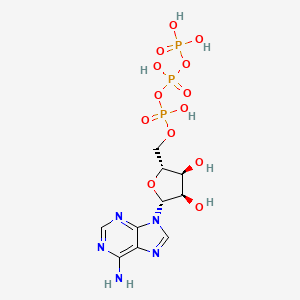
Overview
Adenosine triphosphate (ATP) is a ubiquitous adenine nucleotide that serves as the principal immediate energy currency of living cells. It is central to cellular bioenergetics because hydrolysis of its terminal phosphate bond can be coupled to a wide range of endergonic processes, including biosynthesis, ion transport, mechanical work, and signal transduction. ATP is generated primarily through glycolysis and oxidative phosphorylation, and its intracellular abundance is tightly linked to mitochondrial function, oxygen consumption, and metabolic state.
Beyond its intracellular role, ATP also has important extracellular signaling functions. In the tumor and immune microenvironment, ATP can act as a danger-associated signal that influences dendritic cells, cytotoxic T cells, macrophages, and checkpoint inhibitor responses. In disease settings characterized by mitochondrial dysfunction, oxidative stress, cuproptosis, or altered autophagy and mitophagy, ATP levels are often used as a readout of cellular energetic integrity and treatment response.
Recent Publications Summary
Recent publications have examined adenosine triphosphate (ATP) both as a biological readout of energy metabolism and as a therapeutic or analytical target. In cerebral ischemia, ATP depletion was linked to mitochondrial dysfunction, impaired mitophagy, oxidative stress, and neuronal apoptosis; to address this, positively charged ATP nanoparticles formulated with chitosan were designed to cross the blood-brain barrier after intravenous injection. In a mouse model, these nanoparticles prolonged circulation, increased brain accumulation, replenished intracellular ATP, restored mitochondrial membrane potential, activated mitophagy, and reduced ischemic neuronal damage 42579408Aug.
Several studies also used ATP as a marker of mitochondrial integrity in disease models. In recent-onset type 1 diabetes, hepatic ATP and inorganic phosphate levels were quantified by magnetic resonance spectroscopy and were found to be reduced, with hepatic γATP positively associated with circulating inflammatory proteins such as TNFSF14 and MMP10 42130117May. In copper-induced neurotoxicity, C-phycocyanin increased ATP levels alongside recovery of mitochondrial membrane potential and reduced oxidative stress, consistent with neuroprotection against cuproptosis-related injury in cells and mice 41922617Apr. Similarly, BPM31510 increased cellular ATP content in CoQ-deficient SH-SY5Y cells while also raising CoQ pools in patient fibroblasts and murine tissues 41931022Apr.
ATP was further incorporated into immunotherapy-related and nanomedicine studies. A ratio-tunable dual-peptide nanoplatform for personalized antitumor immunotherapy combined sonodynamic therapy with CD47 and PD-L1 targeting; ultrasound-triggered treatment induced immunogenic cell death accompanied by ATP and HMGB1 release, supporting dendritic cell maturation and antitumor immune activation 41979280Apr. In colorectal cancer, a bacterial phosphoribosyl pyrophosphate synthetase was reported to deplete ATP in tumor cells, disrupt Rab11a-dependent PD-L1 trafficking, and sensitize tumors to anti-PD-1 treatment in mice 41998161Apr.
Additional publications focused on ATP detection or ATP-linked physiology. A ZIF-8@AuNPs nanocomposite was developed as a SERS substrate for simultaneous quantification of ATP and other urinary metabolites, showing high enhancement and a low ATP detection limit 42120743May. A sweet-responsive magnetic metal-organic framework combined with a personal glucose meter enabled point-of-care ATP measurement with a broad detection range and successful performance in real samples 41483604Jan. In acute lung injury, a mitochondria-targeted palladium-loaded carbon dot system increased ATP production and mitochondrial membrane potential while amplifying mitophagy and immune modulation during repair 41810016Mar.
What Changes, What Holds
1. ATP delivery can be turned into a brain-targeted rescue strategy after ischemic injury
NEW DIRECTION Positively charged ATP nanoparticles move ATP from a passive readout of energy failure to an exogenous therapeutic payload, aimed at restoring intracellular ATP, mitochondrial potential, and mitophagy after cerebral ischemia 42579408Aug. That does not alter the established role of ATP as the cell’s energy currency, but it does add a new translational use: ATP supplementation via nanocarrier delivery for neurologic protection. The evidence remains preclinical and needs durability and safety testing.
2. ATP depletion is now linked more tightly to inflammatory and bioenergetic phenotypes across disease models
REINFORCES Reduced hepatic ATP in recent-onset type 1 diabetes and ATP restoration in CoQ-deficient and copper-toxic models sharpen the baseline view of ATP as a marker of mitochondrial integrity and cellular energetic state 42130117May41931022Apr. The diabetes data extend that readout into human metabolic disease and associate it with inflammatory proteins, while the other findings support ATP recovery as a correlate of improved mitochondrial function rather than a competing interpretation.
3. tumor ATP can be therapeutically manipulated to promote immune activation or checkpoint sensitivity
NEW DIRECTION ATP release during immunogenic cell death fits the established extracellular signaling role in the tumor immune microenvironment, but bacterial depletion of tumor ATP to disrupt PD-L1 trafficking and sensitize anti-PD-1 treatment adds a distinct therapeutic angle that the Overview did not cover 41979280Apr41998161Apr. Together these findings suggest ATP can be used both as an immune danger signal and as a vulnerability to exploit in immunotherapy, though the depletion strategy remains preclinical.
4. ATP measurement is becoming a practical analytical endpoint rather than only a laboratory assay
METHOD The new sensing platforms do not change what ATP is understood to mean biologically; they change how it can be measured, including in urine and point-of-care formats with improved sensitivity and usability 42120743May41483604Jan. The lung-injury study also treats ATP rise as a repair-associated readout alongside mitophagy and immune modulation, reinforcing ATP as a dynamic biomarker but not adding a new biological role beyond the baseline.
Overview update candidates: ATP nanoparticle delivery as a brain-targeted rescue strategy; ATP depletion as a means to sensitize tumors to anti-PD-1; point-of-care and urinary ATP detection platforms.
adenosine triphosphate
Background Contexts
In the literature, the biological baseline, pathological conditions, or disease models commonly surrounding adenosine triphosphate are described as follows:
- checkpoint inhibitor (Therapy) — 2 papers: PMIDs 41998161, 41979280
- therapeutic resistance (Disease) — 2 papers: PMIDs 42284888, 42276398
- Acute Gouty Arthritis (Disease) — 1 paper: PMIDs 42133647
- acute lung injury (Disease) — 1 paper: PMIDs 41810016
- adipose tissue (Clinical Metric) — 1 paper: PMIDs 41931022
- African American (Organism) — 1 paper: PMIDs 42140580
- Age (Other) — 1 paper: PMIDs 42140580
- ageing (Other) — 1 paper: PMIDs 41811567
- Astragalus membranaceus (Organism) — 1 paper: PMIDs 41997434
- atherosclerosis (Disease) — 1 paper: PMIDs 41937698
- autophagic flux (Biological Process) — 1 paper: PMIDs 42284888
- autophagy (Biological Process) — 1 paper: PMIDs 42284888
Methodologies & Technologies Used
Researchers utilize the following experimental methods, imaging platforms, computational models, or biological reagents to study adenosine triphosphate:
- mouse (Organism) — 4 papers: PMIDs 42579408, 42503530, 42485058, 42191311
- western blot (Technology) — 4 papers: PMIDs 42133647, 42062031, 42000004, 41997434
- Immunofluorescence (Technology) — 2 papers: PMIDs 42133647, 42062031
- Morris water navigation task (Technology) — 2 papers: PMIDs 42171824, 41922617
- Network Pharmacology (Technology) — 2 papers: PMIDs 42000004, 41997434
- sirolimus (Therapy) — 2 papers: PMIDs 42276398, 41997434
- (S)-(−)-colchicine (Therapy) — 1 paper: PMIDs 42133647
- 16S rDNA sequencing (Technology) — 1 paper: PMIDs 42166975
- 1H/31P magnetic resonance spectroscopy (Technology) — 1 paper: PMIDs 42130117
- 8-butylthio-AMP (Chemical) — 1 paper: PMIDs 42067197
- A0 to A1 Validation (Technology) — 1 paper: PMIDs 42573395
- absorption, distribution, metabolism, excretion, and toxicity (ADMET) (Other) — 1 paper: PMIDs 41288903
Molecular Interventions & Targets
The primary molecular pathways, regulatory genes, enzymes, or therapeutic agents actively targeted and manipulated in relation to adenosine triphosphate include:
- anti-PD-L1 (Therapy) — 2 papers: PMIDs 41998161, 41979280
- cytotoxic T cell (Cellular Component) — 2 papers: PMIDs 41998161, 41979280
- Mechanistic target of rapamycin (mTOR) (Protein) — 2 papers: PMIDs 42276398, 41811567
- 17β-estradiol (Chemical) — 1 paper: PMIDs 42485058
- 5-aminolevulinate synthase (Protein) — 1 paper: PMIDs 41702525
- 8-(1-Naphthylthio)-N6-(4-phenylbutyl)-AMP (Chemical) — 1 paper: PMIDs 42067197
- Acanthaceae (Gene) — 1 paper: PMIDs 41816316
- adenine (Chemical) — 1 paper: PMIDs 42120743
- AIM2 inflammasomes (Protein) — 1 paper: PMIDs 42133647
- AKT/mTOR/4EBP1 signaling (Pathway) — 1 paper: PMIDs 42030279
- AlkB homolog 5 (Protein) — 1 paper: PMIDs 42185511
- aminolevulinic acid (Chemical) — 1 paper: PMIDs 41702525
Observed Outcomes & Phenotypes
The phenotypic changes, physiological endpoints, or clinical metrics observed and measured in connection with adenosine triphosphate include:
- mitochondrial membrane potential (Biological Process) — 5 papers: PMIDs 42579408, 42503530, 42485058, 42166975, etc.
- reactive oxygen species (Chemical) — 5 papers: PMIDs 42485058, 42166975, 42133647, 42030279, etc.
- proinflammatory cytokine (Biological Process) — 4 papers: PMIDs 42166975, 42133647, 42130117, 42025984
- Intracellular ROS (Chemical) — 2 papers: PMIDs 42171824, 42025984
- mitochondrial dysfunction (Biological Process) — 2 papers: PMIDs 42503530, 41997434
- Neuronal Apoptosis (Biological Process) — 2 papers: PMIDs 42579408, 42503530
- oxidative phosphorylation (Biological Process) — 2 papers: PMIDs 42441917, 42025984
- oxidative stress (Biological Process) — 2 papers: PMIDs 42503530, 42166975
- PTEN-induced putative protein kinase 1 (Gene) — 2 papers: PMIDs 42171824, 42133647
- 5L2I-3ERT Kinase-Nuclear-Receptor Pair (Protein) — 1 paper: PMIDs 42573395
- 860 AM (Clinical Metric) — 1 paper: PMIDs 42120743
- A-549 (Cell Line) — 1 paper: PMIDs 42441917
General Takeaways & Clinical Potentials
The high-level concepts, clinical translations, and overarching conclusions proposed in the research surrounding adenosine triphosphate are summarized below:
- therapeutic efficacy (Clinical Metric) — 2 papers: PMIDs 42276398, 42191311
- 17β-estradiol (Chemical) — 1 paper: PMIDs 42485058
- aggregation of ATP and ADP (Biological Process) — 1 paper: PMIDs 42059824
- AIM2 inflammasomes (Protein) — 1 paper: PMIDs 42133647
- ALI therapy (Therapy) — 1 paper: PMIDs 41810016
- aminolevulinic acid (Chemical) — 1 paper: PMIDs 41702525
- AMP-activated protein kinase alpha 1 (AMPKα1) (Protein) — 1 paper: PMIDs 41833273
- AMPK/mTOR axis (Pathway) — 1 paper: PMIDs 41997434
- autophagic imbalance (Biological Process) — 1 paper: PMIDs 42171824
- Bax (Protein) — 1 paper: PMIDs 41833273
- BCL2 apoptosis regulator (Protein) — 1 paper: PMIDs 41833273
- biochemical activity (Biological Process) — 1 paper: PMIDs 42573395